


‘Beau is Afraid’ movie review: Ari Aster’s reflection on traumatised, med-addicted America

When I recently spoke to Armen Nahapetian, who stars in Ari Aster’s new film Beau is Afraid as the teen version of Joaquin Phoenix’s titular character, he told me that Aster has largely left much of the film’s meaning to the audience’s devices. However, this open interpretation approach should only be taken so far, and the final product is ultimately one that sacrifices its potential for narrative worth.
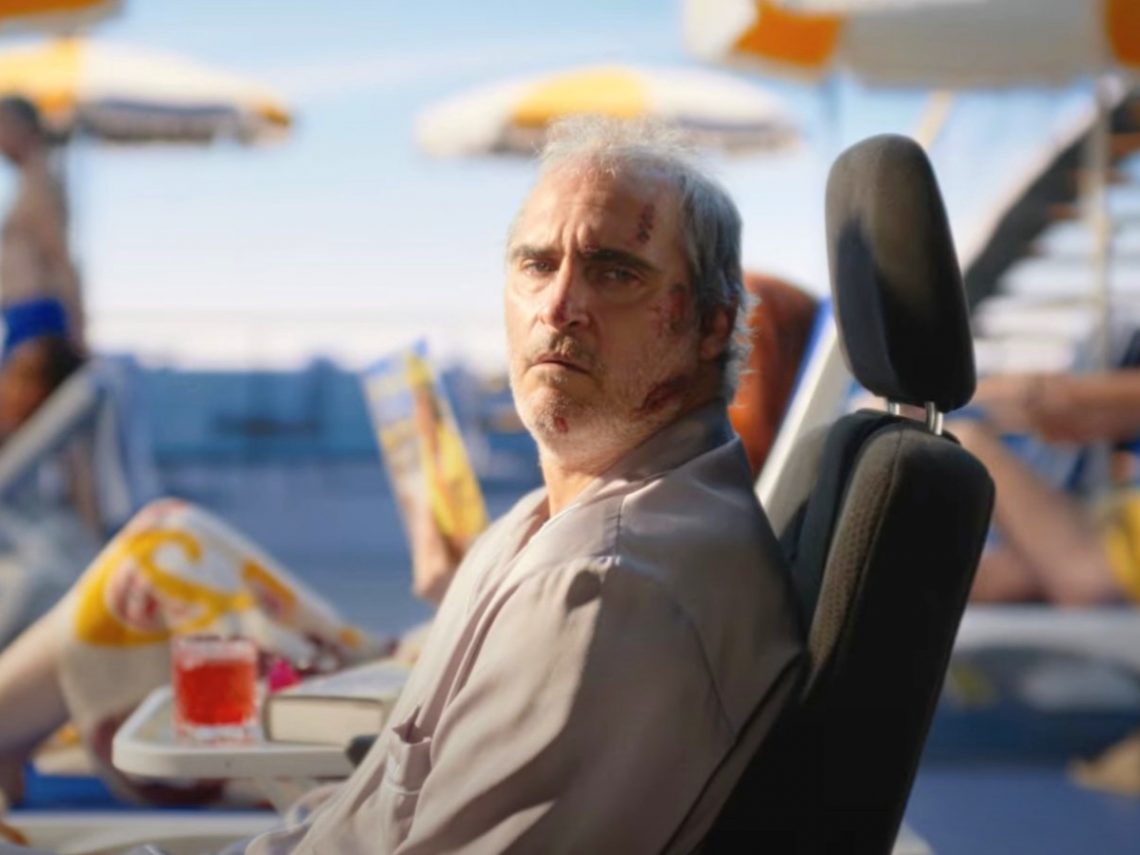
At its root, Beau is Afraid is rather simple. We are introduced to Beau Wasserman (Phoenix), a highly anxious man who is suffering the severe consequences of his mother’s narcissistic cruelty inflicted upon Beau primarily as a child but also throughout his adult life. He is terrified at having to return to his home to visit his “mommy” for the anniversary of his father’s death, and with good reason, too.
The film’s first act shows us to what extent Beau is plagued by his neurosis, to the point that we are unsure whether his anxieties are imagined, hallucinated or real. Aster provides a poignant reflection on the barbarity that has become America with shootings, stabbings and general chaos taking place outside of Beau’s rundown apartment block, which understandably gives him life-impacting cause for concern. However, we do wonder whether the undesirables of the street and the film in sum are merely making of Beau’s imagination without any final elucidation.
Aster also comments on the American reliance on pharmaceuticals as a combative approach to dealing with the ever-worsening national state of mental well-being. In the second act, after suffering an accident, Beau is taken in by a family comprised of father Roger (Nathan Lane), mother Grace (Amy Ryan) and daughter Toni (Kylie Rogers), all of whom gobble down medicine with the gumption to prevent their personal anxieties from becoming too much to bear.
The family have suffered a profound tragedy in losing their Army-serving son in battle in Caracas and subsequently house his terribly-traumatised military buddy Jeeves in a caravan in their garden. Aster shows that different kinds of people deal with trauma in different ways.
For Roger, it is to keep a smile on his face and stay chipper at all times, while Grace takes in Beau as a surrogate replacement for her son, kissing a stranger and calling him “sweetheart”, while Jeeves can only act out under the clear effects of PTSD a la John Rambo. Toni, meanwhile, is typical of a 2020s American teenager, addicted to weed and social media and acting maliciously beyond her years. Yet each family member tucks into Zoloft and other meds as though Skittles, which Roger gleefully describes as “dessert”.
But as for narrative, barre Beau stumbling through a forest trying to make it back to his mother’s house and the confrontation that occurs when he finally gets there, there is little to offer, which may come as some surprise because of the intimidating three-hour runtime. In the forest, Beau either hallucinates (again) or comes across a staged play that is strikingly similar to his own life, a segment that is simultaneously alluring and frustrating in terms of storyline development.
Beau is Afraid is undoubtedly entertaining; however, a problem arises because its characters are undoubtedly curious at the same time as their development being eschewed in favour of a thematic and visual showing-off. Having said that, Aster’s film is frequently laugh-out-loud funny, whether it be from Nathan Lane’s excellence or through the subtle placement of a prop. So too is the set design, not to mention the intoxicating mid-way point animation section, gloriously and painstakingly put together.
Aster has succinctly and accurately portrayed a beyond-bonkers selfish mother and the undoubted effect that her behaviour has on her child. But with just a touch too much focus on the symbolism and intentionally ambiguous meaning and an overt departure from the direct horror of his previous films, one can leave the cinema with an overwhelming feeling of “well, so what of it all?”.
