


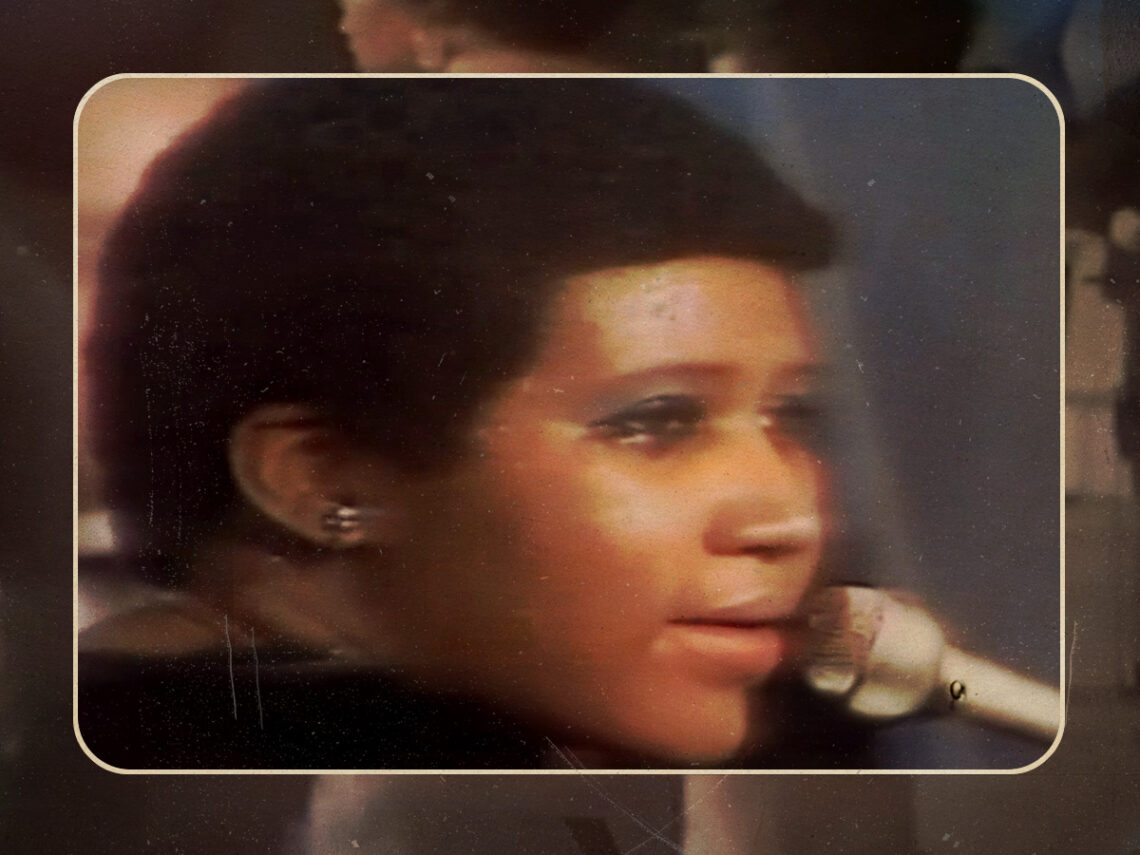
Watch rare footage of Aretha Franklin and King Curtis covering Simon and Garfunkel

One of the most diverse and important eras in American social history, the 1960s changed the world forever. In addition to the political activism of the anti-war movement, the liberation of the civil rights movement, and the awe-inspiring moment that put ‘whitey on the moon’, the era boasted an extensive and revolutionary cultural sector, made up of some of the finest artists ever to grace the airwaves. Folk, psychedelia, soul, and country all stood side by side during the 1960s, making household names and colossal stars out of artists like Aretha Franklin.
The greatest vocalist of the century, Franklin was among the defining stars of the 1960s. Her early gospel period, while incredibly captivating for relatively niche audiences, was deemed a failure, but her subsequent move to Atlantic Records culminated in a wealth of incredible soul anthems. Tracks like ‘Say A Little Prayer’, ‘Think’, or her magnum opus, ‘Respect’, redefined the landscape of soul and continue to inspire and captivate listeners to this day, over half a century on from when they were initially recorded back in the late 1960s.
Like many great soul artists of that era, many of Franklin’s biggest hits were cover songs or standards, rather than original compositions. Even ‘Respect’, for instance, was initially penned and recorded by Otis Redding. As that song demonstrates, however, Franklin made every track she ever recorded her own. Even when she took on The Beatles, recording a variety of covers including a particularly captivating version of ‘Let It Be’, she seemed to have a transformative power that rendered every other recording inferior.
Of course, Franklin wasn’t the only transformative artist of the 1960s. Away from the world of soul, the landscape of folk and singer-songwriters was being redefined by the likes of Simon and Garfunkel. A famously tumultuous duo, the songwriting talents of the pair, though mainly Paul Simon, if we’re being honest, thrust them into the limelight, establishing Simon and Garfunkel among the most successful and beloved artists of the decade.
Given the intense and widespread success which surrounded the duo, it was only a matter of time before their genius was incorporated into other styles, scenes, and genres. Soul music has a rich history of drawing upon blues and folk music, so the stylings of the pair seemed naturally suited to the rich and compelling world of Franklin, who covered ‘Bridge over Troubled Water’ in 1970.
How Aretha Franklin turned ‘Bridge Over Troubled Water’ into a gospel masterpiece
As with virtually every song she ever recorded, Franklin transformed the style and atmosphere of the Paul Simon-penned song beyond belief. Returning to her roots in gospel vocals, the soul singer brought the track “back to church”, as Garfunkel accurately put in a 2018 interview with Rolling Stone. Simon himself was honoured that Franklin had chosen to put her own spin on his work, once declaring, “Aretha’s version is tremendous, the best I ever heard except Artie’s”.
Franklin recorded her version of the song during the sessions for her 1972 album Young, Gifted and Black, but she had already introduced the song into her live performances around 1971, including a particularly awe-inspiring performance at Fillmore West in San Francisco. Aside from that show, however, perhaps the most notable performance of the tune was televised in 1971 and featured backing from none other than King Curtis, the iconic saxophonist who could flitter between jazz and R&B in the blink of an eye.
This performance sees Franklin at her absolute peak, drowning in vocal skill and, most of all, absolute confidence in her showmanship. She managed to make the already powerful song feel utterly Earth-shattering, just as she did with countless other songs over the course of her celebrated career in the music industry.
