


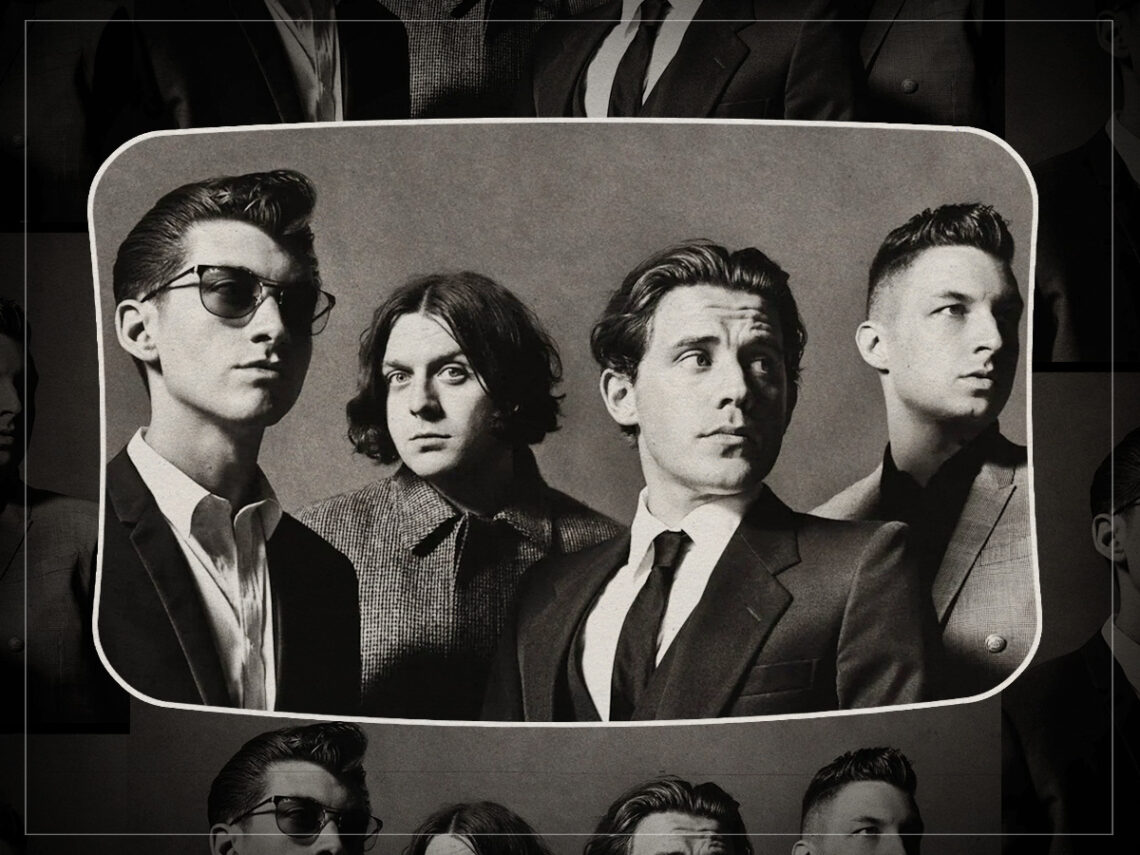
Is Arctic Monkeys’ ‘Snap Out Of It’ a criticism of toxic fan culture?

A large chunk of the music-loving population have appreciated Arctic Monkeys long enough not to really question their place in the music industry. Obviously, there have been several iterations of the band, a sensitive subject that provides the biggest point of contention when arguing about when they were at their best. But mostly, growing up beside them also means we haven’t really properly stopped to think about how they’ve been affected by fan culture.
It’s something we see everywhere at the moment: it’s the reason an artist like Chappell Roan has got so much stick, because she often discusses the boundaries she works hard to uphold, wanting to maintain her career in the music industry without having to stop in the street to entertain fans who only know her by her stage name, or know her real name, but forget the unspoken rules of approaching a stranger in public for a photo they might not want to be a part of to begin with.
It’s a topic that seems constant in the current climate, famous figures perturbed by the implications of social media and the intrusive nature of the selected few who ruin it for everybody. But we’ve never really had these conversations about Arctic Monkeys, or even Alex Turner, and surely that can’t be just because he keeps to himself, acting day-to-day like he hasn’t had several hit records and a lifetime legacy that will forever line his pockets.
But not even a figure as elusive as Turner can bow out as much as he clearly wants to, especially when he’s lived through the different phases of online culture, like AM, which wasn’t so much a commercial breakthrough as a cultural moment that introduced a global aesthetic the teens went mad for, taking Turner’s Teddy Boy-inspired look and attitude and making it the entire personality that defined 2013. But what did he have to say about it all at the time? Not much really, except for that he wanted it to sound “good in the car, like 50 Cent’s ‘In Da Club’.”
This silence on modern culture is even more interesting when you think about the fact that, even at his most oversaturated, Turner didn’t really have that much to say about others’ opinions or vulturistic fan culture. He played into his role like it was his only obligation, but didn’t reveal too much when it came to that disconnect between external fan expectation, constant scrutiny among some of his biggest loyalists, and the brewing issue of parasocial relationships in the modern age. But maybe that’s because he could always maintain that disconnect, even when it seemed impossible.
Or maybe his real opinion came through the most on AM, in the subtle criticisms of songs like ‘Snap Out Of It’, like he almost didn’t want to go into that whole world too much and resigned most of his opinions for the music video alone. Because listening to the song, it’s not immediately clear what he’s talking about. There are lyrics that point towards his displeasure with someone he likely once loved or still does, and how their new relationship seems like copping out, something that makes him want to “grab both your shoulders and shake.” Baby.
But there’s also a push that comes with looking at someone and knowing they can do better, like how Turner says, “I heard that you fell in love, or near enough,” and, “It sounds like settling down or giving up
But it don’t sound much like you, girl.” He’s berating someone who’s gotten too caught up in someone or something that plagues their entire mind, taking their time and making them feel like it’s worth it, when all it is is a fantasy world that doesn’t serve her at all: “Under a spell, you’re hypnotised / Darlin’, how could you be so blind?”
Of course, the inspiration could have come from exactly what it sounds like: a relationship Turner doesn’t approve of, whether it comes from a place of jealousy or not. But the music video pokes fun at the parasocial nature of fan culture, starring Stephanie Sigman as an out-of-touch obsessive who watches clips of Turner endlessly, wrapped up in the haze of not being able to move on from someone we’re not even sure she’s met in real life. A lot like Turner is criticising fan culture and the way that these fixations consume everything.
It’s expected for Turner to poke fun at things for their absurdity every now and then, but unless you look closely at the song and its music video, it’s unclear whether we’re supposed to take it on face value or whether he’s actually saying something more scathing about the world he finds himself in. Turner is no stranger to intense fan passion, but would he want to take such an open dig, knowing how much it can come back to bite him? Or maybe he has his head down enough to stay immune to the modern rules of fan culture and all it entails.
