


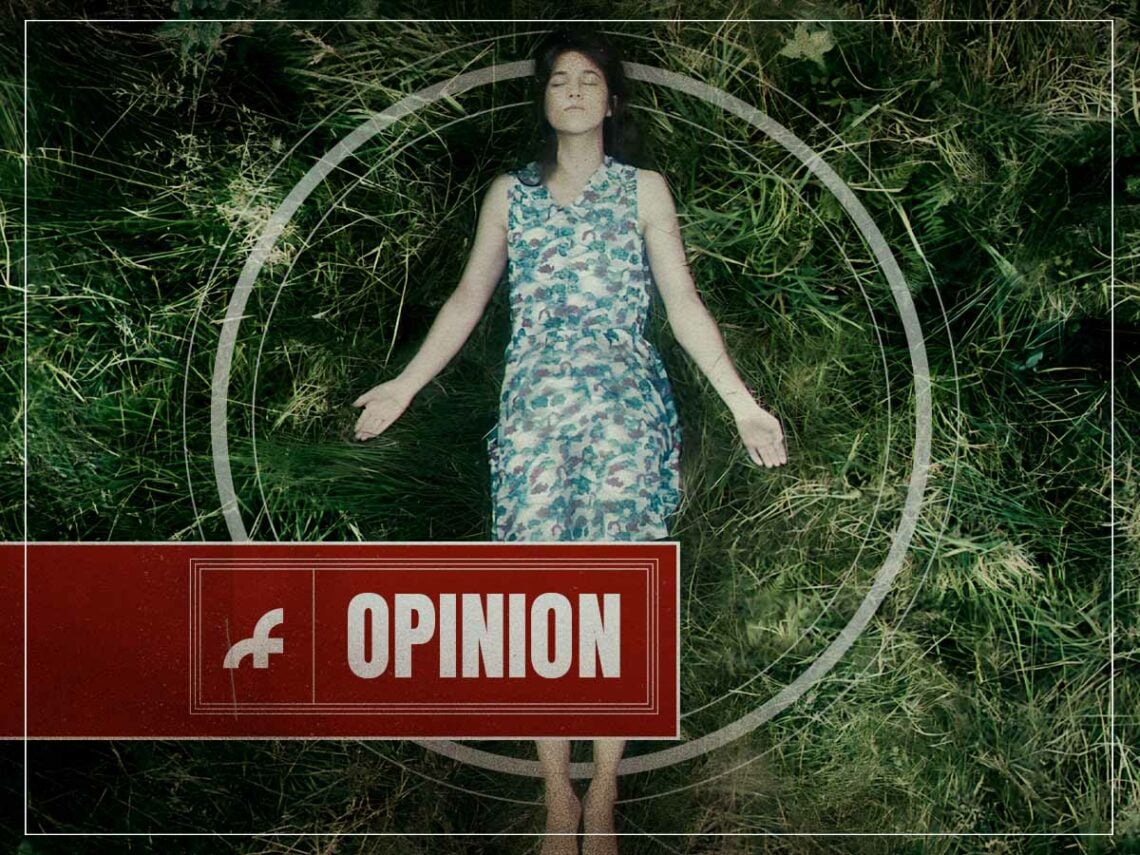
Hear Me Out: ‘She’ from ‘Antichrist’ is cinema’s underrated feminist icon

Horror has long been a realm dominated by women, but up until the 1970s, their role was largely limited to that of victim. Enter Sissy Spacek in the 1976 adaptation of Stephen King’s novel Carrie, who wreaked bloody revenge on her school bullies. Enter the morally ambiguous Isabelle Adjani of Andrzej Żuławski’s 1981 psychological horror Possession. Enter the overtly feminised villains of Dario Argento’s 1977 classic Suspiria. And enter the controversial character of ‘She’ in Lars von Trier’s 2009 experimental horror Antichrist.
Second-wave feminism taught filmmakers that women didn’t need to be confined to victim roles; like men, they could embody villains, even monsters. While this observation may now seem obvious, the truly groundbreaking female characters in horror and cinema surpass simplistic labels of victim or villain. ‘She’ in Antichrist exemplifies this complexity, embodying a radical figure who transcends binary definitions and dives into a more nuanced, layered portrayal.
Lars von Trier is not typically associated with feminism; in fact, the opposite often applies. Known as an “enfant terrible” and famously deemed persona non grata after controversial remarks about Hitler at the Cannes Film Festival, von Trier has built a career steeped in controversy. His films are unapologetically divisive, stirring debates that consistently push the boundaries of comfort and convention.
Antichrist is perhaps the most divisive of them all. Opening with a hyper-stylised black and white prologue sequence depicting the death of She and He’s young son while the couple has sex in various locations around the house, the film certainly starts as it means to go on and ramps up the shock factor as it progresses.
Charlotte Gainsbourg is excellent as She, a grieving mother with no proper name, a fact that points to the universal nature of her suffering. And suffer she does, with the first half of the film dominated by images of her weak and lifeless in her husband’s arms, unable to function and racked by grief following the death of her son.
Over the course of Antichrist, She undergoes a fascinating transition from victim to agent of suffering. He, played by Willem Dafoe, is condescending in his treatment of his wife, but this is arguably the extent of his crimes – the punishment for which She enacts ruthlessly, mutilating his genitalia and bolting a grindstone through his ankle.
It is, ironically, She’s revenge that sets her apart from other horror movie heroines and what sets Antichrist radically apart from films of the classic revenge genre. She is not wreaking revenge on a single person but on the patriarchal system at large, a huge amorphous ‘He’, for centuries of crimes committed against women. Stripped of the role of mother, She even goes so far as to rid herself of the feminine sexuality for which she believes she has been punished, removing her clitoris in a gruesome act of self-mutilation.
What has led people to argue against She’s role as a feminist icon is the fact that ultimately, She pays for her transgressions. At the end of Antichrist, He frees himself from the grindstone bolted through his ankle and strangles her to death, thereby removing the perceived female threat to the patriarchal order.
Yet the film’s ensuing epilogue shows that She’s actions are not lost. As He limps through Eden, a wide shot reveals hundreds of women streaming up the hill towards him, their faces blurred into anonymity. The implications of the ending of Antichrist are manifold and ambiguous but solidify She’s place as a complex feminist film icon, provoking thoughtful discussion and gesturing towards a subversive female collective of the future.
