


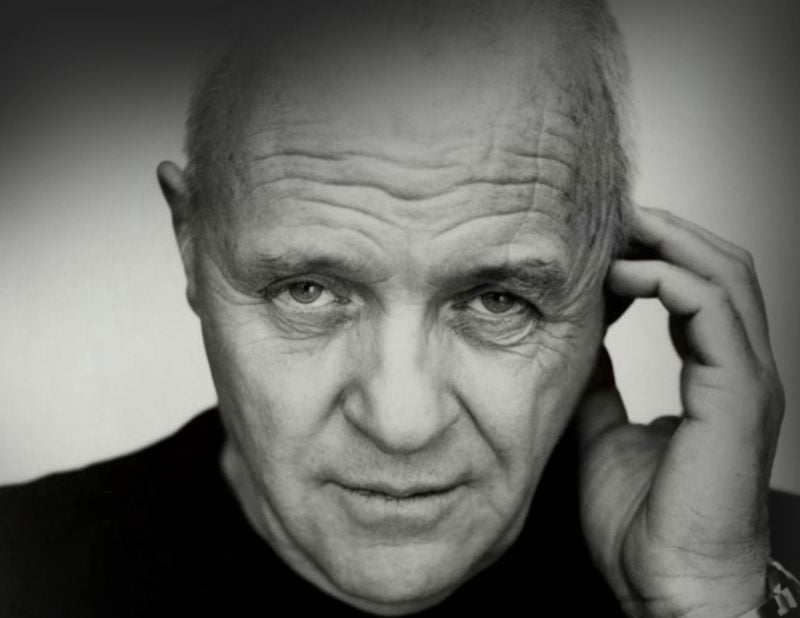
How Anthony Hopkins found Hannibal Lecter’s kindred spirit in Ace Ventura: “Oh my god, that’s what I did”

Inspiration is a funny thing, especially when it comes to actors. While even the most experienced performer in the world can approach a part with decades of knowledge of the craft under their belt, the beauty of playing different characters is that sometimes, the muse strikes them in an unusual way. That was certainly the case with Anthony Hopkins and Jim Carrey. The two famed performers were at opposite ends of their careers in terms of experience when they connected over the bizarre sources of inspiration behind their most famous characters.
Before Ace Ventura: Pet Detective was released in 1994, Carrey was a virtually unknown quantity in the movies. He had broken through as part of the cast of In Living Colour and proved his worth as a wild sketch comedian, but in film terms, the lead role as the barmy detective was far from a sure thing. Of course, its success, along with that of The Mask and Dumb & Dumber, catapulted him to the top of the Hollywood A-list. Soon, he was lunching with genuine Academy Award winners like Hopkins, and they discovered they may be kindred spirits.
In 2008, Carrey told The Guardian, “He asked me about Ace Ventura, and I said, ‘What I was trying to do was be a bird. I was not trying to be human.'” To Carrey’s surprise and delight, the Silence of the Lambs star replied, “Oh my God, that’s what I did with Hannibal. I was a tarantula and a crocodile.”
As bizarre as this may sound, actors taking inspiration from the animal kingdom when playing human characters isn’t as rare as you’d think. It also doesn’t matter if they’re using the technique for broad comedy or serious drama – it can still apply perfectly.
For example, when drilling down into the hollow soul of Lou Bloom in Nightcrawler, Jake Gyllenhaal and writer/director Dan Gilroy realised he should exhibit the predatory movements and demeanour of a coyote. When Chris Pratt signed up for Jurassic World, he decided to try a new acting technique, which was to decide which part of his body his character would lead by assigning him an animal. To Pratt, raptor trainer Owen Grady was a dolphin because, as he told GQ, “They lead with their foreheads.” Similarly, Nicolas Cage based Ghost Rider’s head movements on cobras because he loved how the terrifying snakes move their heads back and forth in a hypnotic motion.
Heck, actress Zoey Deutch (Set it Up, The Politician) has been remarkably candid about including animal elements in most of her characters. She told the In the Envelope podcast, “I love, love, love animal work. It allows me to base my characters not just off of people and experiences that I’ve had, which are limited. It opens your world up.”
When you put it like that, then, maybe Carrey basing Ventura on “a smart bird at the edge of the pond” – as he told The New Yorker Festival in 2018 – isn’t so weird after all.
To be fair to both Carrey and Hopkins, once you know what they were drawing from, it’s easy to see the animal inspiration in both their iconic roles. As Ventura, Carrey doesn’t even pretend to have the eccentric sleuth move like anything other than a bird. After all, he’s constantly tip-toeing around with his long, skinny legs while extending and contorting his long neck into positions which would do most humans a mischief. Similarly, Hopkins’ preternatural stillness as Lecter, especially in the scene where Clarice Starling meets him for the first time in his prison cell, is very reminiscent of a crocodile slightly submerged in water, waiting for its prey to get too close.
