


Anthony Bourdain’s Grails: Bánh Mì Phượng, in Hoi An

Anthony Bourdain was many things, and although he was a New Yorker by birth, he was very much a citizen of the world, a man who introduced a generation of Americans, and those outside the States, to places we could only dream of visiting, doing more than most for the image of grassroots travelling.
His television shows and books captivated millions, but he was humble and comfortable sitting and talking with anyone, wherever he travelled. Most of all, Bourdain was human, with his flaws, but he was honest about them, and his humanity allowed him to assimilate anywhere he went, as he was genuinely curious about people’s lives and their cultures and empathetic, seeing beauty everywhere.
But, out of all the places he visited, it always felt like Vietnam was amongst his favourites, wherein he even credits the country as having transformed him: “Going to Vietnam the first time was life-changing. It was like I’d found a new obsession”.
Though Bourdain might sadly be gone, his work lives on forever and in the places that he championed, so do the queues; hence, we’re going to look at one of the restaurants he visited during one of his trips to the country, Bánh Mì Phượng, and just what it was about the bánh mì that he fell in love with.
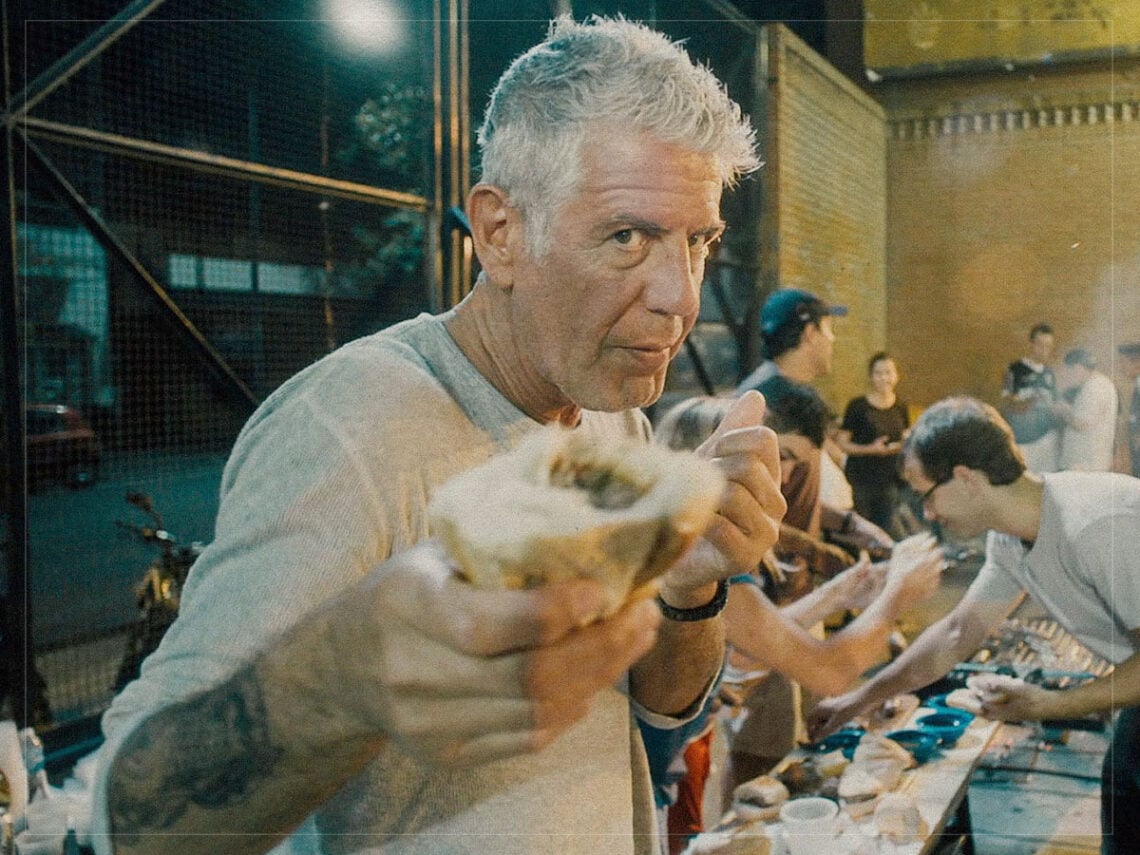
When Bourdain visited with Phillipe Lajaunie in season five of No Reservations, the shop was modest, whereas now, blessed with his seal of approval, it’s more westernised. These days, Bánh Mì Phượng, the small shop in the old town of Hoi An, has been done up, with shiny and new signs which mention their famous visitor, such that once you reach the front of the queue, and there will be queues, you are greeted by the service station, with the ladies working there cramming all the ingredients into that warm French bread, with the menu overlooking you and a still image of Bourdain from No Reservations front and centre.
The chef author claimed that their bánh mì was a “symphony in a sandwich”, and it’s hard to disagree; there are different variations of it on the menu but, at its core, it’s a simple, crispy, warm baguette filled to breaking point with a combination of meats, the pork being my personal favourite. Inside those meats lie a menu of pâté, mayonnaise and pickled vegetables, with the tang of pickling adding something extra to the cucumber and carrots. Perfectly accented by daikon radish, coriander and a splash of fish sauce, it’s both substantial, filling and yet somehow refreshing.
Even now, over 12 months since my last bite, I still sometimes catch myself longing to clamp my teeth down on it once again.
In many ways, the bánh mì represents everything that Bourdain loved about food, notably its ability to bring people together, and with the baguette having been introduced to the country in the mid-19th century, this fiercely Vietnamese dish draws on French cuisine, making for an iconic blend resulting in a form of post-colonial grub. In time, the bread was adopted as their own, alongside mayonnaise and pâté, but subsequently mixed with cured meats and the fresh vegetables that Vietnam excels in, to create something truly unique and addictive. A perfectly encapsulating example of what a human mixing pot can achieve, and perhaps indicative that we’re all better together.
With over 14.000 reviews on Google, the majority being overwhelmingly positive, it’s fair to say that Bourdain‘s love of bánh mì, and in particular, Bánh Mì Phượng, is echoed by almost all who visit. It’s beautifully ironic that this fusion cuisine vendor owes a little part of their success to a man from the other side of the planet, and from a nation that had caused theirs so much harm. As he once said, “Food may not be the answer to world peace, but it’s a start”.
