


Answer the lobster: Salvador Dalì’s ode to seafood

Described by many as ‘the first pop star of painting’, Salvador Dalì held undisputed notoriety in the socialite, artistic and hedonistic arenas. His iconic and surrealist pieces have become cultural staples, and his name is still being upheld and capitalised upon. A film about Dalì, titled Daliland, is even being released this year in the US, starring Ben Kingsley and Suki Waterhouse. With his legacy being remade into T-shirts, functioning watches, clocks, prints and even underwear, it’s a given that Dalì is recognised a pioneer of the surrealist movement.
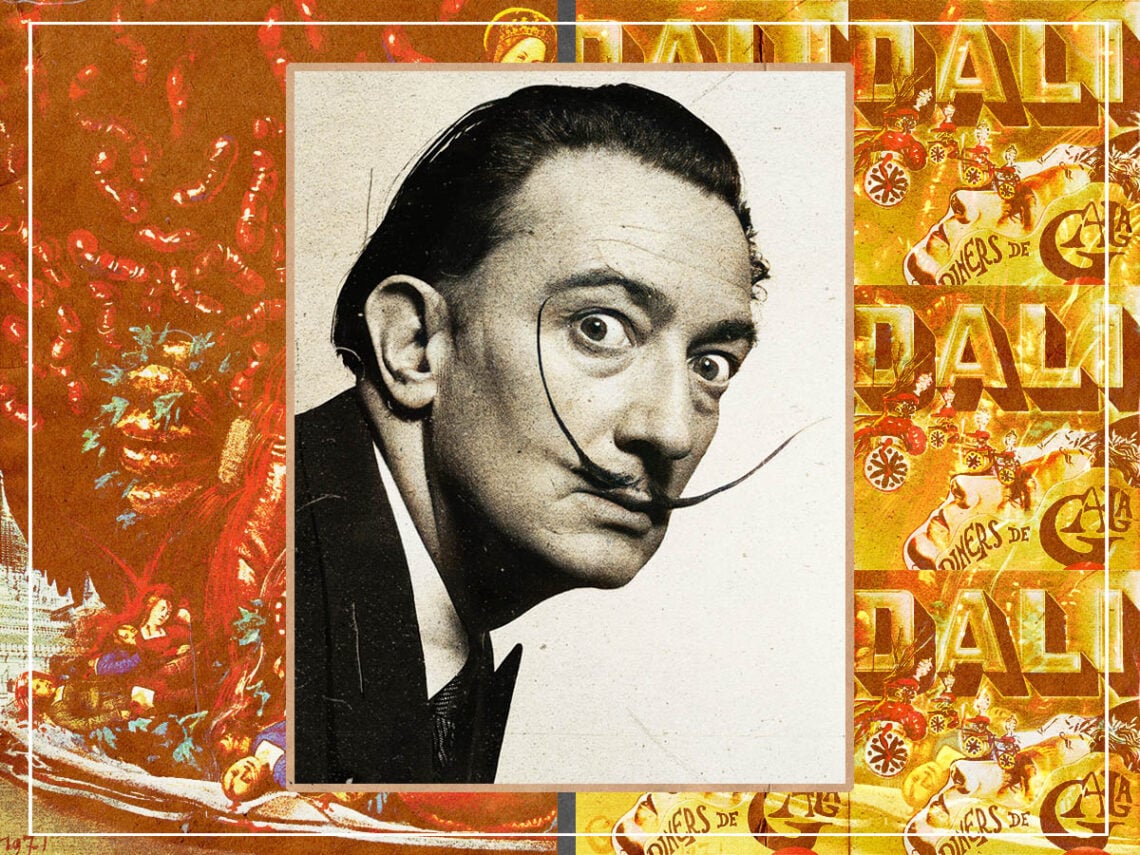
Despite Dalì’s supposed fear of female genitalia, many of his works revolve around sexual inferences represented by food. His cookbook ‘Les Diners de Gala’, is described by Dalì as “uniquely devoted to the pleasures of taste,” he said. “If you are a disciple of one of those calorie-counters who turn the joys of eating into a form of punishment, close this book at once; it is too lively, too aggressive, and far too impertinent for you.”
Seafood, a known aphrodisiac, has been used in his work from 1939 called ‘The Dream of Venus’. Within the bounds of Dalì’s already controversial career, his performance consisted of nude models in seafood, with a lobster over the female performer’s genitalia. The work was inspired by his 1935 commission for American Weekly to create impressions of surrealist objects based around New York.
One of the objects was the ‘Téléphone Aphrodisiaque’, a phone with a lobster tail placed over the receiver. The work is an amalgamation of one’s supposed secret desires – as a surrealist object’s goal is to uncover repressed carnal cravings. New York’s fast pace and instant gratification culture combined with its luxury market is symbolically compounded into this telephone.
In an entry to the Dictionnaire Abrégé du Surréalisme of 1938, Dalì provides context to his ‘Téléphone Aphrodisiaque’. He said: “I do not understand why, when I ask for a grilled lobster in a restaurant, I am never served a cooked telephone; I do not understand why champagne is always chilled and why on the other hand telephones, which are habitually so frightfully warm and disagreeably sticky to the touch, are not also put in silver buckets with crushed ice around them”.
Dalì continued: “Telephone frappé, mint coloured telephone, aphrodisiac telephone, lobster-telephone, telephone sheathed in sable for the boudoirs of sirens with fingernails protected with ermine, Edgar Allan Poe telephones with a dead rat concealed within, Boecklin telephones installed inside a cypress tree (and with an allegory of death in inlaid silver on their backs), telephones on the leash which would walk about, screwed to the back of a living turtle … telephones … telephones … telephones …”
This embodiment of New York would not have existed without Dalì’s benefactor, Edward James. The son of an American millionaire, his passion and obsession with surrealism drove him to support Dalì by buying all his work for a year. He was a 20th-century dandy whose claustrophobia in the English upper classes drove his dedication to the arts and the surrealist lifestyle. Dalì once commented that James was “crazier than all of the Surrealists put together. They pretend, but he’s the real thing!”
Many believe that without James’ spirit and financial generosity, Dalì would not have the acclaim he has today. Eleven lobster phones were made for James’ house in central London.
Dalì’s inventions to reconcile reality and surreality manifest in the ‘Téléphone Aphrodisiaque’. While he is often seen as a celebrity and one-man show, the indispensable creativity of his entourage, such as James, is often overlooked. The telephone rings an ode to sex, consumerism and immediacy, which we all crave – the surrealist object having successfully uncovered our repressed desires.
