


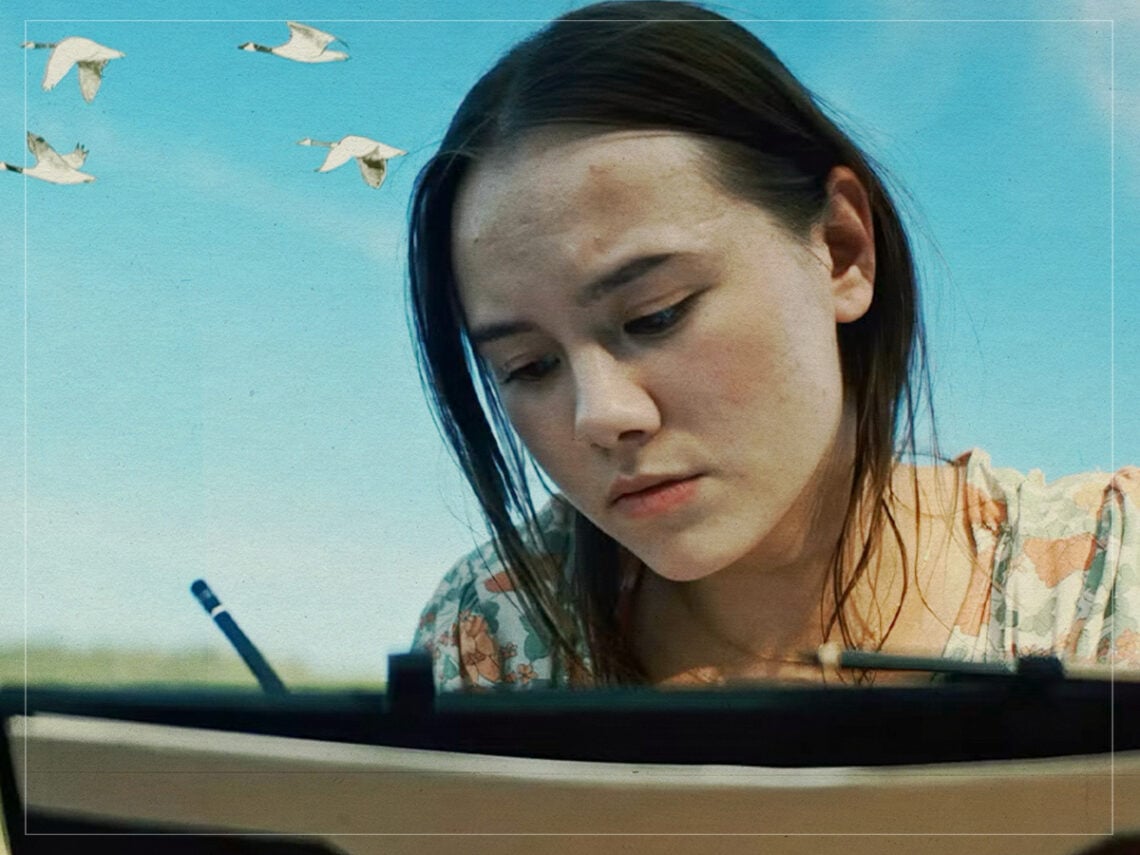
‘Can I Get A Witness?’ movie review: insightful and provocative

A fictional dystopian future is typically frightening, or at least dismal. At best, it may show a well-intentioned ideal society that tragically turned wrong. Rising talent Ann Marie Fleming’s latest production takes a slightly different direction. Her near-future society is a seemingly sensible one which has recognised certain problems, addressed them, and solved them, and all but dares us to disapprove of the means by which such an end was achieved. Can I Get A Witness? differs from a usual dystopian tale in that it is not so much terrifying as thought-provoking.
The story posits a world in which the continual destruction of the natural environment has been taken seriously and dealt with. The burning of fossil fuels is banned, electricity is used extremely sparingly, toxic materials are avoided, and the use of motor vehicles is drastically limited. These changes came about fairly recently, apparently in the previous 20 to 30 years, and nature is already in recovery, the air and water cleaner, woodlands and other natural areas carefully protected. The central story revolves around one change deemed necessary by the reformers in order to maintain stability: everyone must agree to die at the age of 50.
The deceptively cheery title does not refer to the Marvin Gaye song, but to an important aspect of the new system. Kiah (Keira Jang) is a girl in her late teens, about to take on her first real adult role in society: to act as witness, moral support, and documenter (through artwork) to the painless, voluntary suicides which have become routine. She is guided by a slightly more experienced witness, Daniel (Joel Oulette). Adding some interesting facets to the situation is the fact that Kiah’s mother Ellie (Sandra Oh) is 49, and approaching her formal expiration date.
The setting is arranged to showcase the society’s success, showing tree-lined streets filled with bicycles, pedestrians, and the occasional skateboard or manual scooter. Casual references reveal that plastics and single-use materials, and a wide range of technology, have been virtually eliminated. The ecology-friendly society is displayed in a buoyant, idealistic tone that falls just short of parody. This environmental paradise is a recent enough development that the residents retain a tone of smugness at the success of their revolution, and tend to put off difficult questions when they arise. It is mainly the very young who witness and document the suicides, and their distinctly youthful reactions are used to provide a faintly ironic tone.
Excellent acting, especially by Sandra Oh, keeps the fanciful storyline down to earth and believable; and the cinematography is helpful in setting the mood, displaying both the beauties and the limitations of this new world. The camera frequently turns to shots of wild landscape, or glimpses of trees and wildflowers in loving close-up. It also uses a few animated touches, such as having Kiah’s drawings fly off the page and briefly take form; director Fleming is known for her effective use of animation in previous films. The director is also selective about which events are clearly viewed, and which are kept hazy or off-camera, to great effect.
Periodically, the script allows details to emerge which reveal how much has been sacrificed to protect the planet. This comes across faintly through Kiah’s work, and more poignantly through the subtle and ambivalent reactions of Ellie, who was, years earlier, one of the determined reformers who put the system in place. Even when Kiah and her mentor encounter some disturbing events that call the regulations into question, the film never takes a clear position, or identifies their new society as dystopian.
A combination of commitment to a longstanding cause, and youthful optimism, hold things in place. Early in the film, it becomes apparent that the population is disproportionately young, and only more gradually suggests what impact this may have on things other than the environment. Despite being, at times, frustratingly vague and elusive about its position, and almost painfully subtle in its approach, the film is insightful and provocative.
