


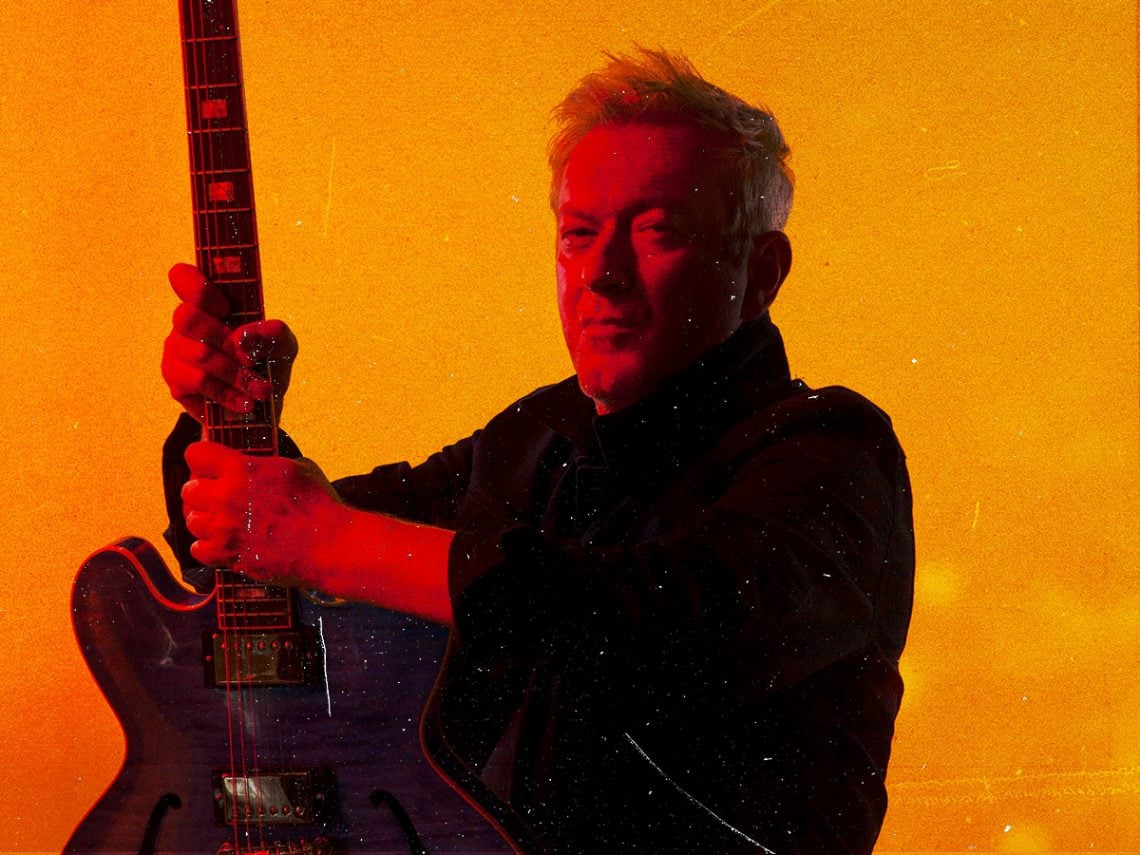
Gang of Four: Andy Gill’s six best guitar moments

Leeds quartet Gang of Four achieved great strides while influencing contemporary music. From popularising a situationist attitude to frontman Jon King’s flailing dance moves, their hallmarks feel omnipresent. Whilst there is a lot to love about the band, including King’s on-the-nose lyrics and the funky dynamics, much of the props have to go to the band’s late guitarist, Andy Gill. Gill is one of the most impactful guitarists the country has ever seen, even if his work often flew under the radar of the masses.
Tragically, Gill passed away in early 2020 due to pneumonia and organ failure. His wife, Catherine Mayer, suggested that he might have been an early victim of Covid-19 following a tour of China in later 2019. Understandably, there was an outpouring of tributes to the Manchester native, as Gill’s work on the guitar and as a producer is up there with the very best. Although there’s a lot to be said for his efforts behind the mixing desk, Gill’s work on the fretboard alongside King and the rest of the band deserves the most plaudits.
Whilst contemporaries like John McGeoch and Stuart Adamson were crafting a sound that leaned heavily on melodies, often drenched in chorus and phase, Gill used the guitar almost percussively. Whilst he dipped his toe into the world of effects, he used them sparingly and created an attitude-laden style that many new bands follow even to this day.
In many ways, Gill was the first true British indie guitarist, cultivating an angular, almost glacial sound that nodded to the work of Talking Heads and Joy Division whilst also accomplishing something new. It was primarily thanks to his flourishes on the six-string that Gang of Four stood out from the crowd, with records such as 1979’s Entertainment! and 1981’s Solid Gold remaining highlights from the era. There’s a strong argument to be made that if it wasn’t for Gill and the band, the contemporary post-punk movement wouldn’t exist as it does.
A pioneer by definition, Gill pushed the boundaries of the guitar to their limits, and in doing so, he became one of the most crucial alternative players of all time. There’s no surprise that the likes of R.E.M., Red Hot Chili Peppers and Nirvana have all effused about him and the group.
Join us then, as we list Andy Gill’s six best guitar-playing moments. We could have run wild with this, but instead opted for a handful of classics, so be warned, hardliners.
Andy Gill’s six best guitar moments:
‘Damaged Goods’ – (Entertainment!, 1979)
Perhaps the earliest moment in the history of dance-punk; without this, classic bands like Bloc Party, The Rapture and many of the other more dynamic indie outfits of the 2000s wouldn’t exist. Gill’s guitar playing is spiky and unrelenting, with his up-and-down rhythm dovetailing with the bass, and filling in the space it leaves behind.
Another indicator of Gill’s prowess in this song is how he doesn’t overdo it. He drops in and out for extra punch, which helps pull the listener back in.
‘Ether’ – (Entertainment!, 1979)
An early banger from Gang of Four, ‘Ether’ was the perfect opener of their 1979 debut album. In another masterclass from Gill, the main guitar line is one of his most aggressive, harking back to the glacial sounds of Joy Division’s Bernard Sumner, just much more active.
Providing a foil to the uptempo refrain of the track, Gill adds slightly dissonant notes in the bridge to create a palpable sense of tension and atmosphere that connects with the melodica in the final bridge before it crashes into the riff for one last burst.
‘Love Like Anthrax’ – (Entertainment!, 1979)
A personal favourite performance of Gill’s, this is one of the greatest guitar moments of the era. Complete with conviction and the artistic sensibility that underpinned all of his work, the way he uses space and effects here grabs the attention instantly.
Essentially art rock, the way Gill’s playing pans in and out in measured bursts of noise was far ahead of its time. Just note the drone he commands towards the end; no guitarist was creating soundscapes such as this at the time. No matter how elementary it might appear today, with listeners used to textural masters such as Kevin Shields and Nick McCabe, ‘Love Like Anthrax’ is a masterpiece.
‘Natural’s Not In It’ – (Entertainment!, 1979)
Gill’s riff is infectious on ‘Natural’s Not In It’. Even giving the funky works of Talking Heads a run for their money, it provides Jon King’s syllabic vocal melody with the foundation to detail the ills of a society obsessed with leisure.
Whether it be Blur, Franz Ferdinand or even The Rakes, Gill’s guitar tone in this piece is one that listeners would go on to hear throughout future British guitar music. In many ways, it is the definitive British guitar tone. Clean, punchy and unrelenting.
‘What We All Want’ – (Solid Gold, 1981)
There is an argument to be made that ‘What We All Want’ is Andy Gill’s finest moment on a guitar. Ominous and pulsating, it drives the track along in his traditionally scratchy way before he bursts through the mix with a dissonant, effects-laden riff to destroy the stability.
Gill flips between the melodic and dissonant on the track to full effect, heightening the tension with textures as Dave Allen’s bassline and Hugo Barnham’s rhythm repeat in a dark spiral. An almost gothic piece of music, it’s a testament to Gill’s skill that his licks can easily drive themselves into the prefrontal cortex.
‘He’d Send in the Army – (Solid Gold, 1981)
Another darker piece from the group, in the beginning, Gill leads the charge with the muted strums of his guitar. It then gives way to one of their more impactful rhythms and anthemic choruses. As the song trudges along on its almost dub rhythm, Gill does his thing, moving between his classic form of acerbic chords and pure dissonance.
He then heightens the quality of proceedings by introducing brief flecks of effects before delivering one of his best moments towards the end. This climax is noisy and funky, displaying everything great about the late guitarist.
