


‘The Last Viking’ movie review: A violent Scandi comedy about childhood trauma, IKEA, and beavers

Anders Thomas Jensen’s latest dark comedy, The Last Viking, opens with a fairytale about a Viking chieftain who insists that all of his subjects lose their left arms to preserve an equal society.
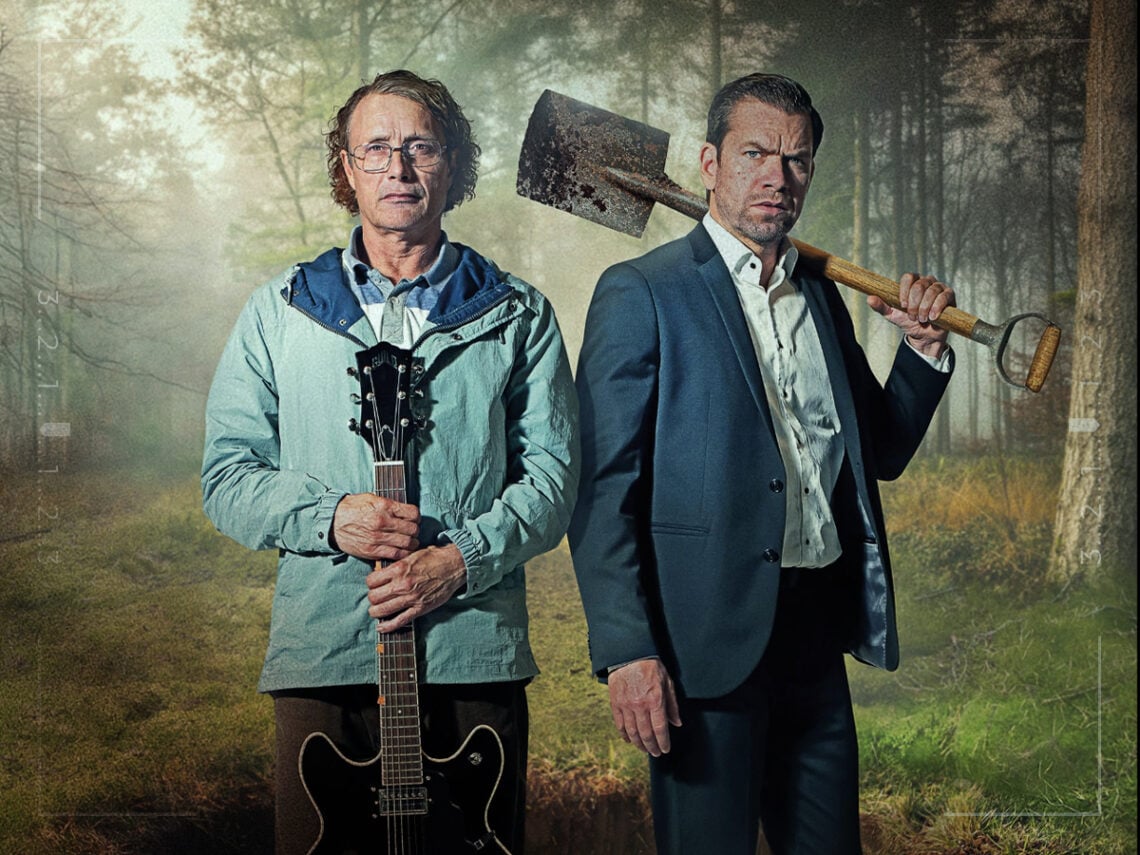
In a similar spirit, the rest of the movie is lighthearted and whimsical until it isn’t, featuring shocks of brutal violence, traumatic memory, and irredeemable cruelty. Like all great Scandi comedies, its humour hinges on bleakness and discomfort, and its plot has loyalties outside the classical Hollywood structure. It sees the Danish filmmaker reunite with his frequent collaborators Nikolaj Lie Kaas and Mads Mikkelsen, who play brothers bound by a harrowing childhood. Kaas is Anker, a bank robber who has just been released from a 15-year prison sentence and wants to find the suitcase full of money buried near their childhood home.
Mikkelsen is Manfred, a quiet, sensitive man who likes puzzles and believes he is John Lennon. Shortly before his arrest, Anker tasked Manfred with burying the suitcase, but more than a decade later, Manfred’s mental state is at odds with his brother’s mission. Living with their sister and signing autographs for neighbours, Manfred/John spends his time stealing dogs and jumping out of windows.
It is tricky territory to turn a character’s suicidal ideation into comedy, as anyone who has seen Groundhog Day lately can attest, but Manfred’s calmness, determination, and stoic imperviousness to pain become their own sort of levity. Crucially, we are also given a backstory to explain where the deeper pain is coming from. As a child, Manfred’s obsession with Vikings led to intense bullying at school and savage beatings from his father at home. Anker, who was tasked with protecting his brother from ridicule and his father from embarrassment, received even greater physical abuse.
Locked in this bitter past, the brothers are dysfunctional in middle age. Anker takes his rage and resentment out on Manfred, but has blocked the most traumatic incidents of their childhood from his memory. Manfred remembers everything, remains steadfastly attached to his brother, and takes up an alternate identity to escape from the horrible knowing of their past. Anker’s cruelty towards the largely silent Manfred is difficult to reconcile until we understand the scope of their early tragedy.
Perhaps you can guess where the plot is going from here – the brothers return to their childhood home to find the suitcase, finally air their mutual grievances in a cathartic blow-up argument, and unite in their mission. Finding the money, they run away together, leaving their trauma behind, both physically and emotionally, forever.
Except that is not what happens. A simple tale of treasure hunting and family reunification gives way the moment a psychiatrist from a mental institution suggests re-forming the Beatles with patients who identify as George, Paul, and Ringo. And when the brothers turn up to their remote childhood home, they discover a middle-aged couple who manage the property as an Airbnb and have their own latent bitterness to contend with.
The Last Viking reminds us that we are all a little bit mad, and that even the maddest among us are uniquely sane. From the psychiatric doctor, Lothar (Lars Brygmann), whose only frame of reference is IKEA, to Hamdan (Kardo Razzazi), who oscillates between Paul, George, Björn Ulvaeus from ABBA, and Heinrich Himmler of Nazi Germany, all of the characters live in a version of reality that has its own logic. When Manfred/John struggles to learn guitar, Paul-George tells him to think like a beaver. “Are they good at playing the guitar?” someone asks. “No one does it better,” he responds.
One’s capacity to love this movie will no doubt rest on their capacity to enjoy utter silliness alongside abject suffering, but it is no small feat to bring them together with the ease that Jensen does. The tragedy of the siblings’ childhood is Shakespearean in its dimensions, and it isn’t undercut with humour. The elements of comedy and tragedy stand on their own, and it’s up to the characters to reconcile them. It’s no wonder the result is so absurd. How else is one to cope with so much pain?
Ultimately, this is a story about strength in numbers, about accepting differences, and embracing wisdom and grace in all their cryptic forms. It is, as Lothar says about ‘With a Little Help from My Friends’, about a child getting lost in IKEA – about facing your biggest fears and finding solace in those around you. And severed appendages. There’s a lot of that, too.
