


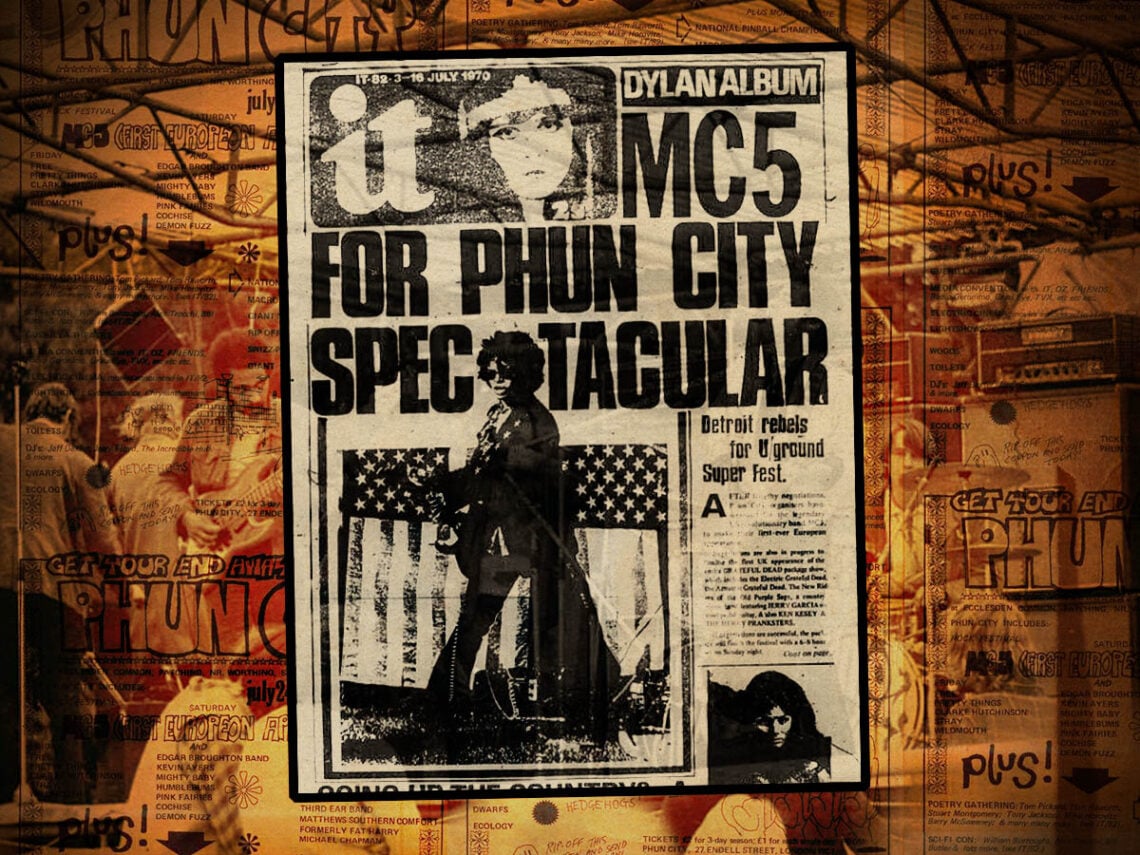
Anarchy in Sussex: when Phun City took over Ecclesden Common

“Phun City is attempting to provide a three-day environment designed to the needs and desires of the Freak, not just a situation set up to relieve him of his money,” boldly proclaimed one of the many underground adverts promoting Mick Farren’s ramshackle 1970 festival.
Farren lived and breathed the counterculture. Possessed with a staunchly anti-establishment spirit and political radicalism, the journalist and impresario would eschew the bloodless bloat that afflicted much of the 1960s’ prog legacy in favour of dwelling firmly in the realms of rock’s insurrectionary fire, which was supposed to clash with society’s upheaval. Fronting garage band The Deviants while juggling columns for the libertarian-left International Times and heading the UK’s White Panther branch, dissidence seemed to flow in Farren’s veins.
Naturally, the emerging free festival culture would pique his interest. There was some precedence dotted around the country, Cambridge and London’s Camden and Hyde Park hosted live happenings with no price for admission in the late 1960s, but Farren would dream up the first large-scale free even boasting a three-day programme. An old pupil of Worthing High School for Boys in West Sussex, Farren eyed up the nearby Ecclesden Common fields and woodland area to organise his jamboree befitting the era’s freak attacks on the ‘Man’.
Not that he intended the event to be strictly free. A slew of headaches hit Farren hard when realising his Phun City, West Sussex County Council managing to nab a High Court injunction ten days before kick off and spooking various financiers from the project.
Thankfully, field owner Mr J Fitzroy Somerset didn’t care about local opposition and allowed plans to go ahead on his land, with the injunction overturned and a last-minute cash injection from Radio Caroline honcho Ronan O’Rahilly saving the festival. Trouble was, the team had no money to hand to the arriving talent.
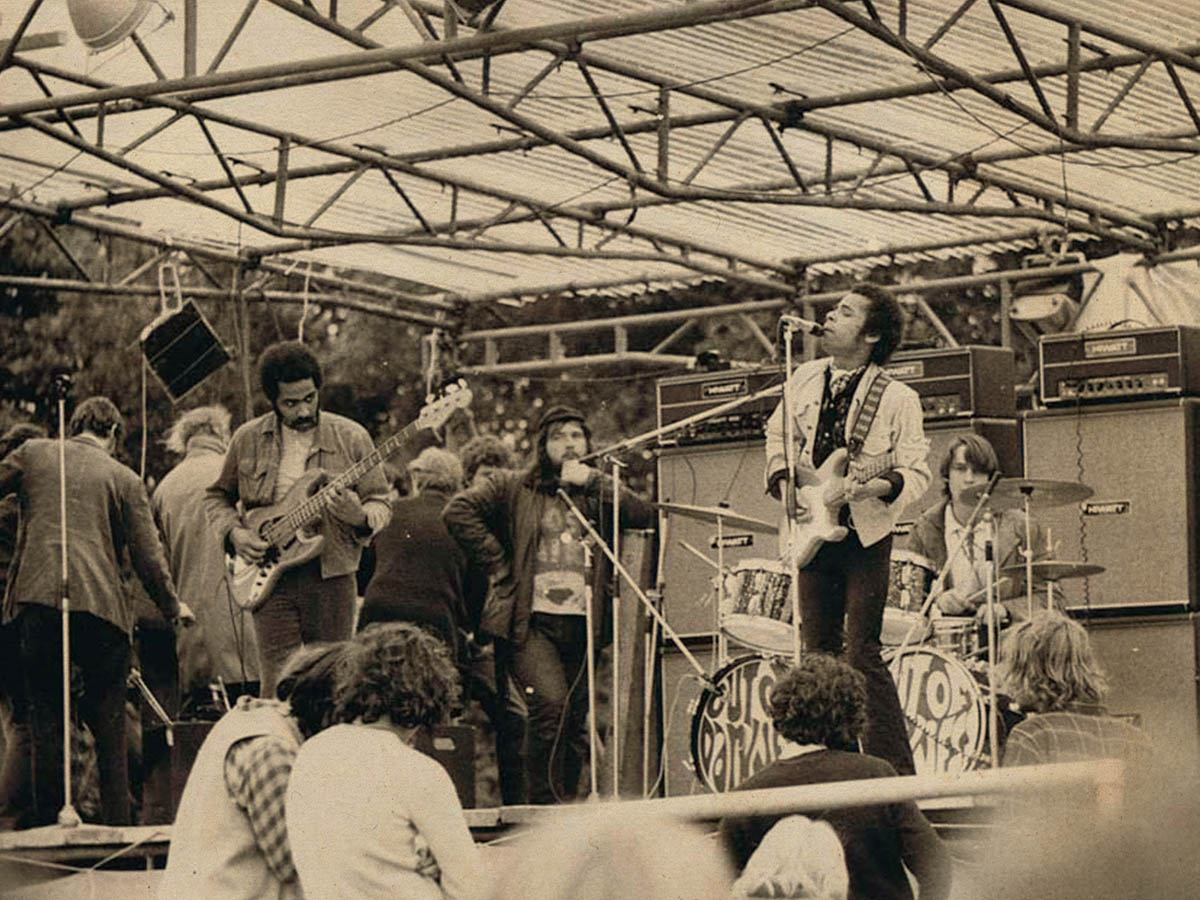
Due to the brief cessation of operations while the financial turmoil was grappled with, the Phun City team raced through ten days’ worth of set-up three days before opening day, resulting in a mad dash to build the essential resources for the stage as well as surrounding facilities, toilets, tents and the novel ‘shanty town’ nestled on the site’s forest. No time for fences meant no way of accepting fees, and so Farren had to inform the bands who turned up that their performances would be without remuneration.
Remarkably, the vast majority agreed. With Free being the only act on the bill to withdraw their slot, a fairly illustrious cohort all soaked up on the free festival spirit of the day and played their sets for free as scheduled across July 24th – 26th. Among the bill were Pretty Things, Soft Machine’s Kevin Ayers, Mungo Jerry, Farren’s formerly fronted Pink Fairies, who took their clothes off while playing, and remarkably, Detroit garage rockers MC5. Joining the day’s programme were also writers JG Ballard and William Burroughs as part of the ‘Sci-Fi Con’ talk, delayed as its inflatable dome failed to erect.

Through mishap and misadventure, Farren ultimately achieved his goal of a ‘people’s festival’ greater than if all had been financially secured and set up as planned. Phun City would prove a defining chapter of Farren’s lore, a potent plume of pure, unabashed creativity and alternativity anticipating both the new age travellers as well as punk’s insurrectionary fire only a few short years away.
A seed for many among the tens of thousands flocked to Phun City was sown. Billy Idol caught MC5’s set and claimed he “had just seen the future of rock,” and The Clash’s Mick Jones would also recount just how important the proto-punks’ live UK debut landed. “That was the first time MC5 had played,” he told John Robb in 2012. “My overriding memory was falling into a ditch! That was a great festival.”
