


How Amy Winehouse’s sweep at the Grammys showed everything wrong with the music industry

The glitz, the glamour, and the grandeur of an occasion like the Grammys is enough to cement the status of most artists for a lifetime. But in the case of Amy Winehouse, it also arguably broke her.
It was March 2008: Winehouse had just released her iconic sophomore album Back to Black, and from an outsider’s perspective, was all set to shoot to the stratosphere. Then came the night of the Grammys, where, as the events of the night unfolded, it became clearer and clearer that the life of the girl from London was never going to be the same again.
In classic style, the singer’s Visa to travel to America had not come in on time, so she was performing and tuning in via a satellite, from the early hours of the morning in London. While that may have dampened the occasion to some, it transpired to be the making of the magic that laced the electric air of that night.
Winning five awards in total, including ‘Best New Artist’ and ‘Best Pop Vocal Album’, it was a moment that stunned the world as well as Winehouse herself, as suddenly she assumed a status that wasn’t just of the everyday star, but a transcendental one whose impact would endure down the ages.
Yet through all the throngs of decadence that the night was steeped in, you could almost pinpoint it down to the very second when the singer felt the Earth move, and something forever changed in her soul. It was in the seconds after the late Tony Bennett announced her name as the winner of ‘Record of the Year’ for ‘Rehab’.

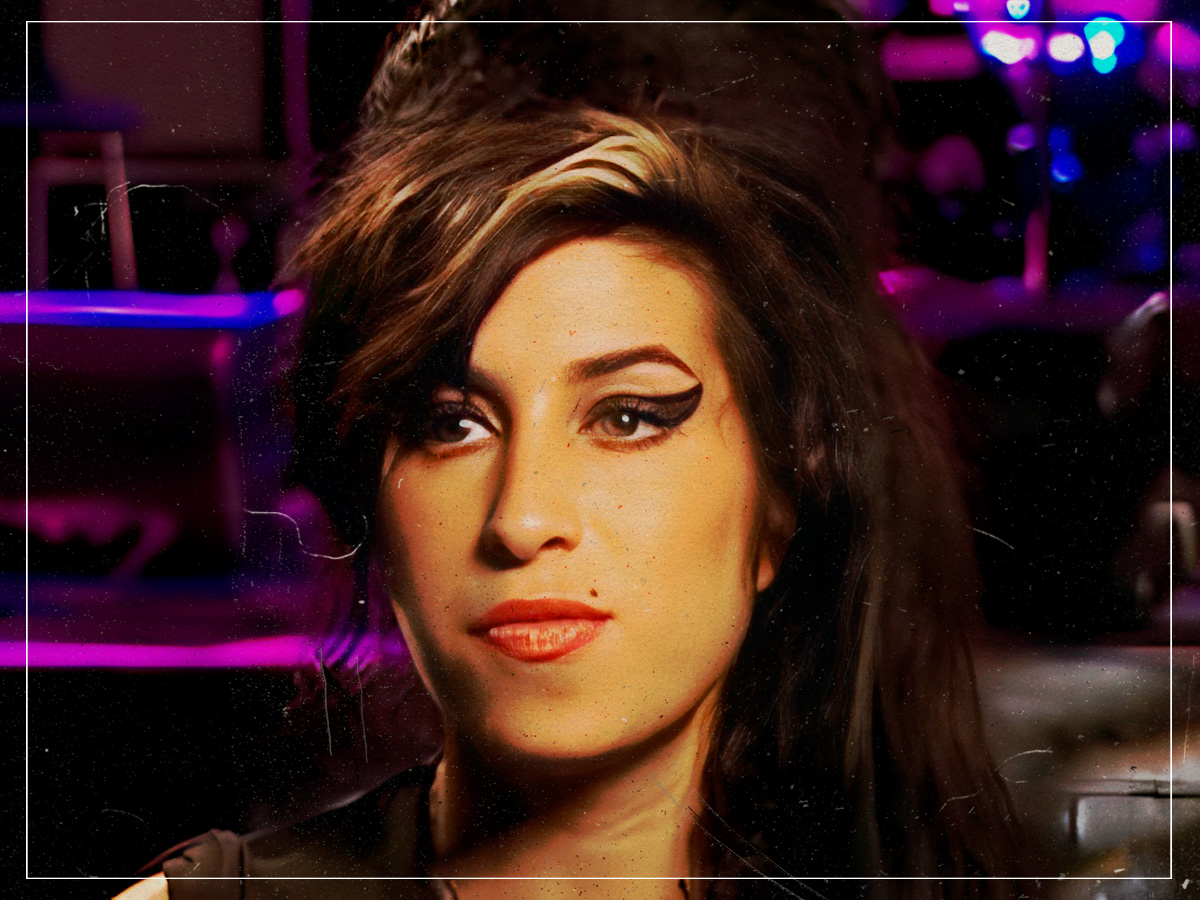
The room in London erupted, her band members leaping in the air, her parents rushing in to hug their daughter. Yet there Winehouse stood, right in the eye of the hurricane, dazed, bewildered, and completely stock still. Her mouth agape, her eyes wide open: if there was any picture which symbolised the definition of a rabbit caught in the headlights better, it might just be this.
That image is seared into so many pop culture consciences, not least my own, largely down to the sheer volume of emotion Winehouse conveys in that one stricken facial expression. It was shock, overwhelm, and even a little bit of fear all bundled into one spearhead of a moment, and you can see that she simply didn’t know what to do, stuck frozen in time.
In turn, it represents everything wrong with the music industry. To be clear, before I’m shot down in flames here, that problem is absolutely not with Winehouse. Yet in the sheer act of placing her on such a precarious pedestal, making sure the beadiest and most critical eyes of the world were always on her in her most vulnerable state, was she ever not destined to falter?
You could tell this much even from before the Grammys took place that year, with the singer struggling through the start of her 17-date tour at the end of 2007, marked by her alcohol use and full burnout. Live Nation released a statement when the dates were eventually cancelled partway through, saying she had been under “intense emotional strain” over the course of recent weeks to that point.
Was it really wise, then, to place a young star, evidently under so much pressure and battling her own demons, on the biggest platform she had ever been on, only mere months later? The answer to that one probably doesn’t need to be said. When sales of Back to Black once again rocketed after the awards streak, she simply once again became entrapped in that vicious cycle.
After the shine of the golden moment had thrown its last sparks, the foot was firmly put to the floor for Winehouse in terms of what she was expected to create – a highly anticipated third album, a new tour, every fan and label executive’s wildest dreams of single-handedly bringing the entire swinging sixties soul scene back to life.
That would be far too much strain to place on anyone, let alone a person whose issues with addiction and mental health were only too well-documented by the media over the course of the storm of the next few years. It comes as no surprise that her troubles only deepened, pulling out of performances, moods darkening, and her alcoholism enacting a tighter and tighter grip.
In the early hours of July 23rd, 2011, Winehouse had reportedly stayed up, watching footage of old performances and reminiscing about the glory years. Merely hours later, she was found dead from alcohol poisoning, aged just 27. With that, the bang of the fireworks had finally fizzled out.
From the night of the Grammys to that tragic ending only played out over the course of a breakneck three-year period, exhibiting the very highest point of musical ecstasy and its lowest ebb, all in one rushing ride.
Yet in the centre of the storm, that still, in some ways, rumbles on, there was the rabbit caught in the headlights at just 24 years old on that famous night in March 2008. It was clear that she was not equipped to deal with the world of fame, but equally, that world was also not ready to deal with the precious gift that was her.
