


‘Layla’ movie review: a slightly undercooked debut full of potential

We’re currently living in a world that, at least on the surface, allows people of all identities to thrive much more freely than in the past. Dating apps, gay clubs, close-knit queer communities, and LGBTQ+ performances and parades might have allowed those who identify with labels outside of society’s heteronormative expectations to feel more accepted and to find connection, but there are still a host of intricate issues that are experienced by people from marginalised backgrounds that can be incredibly hard to navigate.
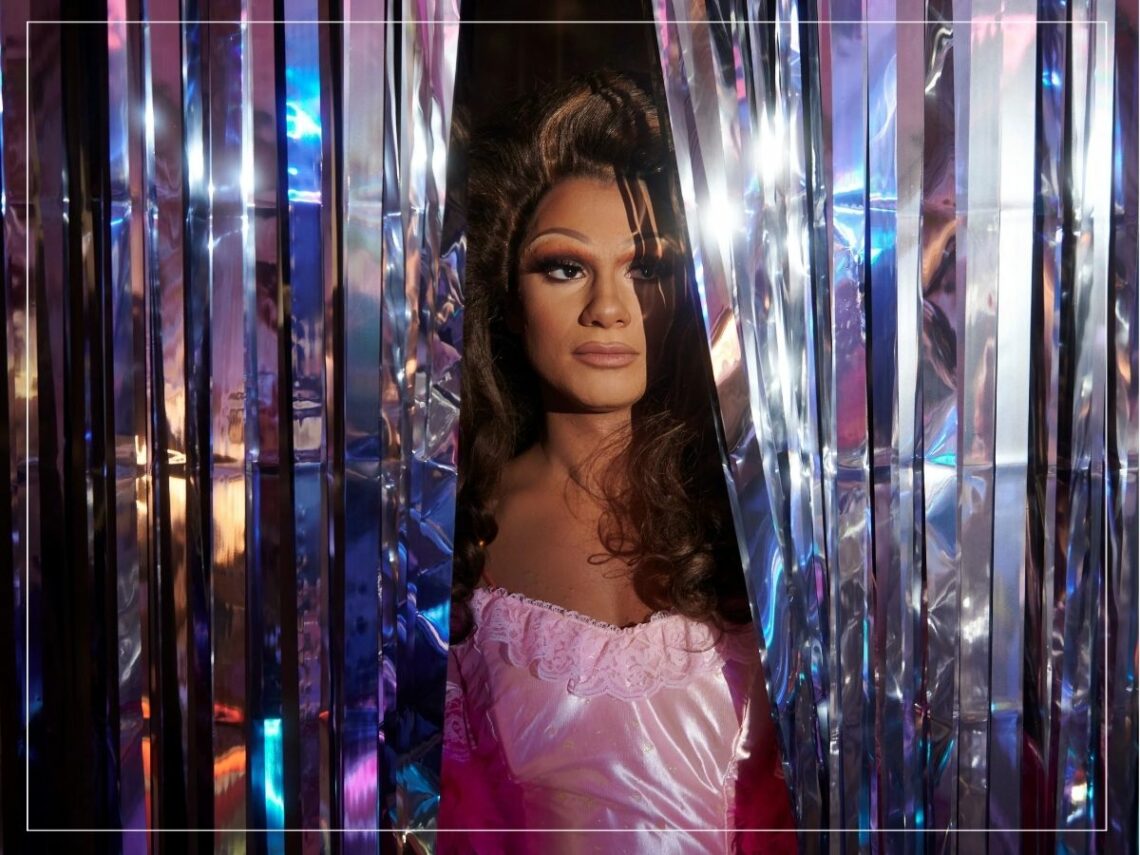
In Amrou Al-Kadhi’s debut feature, Layla, we follow a non-binary drag queen as they struggle to find a sense of harmony between their identity as a British-Palestinian person and their relationship with a white, straight-passing businessman, Max. When we first meet Layla in full drag, we’re introduced to their exuberant world full of sparkly clothing, long fake nails, countless wigs, and dramatic makeup. They live with their friends, all of whom are equally as flamboyant with their clothing choices – almost always sporting bright colours and eccentric pieces.
Here, Layla is at home, surrounded by people who have similar values and beliefs. Yet, after Layla attends a corporate pride event for a ready-meal company – where they are paid in boxes of free food to lip-sync in front of business people – they meet Max, who accepts their invitation to attend a much better party at a local gay club.
After transforming Max’s black long-sleeved polo neck into a club-ready crop top, the pair quickly connect and have sex on the rooftop, only for Layla to wake up and find Max has gone. Still, Layla falls hard for him, although the film never probes very deep into why they are attracted to someone so strikingly different and unacquainted with drag queens or even queer culture, despite Max being gay.
This lack of clarity continues as Layla visits home, where they wear traditional clothing and go by their birth name, Latif. We are instantly granted a peak into Layla’s complex world, where secrets sustain their identity. Yet, it remains just that – a small peak. Al-Kadhi doesn’t dig deep enough into Layla’s struggle between their non-binary, gay identity and their relationship with their family, culture, and religion, which leaves the film feeling a little half-baked.
Instead, the filmmaker mainly focuses on Layla’s difficulties in navigating a relationship with a white man who lives a completely different life, one that surely can’t be compatible with the glitter-soaked one that Layla immerses themselves in. Or can it? The film explores this dilemma interestingly, highlighting moments of pure joy and naive excitement that are felt when we meet someone we like before emphasising moments that paint a fuller picture, such as Layla’s friends acting hostile towards Max, seemingly an outsider, or Layla unable to call Max their boyfriend in front of their sister.
Yet, we are once again left with gaps in the story that prevent Layla from becoming as accomplished as she could be. For example, why does Max act a certain way before changing his tune without much of an explanation? Why does Layla walk away mid-confrontation multiple times? This can only be put down to moments of weak writing, where instances are brushed over in order to quickly move the narrative forward without dwelling on issues that, in reality, should require more attention.
Layla is a movie full of potential, and Bilal Hasna does a fantastic job of embodying both vivacious drag queen Layla and brooding, confused Layla-as-Latif. Louis Greatorex also delivers a charming performance as Max, trying his best to understand a world that, despite his sexuality, is so foreign to him. Still, you can’t help but wish there was a little more nuance within the depiction of Layla’s family life and religion and that the dialogue between Max and Layla was stronger at times.
However, Layla is still a fun and hopeful watch that spotlights issues and identities that are rarely given such love and attention on-screen. Movies like these are vital, exposing audiences to stories they might not have otherwise been familiar with or allowing people in similar situations to feel a little more understood.
