


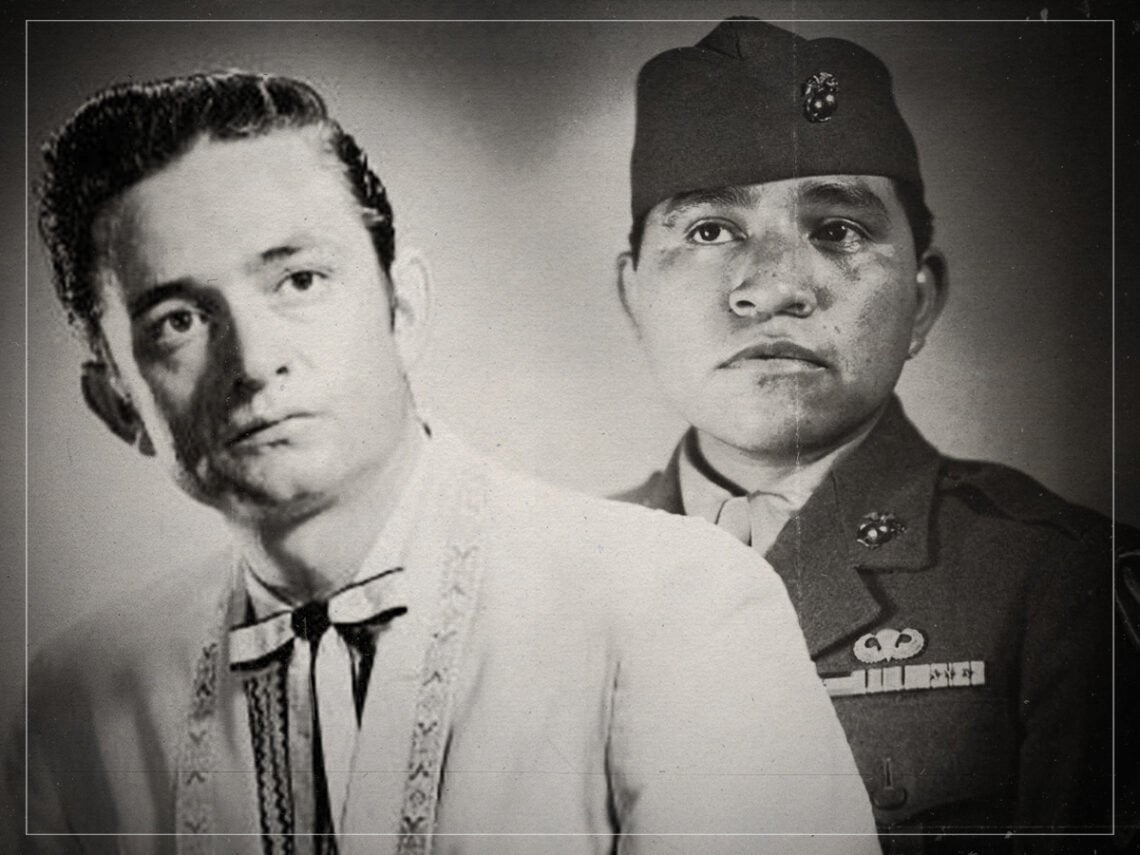
Ira Hayes: the American hero who inspired a Johnny Cash classic

Country music is a genre that has always been awash with a sense of American patriotism, and that certainly extended itself to the outlaw output of one Johnny Cash, whose brand of patriotism involved rebelling against the status quo and standing up for those whose voices were being routinely ignored.
Richard Nixon was one figure who mistook Cash’s love of his country for blind patriotism and support of the state. Upon inviting the ‘Man in Black’ to the White House in 1970, the then-president – soon-to-be crook – requested that Cash perform various ultra-conservative country songs. Instead, he performed a series of socially conscious masterpieces, including ‘What Is Truth?’ which summed up the attitudes and misunderstandings of the hippie age better than virtually any other song.
If Nixon had been paying attention to Cash’s output, that anti-authority streak at the White House perhaps wouldn’t have been much of a shock. Particularly during the politically tumultuous days of the 1960s, the country performer imbued a lot of his work with the kind of social commentary and activism that manifested itself in ‘What Is Truth?’. What’s more, he always maintained a specific view of American history that was often at odds with what the likes of Nixon might have preferred.
Back in 1964, the country outlaw exemplified that spirit with his album Bitter Tears: Ballads of the American Indian, which centred around the historic struggle of the Native American population. Whether it was the routine massacres of the ‘Old West’ or the disrepair and poverty of reservations that still continue to this day, Cash aimed to set the record straight with one of his most affecting albums.
For his part, Cash believed himself at the time to be descended from the Cherokee tribe and, although that later turned out not to be the case, his activism for Native Americans continued.
At the focal point of that 1964 album was Cash’s incredible, emotive cover of the Peter La Farge track ‘The Ballad of Ira Hayes’. An ode to one of the most heartbreaking tales of American heroism in history, Cash details the life of Hayes and how this bona fide hero was so poorly mistreated for his Native American origins.
Hayes served in the US Marines during World War II, including during the Battle of Iwo Jima, in which he became one of the six soldiers to have raised the star-spangled banner on Mount Suribachi – making for one of the most iconic photographs of the entire conflict.
Yet, when he returned home, he was met with the same mistreatment and oppression that had befallen First Nations since the white population first set foot on the North American continent. In 1955, at the age of just 32, Hayes tragically passed away, having fallen into the depths of alcoholism following his military service.
It was this tragic tale which initially spurred La Farge to pen the song, but Johnny Cash imbued that composition with a different kind of emotional depth, fitting perfectly into Bitter Tears as both an ode to the heroism of the Native American hero and as a stunning indictment of the treatment of those First Nations by the American establishment.
