


‘La Cocina’ movie review: Alonso Ruizpalacios weaves a pretty nightmare in a pressure cooker environment

You cannot make a blisteringly-paced drama about the horrors of working in a restaurant kitchen without drawing instant comparisons to The Bear, and there are many similarities between the Emmy-winning FX series and Alonso Ruizpalacios’s new movie La Cocina. They are both set in big American cities and centre on restaurants in which the cooks take their work exceptionally seriously. They both feature passionate, mercurial central characters dogged by demons. And they both want to make you, the viewer, suffer.
Unlike The Bear, however, La Cocina is a tale of exploited labour that walks an often unsteady line between real-world drama and poetic surrealism. The restaurant in question is The Grill, an upscale establishment in Times Square serving elevated American grub. Many of the workers are undocumented immigrants, and the owner uses this fact as a carrot and a stick, at times promising to get them their papers and others insinuating that he can have them deported.
Rooney Mara stars as Julia, a prickly server who is having a fling with one of the cooks, Pedro (Raúl Briones Carmona). Their relationship is a complicated one, the kind that is shrouded in red flags but has led to an unwanted pregnancy. Pedro wants Julia to keep the baby. He dreams of returning to Mexico with her to raise the child and even tells his monosyllabic father over the phone that he’s going to be a dad, never mind that Julia is adamant that she wants neither the child nor a serious relationship.
Their affair is an open secret in a restaurant teeming with tension. When the film begins, the front-of-house manager discovers that there is $800 missing from the cash register, the exact amount that Pedro gave Julia for the abortion he doesn’t want her to have. Max (Spenser Granese), another chef, is spoiling for a knockdown, drag-out fight with Pedro, who pulled a knife on him earlier in the week. And to cap it all off, the soda machine stops working mid-lunchtime rush, turning the floor of the kitchen into a sugary lake. All of this is framed, at least partially, through the eyes of a new employee, Estela (Anna Diaz), a young undocumented worker who grew up being terrorised by Pedro in their small hometown.
The centre of the movie is the nail-biting lunch service, which does, in fact, give The Bear a run for its money in terms of sheer discomfort. The cooks scream at the servers, the servers scream at the cooks, and the head chef screams at everyone. Meanwhile, Julia and Pedro argue over their relationship, alternating between aggressive flirtation, sex in the walk-in freezer, and abject rage and contempt.
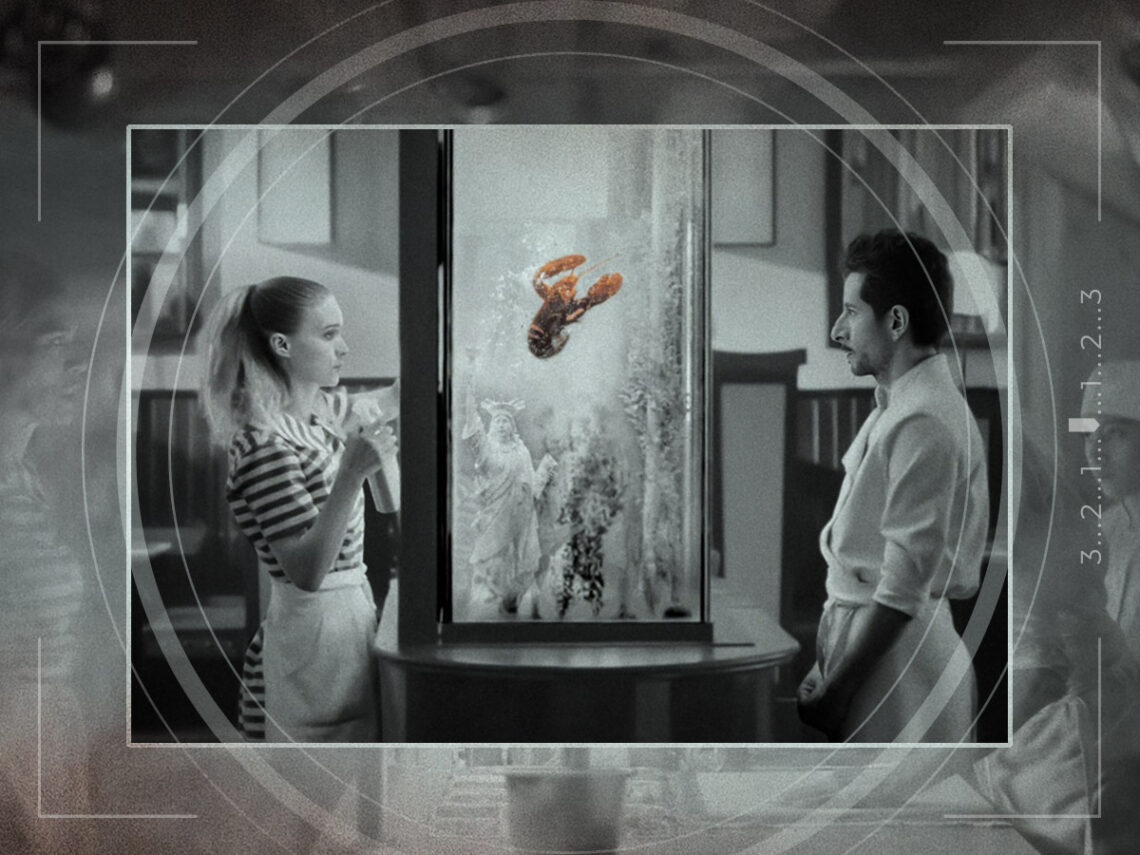
Shot in lustrous black and white with a few strategic flashes of colour, the film is often mesmerising, a feat of pure visual poetry that is at stark odds with the painfully real system of exploitation that it depicts. In one scene, Pedro and Julia stand on opposite sides of a large aquarium, where live lobsters are being dropped into the water. It is a gorgeous moment, luxuriously shot as if there was all the time in the world to be transfixed by its beauty. The framing is equally arresting, with characters occasionally appearing on the edges of the screen, marginalised by their surroundings. The restaurant itself is cavernous, with shafts of light making it look like a cathedral or a dungeon.
However, the relentless unlikability of Pedro, Julia, and nearly everyone else in the restaurant becomes grating after a while. It is a breath of fresh air for an undocumented migrant to be painted as anything other than a saint or a villain, but Pedro’s actions are so inconsistent that he ultimately does not come across any more real than a simplistic stereotype.
After two hours of meticulously ratcheted tension, La Cocina stumbles in the final act, veering away from the nerve-shredding (and relatable, for anyone who’s worked in a restaurant) pressure-cooker environment to the sort of melodramatic, no-holds-barred freak-out befitting a low-budget Nicolas Cage movie. For all its blending of visual poetry and real-world anguish, it undercuts itself at the final hurdle, leaving too many unanswered questions to be satisfyingly open-ended.
