


‘All the World’s Memory’: Alain Resnais explores the architecture of knowledge

The explosive legacy of the French New Wave would never have been complete without the unforgettably original works of Alain Resnais. Although Resnais didn’t conceptualise his filmography as a proper part of the New Wave, his work has come to define some of the more surreal experiments conducted by the radical filmmakers associated with it. That’s exactly why Resnais has retained his status as one of the most interesting filmmakers of the 20th century.
Resnais’ body of work is haunted by the concept of human memory, appearing as a recurring artistic concern that evidently plagued the director. Through masterpieces such as Hiroshima mon amour and Last Year at Marienbad, Resnais routinely examined the relationship between our collective memory and our imaginary frameworks for the past. However, the one Resnais film that is often overlooked during this discussion is his 1956 work All the World’s Memory.
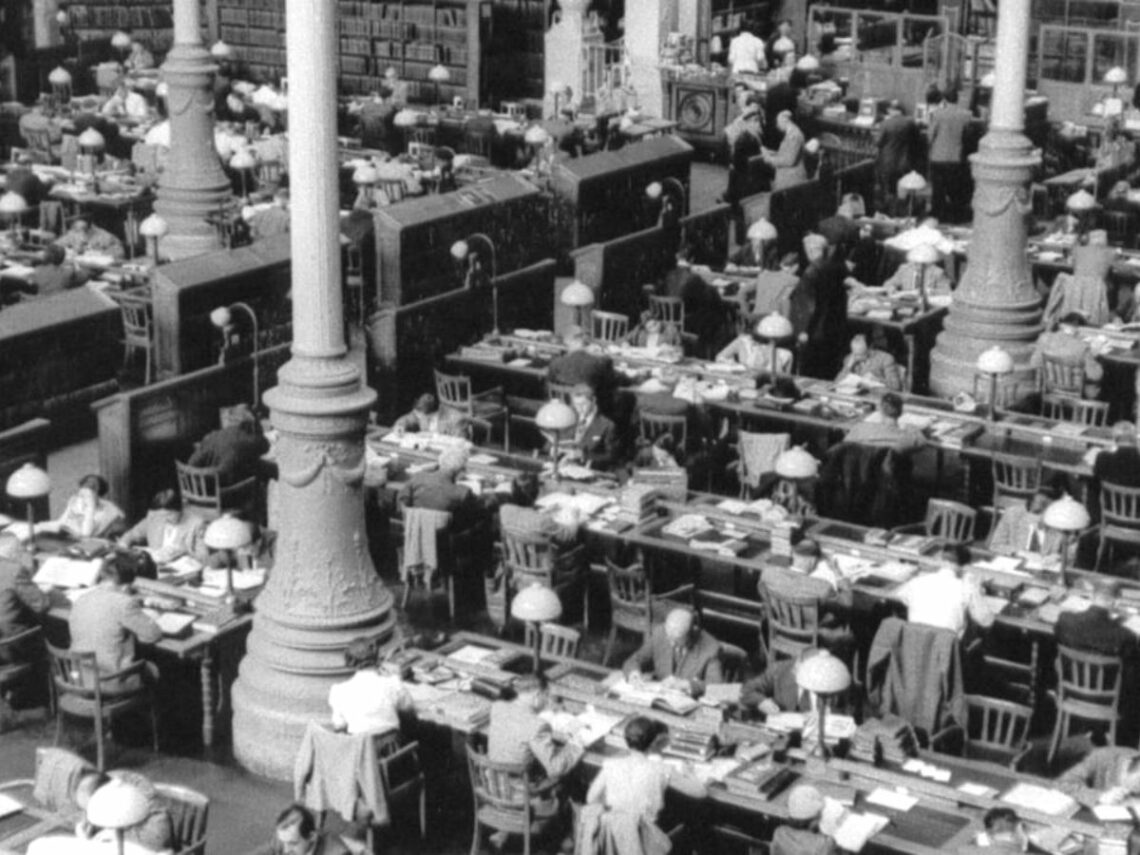
A wonderful documentary about the Bibliothèque Nationale in Paris, All the World’s Memory tries to understand our civilisation’s obsession with recorded history. It views the documentation of knowledge in archives and libraries as an immortality project, trying to combat the inevitability of the failure of human memory and our mortality. One of the major criticisms of Resnais’ work is a perceived sense of moral ambiguity, especially because many of his contemporaries were working within rigid political domains.
During a conversation with Artforum, Resnais said: “People who don’t like my work say it makes them uneasy and bored at the same time because they are never sure exactly of my point of view if I have a serious moral judgment to make. All I can say is that I make no moral judgments. I am just fascinated by human beings, by all the contradictions I can feel even inside myself. That’s what unconsciously could be—may be—reproduced on the screen. I am not sure of what I am telling you, but I can feel in a kind of fuzzy way, a foggy way, that we are nearing something that could be exact.”
Resnais’ critique of the cultural institution that is the Bibliothèque Nationale, is particularly interesting because he had a lifelong belief in art as a societal institution. In the same interview, the director added: “I have no faith in myself. I don’t believe in anything. I mean, anything religious. In things like that, I have no faith. But I have to admit that I have a total faith in art and beauty. I could say that all my films, especially the last ones, are a kind of critique of faith. But as I said, even though I imagine myself an unbeliever, I believe in art and in love, too.”
In All the World’s Memory, the Bibliothèque Nationale morphs into a monstrous entity whose organs are dedicated to the crystallisation of art and human experiences for future generations. While the physical archival process evokes a sense of nostalgia, Resnais’ film takes on a different form for modern audiences living in the internet era, where all our thoughts, feelings, desires, hopes and fears are rapidly being converted from analogue to digital.
Watch the film below.
