


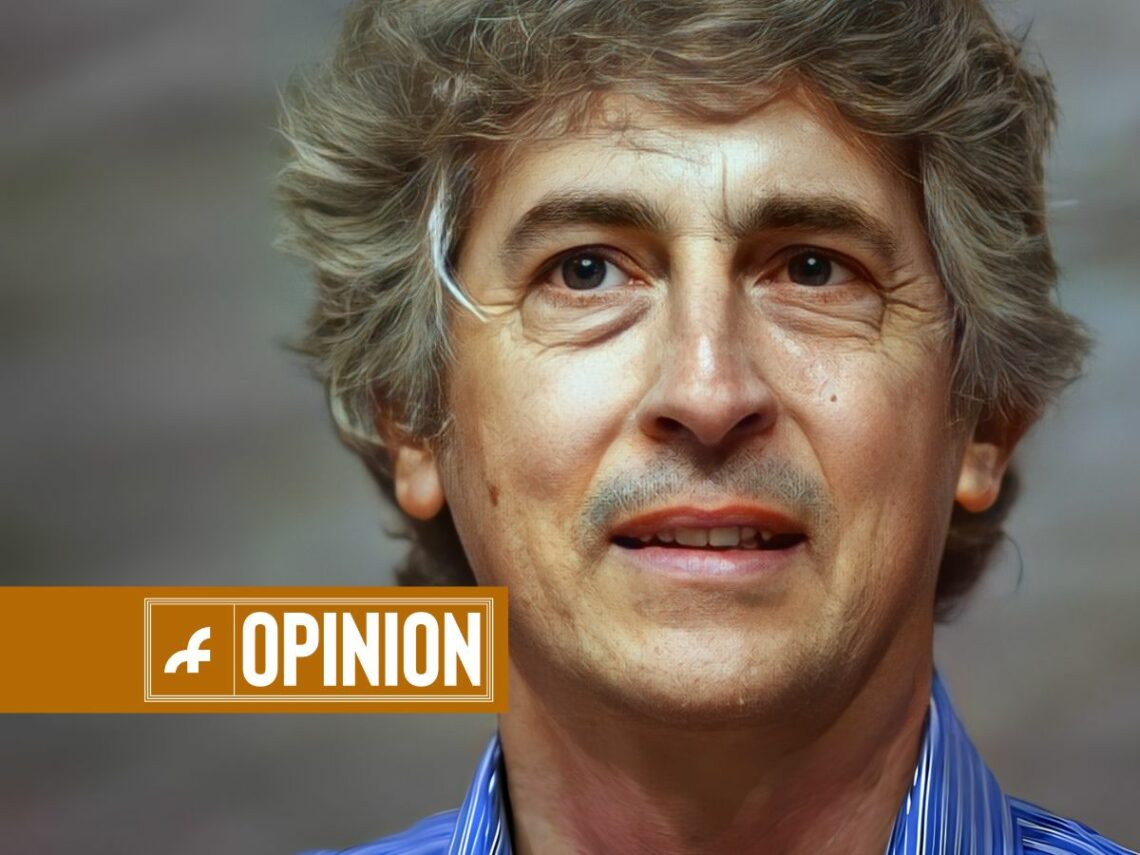
Hear Me Out: Alexander Payne is one of the most underrated filmmakers in Hollywood

Alexander Payne, a name that doesn’t quite echo in the halls of mainstream auteurism, has been quietly crafting some of the most profound, witty, and observant films for Hollywood in the last few decades. While he might not have the high-octane style of Quentin Tarantino, or the eccentrically visual oeuvre of Wes Anderson, Payne has honed an equally distinct and compelling cinematic language that defies simple categorisation.
His debut feature, Citizen Ruth, in 1996, provided the first glimpse of Payne’s capacity for infusing sociopolitical satire with human drama. It featured Laura Dern as a hapless woman caught in the crossfire of America’s abortion debate. Its humour was as sharp as its observations, and it set the stage for Payne’s ability to inject comedy into the bleakest of narratives. Over 15 years later, when promoting Nebraska, Payne told Time Out, “If I have to call my films anything, I call them comedies. I’m always looking for humour.” His first feature demonstrates this perfectly, finding the humour in an otherwise incendiary subject matter which still divides the nation to this day.
Three years later came Election, a film that retrospectively has gained a cult status but, during its release, fell under the radar. Starring a young Reese Witherspoon as the ambitious high school student Tracy Flick, the film was a scathing commentary on politics, ambition, and the failure of the ‘American Dream’, all set within the microcosm of a high school. This movie marked Payne’s mainstream arrival as a filmmaker adept at exploring the underbelly of American life with his trademark humour and insight.
It’s interesting and unfortunate that Payne’s work isn’t considered as singular as his other contemporaries. With his sophomore feature, the mixture of bitter-sweet tragic comedy heralded a clear artistic style that rivalled other auteurs. Second films are often considered watershed moments where a director forges their style. If Pulp Fiction and Boogie Nights proved that Tarantino and Paul Thomas Anderson were distinct in their storytelling, Election proved it for Payne even more.
In 2002’s About Schmidt, Payne masterfully used the road trip narrative to delve into the psyche of a man in the twilight of his life. Jack Nicholson’s character, Warren Schmidt, grappled with retirement, loneliness, and a life steeped in mediocrity. Despite its bleak themes, the film was punctuated with Payne’s characteristic wit, providing a study of the human condition that was both touching and humorous. The road movie formula harked back to Citizen Ruth in the way it used a journey to study its central character further, and Payne’s return to the form was nothing short of triumphant. It proved to be so fruitful, in fact, that he wisely decided to lean into the genre further with his next feature.
With Sideways in 2004, Payne delved deeper into the exploration of middle-aged ennui and disillusionment. Following the journey of two friends through California’s wine country, the film was a masterclass in character study, combining humour, drama, and a profound understanding of human nature. It was a categorical hit, earning Payne widespread acclaim and an Oscar win for ‘Best Adapted Screenplay’. And yet, for some reason, Payne’s auteur status remained underappreciated. Once again, unlike his contemporaries, it was the film alone that people were speaking about rather than the director as well. No one was excited about ‘the new Alexander Payne film’. To this day, I know of several people that cite Sideways as one of their favourite films, but barely any could tell me who was behind it.
In 2011, Payne returned with The Descendants, a deeply moving family drama set against the beautiful rolling vistas of Hawaii. The film presented George Clooney (in a genuine career best) as a cuckolded husband and inept father trying to reconnect with his daughters after his wife falls into a coma. If there was ever a film that boldly balanced humour and tragedy, it was this one. Only the most deft directors could show a scene featuring a comatose mother with sickly pallid skin and sweat-plastered hair, two sobbing teenage daughters and a shell-shocked father and then have the audience laughing by the end of it.
2013’s Nebraska, meanwhile, was a return to Payne’s midwestern roots, combining the road movie again with a black-and-white family drama about an ageing alcoholic father and his estranged son. Payne’s films have always looked beautiful in an understated and humble way, which is probably one of the reasons he’s not regarded the same as filmmakers with more obvious visual flair. However, Nebraska marked the first time he actively experimented with the aesthetic and made it a character, and the result was exquisite. The stark monochrome palette mirrored its characters’ bleakness and despair, bolstering a poignant exploration of generational divide and familial reconciliation.
Skip forward to 2017 and Payne ventured into science fiction territory with Downsizing. It was an ambitious satire on environmentalism and human greed, showcasing Payne’s willingness to step out of his comfort zone and take on new narrative challenges – but generally regarded as something of a dud. Whilst all of his previous films focused on tone, character and atmosphere, the problem with this one was how much it hinged on the conceit – to maximise their wealth, the characters opt for an experimental procedure which shrank them down to toy-doll size. It was smart but much too heavy-handed.
Despite his last film, Payne’s catalogue has consistently shown his keen eye for human idiosyncrasies, his flair for merging comedy with drama and hilariously astute observations of American life. As film enthusiasts, it’s time we acknowledge Payne not just as an accomplished director but as an underrated auteur who has been quietly contributing some of the best strands of contemporary cinema. The bottom line is, if we aren’t speaking about Alexander Payne in the same breath as Tarantino or Anderson, perhaps it’s high time we started. Let’s hope his upcoming 2024 feature, The Holdovers, will change things.
