


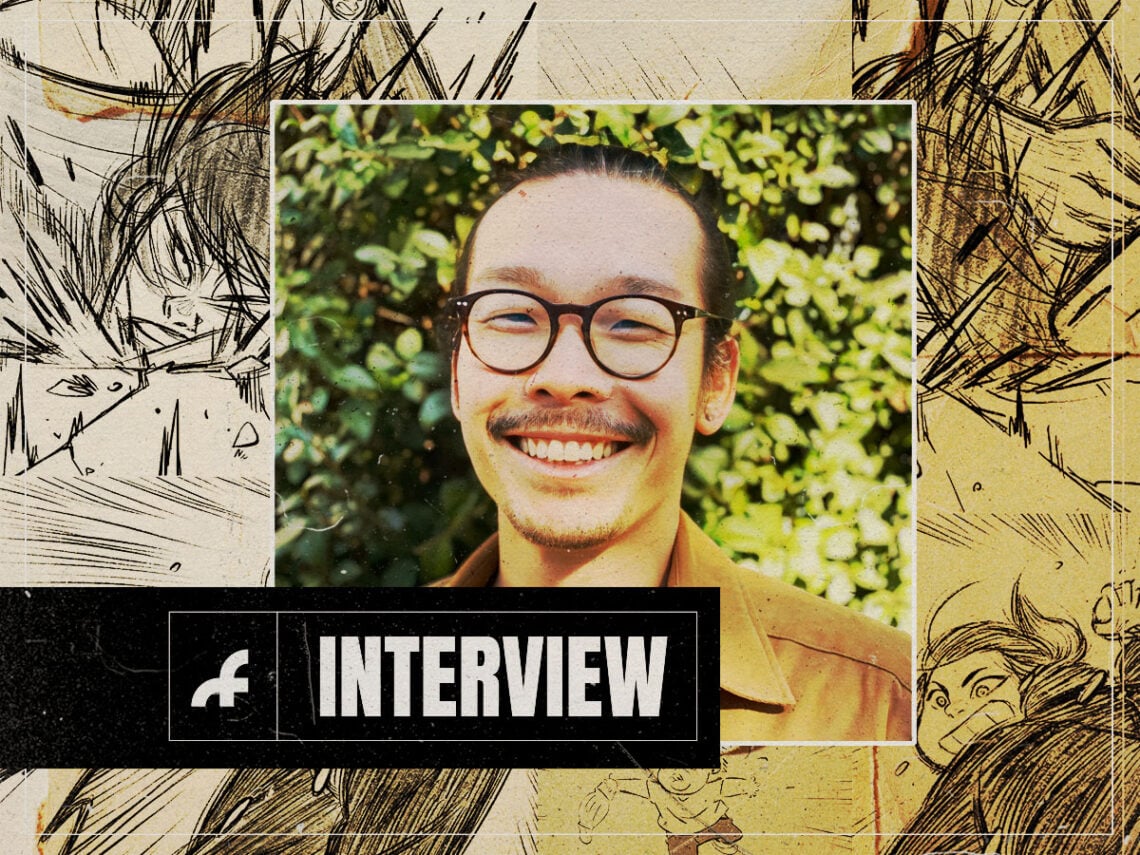
Animator Alex Teoh discusses hand-drawn animation “making a comeback” and the dominance of CGI

You only have to glimpse at a list of the highest-grossing movies of all time to discover that most contain animation and visual effects. Films such as Jurassic World: Fallen Kingdom, Star Wars: Episode VIII – The Last Jedi, Avengers: Endgame and Avengers: Age of Ultron all make the list. Yet, these blockbuster hits would not have been possible without the help of dedicated animators and visual effects maestros like Alex Teoh.
Not only has Teoh worked on all of the above, but he has lent his skills to projects like Jupiter Ascending, Ant-Man, and Terminator: Genisys, eventually becoming a senior animator at Industrial Light & Magic – the visual effects company founded by George Lucas. He has even shared his skills with budding animators, giving a masterclass at the Manchester Animation Festival in 2023. The efforts of animators frequently go under the radar, yet their contributions are vital factors in bringing many filmmakers’ ideas to life, elevating rough concepts into fully fleshed-out visual spectacles.
Teoh’s list of animation credits is highly impressive, yet this success didn’t come overnight. Before he attended college, he had dreams of becoming a comic book artist, telling me over Zoom, “Animation was not my first interest”. However, after the release of Toy Story in 1995, Teoh’s father suggested to him that animation was “the future”, leading him to reconsider his career plans. Teoh caught “the animation bug” during a college lecture about the creation of Disney movies, particularly 101 Dalmations and The Jungle Book, which “opened [his] eyes” to the potential of 2D animation. “Being someone who loves to draw, that really, really became a turning point for me,” he explains.
Teoh’s exposure to Disney (he much preferred anime growing up in Malaysia, where Disney films were “hard to come by” at the time) introduced him to the importance of illustration within animation. He subsequently focused his attention towards the “creative side” of the medium as much as possible. He found himself incredibly impressed by the “high quality” of old Disney animation, which “really inspired” him. Thus, Teoh “felt that the knowledge of understanding the creativity in a craft was the biggest thing” for him in comparison to “understanding the technical side”. Still, Teoh picked up many practical skills as he entered the world of animation, leading him to “incorporate a lot of technical knowledge” along the way.
Citing “a bit of luck and a lot of hard work” as the reason for his success, Teoh explains that after he graduated from university in Malaysia, he struggled to find opportunities due to a lack of studios that had “the same kind of quality that the visual effects industry had [in London].” However, when Rhythm & Hues opened up a studio in Malaysia, Teoh entered into their apprenticeship programme for nine months. After he graduated from the scheme, he was hired to create the computer-generated deer that ransacks Adam Sandler’s house in Grown Ups 2.
Following that, Teoh worked at Double Negative for two years before securing a place at Industrial Light & Magic. “I was really hungry to learn,” Teoh tells me, which gave him the confidence to reach out for advice from fellow animators. When starting out, his main goal was “absorbing everything and taking every opportunity” to learn from others before “applying it to the craft” he was so determined to excel in.
Since then, Teoh has worked with massive companies such as Marvel, who are responsible for some of the biggest box-office hits ever made. However, some critics have argued that Marvel relies too heavily on special effects. Teoh disagrees, believing that putting the blame on ‘too much CGI’ is often used as “a scapegoat” because it’s the most obvious aspect of a movie to criticise.

“There’s a lot more things that are involved that might be the reason [for a movie’s failure] instead of just pointing our fingers at CGI. I think it’s because it’s literally there,” he argues. Moreover, Teoh suggests that most people won’t actually notice the amount of CGI used in a movie if it also contains a “good story” and “good direction”. He adds that good CGI “almost feels invisible. [The audience] knows it’s there, but they can enjoy the film as it is”.
With the dominance of 3D animation sweeping our screens, I asked Teoh if he believes that 2D animation is on the decline. When Teoh started out with the desire to become a 2D animator, studios like Pixar, Dreamworks and Disney were “adopting 3D animation,” which, for Teoh and his fellow hand-drawn animation enthusiasts, felt like a “doom and gloom” situation.
Yet, Teoh feels like we have now reached a point where “2D and 3D can coexist together.” He explains, “People really enjoy it, and they’re starting to appreciate the art of drawing. I think hand-drawn animation is actually making a comeback.” Using the Netflix film Klaus as an example, which merges “traditional technique” with “modern technology,” Teoh argues, “It’s a great time right now because 2D and 3D are pretty much living in harmony.”
So, what are some of Teoh’s biggest inspirations, both 2D and 3D? He cites Dragon Ball as a seminal influence, helping to get him into anime, as well as swaying him towards animation rather than comic book illustration. Elsewhere, he picks How to Train Your Dragon as one of his favourite animated movies, “It’s just got everything in it,” he declares.
“And anything that has – it sounds so cliche – giant robots,” remains a go-to for Teoh, such as Transformers. He also loves Pacific Rim, describing the Hong Kong sequence as a deep source of inspiration. “Every time I feel like I’m stuck creatively, I always pull up those sequences on YouTube to use as a way to motivate myself and get going again.”
Throughout Teoh’s career, he has demonstrated a consistent eagerness to learn from others. That remains his most vital piece of wisdom – don’t be afraid to reach out to other creatives for advice. You never know what skills you might learn – and where they’ll take you.
