


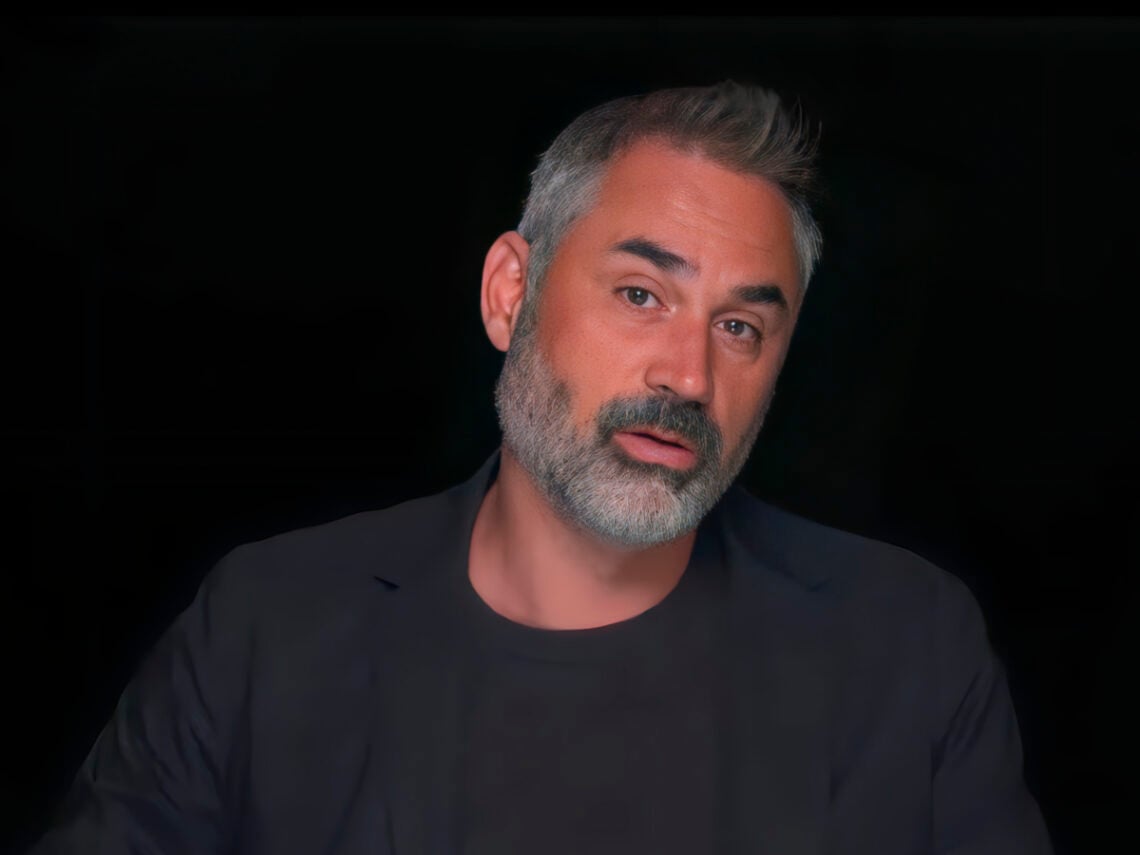
Alex Garland names his favourite anti-war movie: “It’s an extraordinary film”

At a time when it seems like most up-and-coming directors are selling out and making comic book movies, Alex Garland is a breath of fresh (though almost always unsettling) air. He specialises in a kind of creepiness that is very hard to put your finger on. It isn’t about slasher bloodshed, jump-scares, or monsters. It gets under your skin quietly, like a parasite you can’t get rid of once it’s wormed its way inside you. None of his movies are straight-up horror films, but all are terrifying in their own way, whether it’s Oscar Isaac’s calmly sadistic scientist in Ex Machina or the silent mutations in Annihilation that turn flora and fauna into things of exquisite beauty and monstrosity.
Perhaps his most unsettling films, however, are the ones that poke at the fabric of the modern world. 2024’s Civil War and 2025’s Warfare strike straight at the heart of America’s culture of institutionalised violence. In the former, Garland imagines a present-day conflict between the states that turns suburban dads into torturers and peaceful farmlands into mass graves. In Warfare, he takes viewers into the middle of modern-day war in all its senselessness, brutality, and unending trauma.
With this track record, it’s hardly surprising that Garland’s taste in war movies falls firmly into the anti-war category. In an interview with Letterboxd, he called out the 1985 Soviet film Come and See, one of the most harrowing stories ever committed to celluloid. “It’s an extraordinary film, but it’s also an anti-war film,” Garland remarked. “A lot of war movies might want to be anti-war movies, but they’re not really anti-war. And Come and See, that’s anti-war.”
Whether or not anti-war films actually exist is a topic of hot debate. François Truffaut famously argued that all films about war inevitably glorify rather than condemn it. Steven Spielberg, on the other hand, has argued that “every war movie, good or bad, is an anti-war movie”. The debate is going nowhere, and Garland’s consistent refusal to discuss the philosophy behind Civil War and Warfare has stoked its own mini-debate within this broader one. But if any movie is truly anti-war, it’s Come and See.
Set in Byelorussia in 1943, it follows the Nazi occupation of the territory through the eyes of a young boy. Director Elem Klimov took a novel approach to depicting the horrors of war, opting for a combination of documentary-level realism and surreality. The effect is a haunting, scarring nightmare of a film that conveys the experience of trauma so acute that it thrusts its victims into a state of hallucination.
Klimov based the film on the documented recollections of people who had survived the occupation, and he was perfectly aware that it was going to be a punishing, even unbearable, watch for some.
According to him, his co-writer Ales Adamovich, who had co-authored a book of first-hand testimonials about the occupation, responded, “Let them not watch it, then. This is something we must leave after us. As evidence of war, and as a plea for peace.” As they intended, it’s not an easy watch, but it is one of the most visceral feats of filmmaking ever realised.
