


‘I Never Loved A Man’: the classic album that marked Aretha Franklin’s rebirth

It is hard to envision a period in musical history during which Aretha Franklin wasn’t the ‘Queen of Soul’, particularly given the omnipresence that tracks like ‘Respect’ have been afforded in the multiple decades since her initial heyday. Back in 1966, though, Franklin was a failing vocalist recording jazz standards for Columbia Records.
Franklin’s otherworldly vocal talents were always evident, even during her childhood days singing gospel music in local churches. However, that incredible voice wasn’t always utilised to the best of its ability, which is something that became increasingly evident during her doomed period at Columbia Records. Having signed to the label in 1960, after turning down an offer from a then-unknown label called Motown, Franklin presumed that Columbia would be her gateway to mainstream recognition, but it didn’t quite work out like that.
Despite being one of America’s largest, most powerful, and best-established record labels, Columbia didn’t seem well-equipped to traverse the changing landscape of popular music. So, while the aforementioned Motown began dominating the singles charts of the 1960s with their soul and R&B excellence, and the likes of Stax, Atco, and Chess finding similar success with that cutting-edge funk and soul sound, Columbia was still confining Aretha Franklin – arguably the greatest soul voice of all time – to recording old-fashioned standards and doo-wop records.
With little creative control over her output and a multitude of failed records, Franklin’s career was rapidly failing, and she risked becoming one of the countless soul obscurities of the 1960s. That was, of course, until she was rescued from the Columbia roster by Jerry Wexler and Atlantic Records, who allowed the vocalist to play to her strengths for the very first time.
Her induction to the Atlantic family in 1966 was famously chaotic, revolving around a night of drunken arguments at Muscle Shoals in Alabama that miraculously produced the single ‘I Never Loved a Man (The Way I Love You)’ in the midst of the conflict.
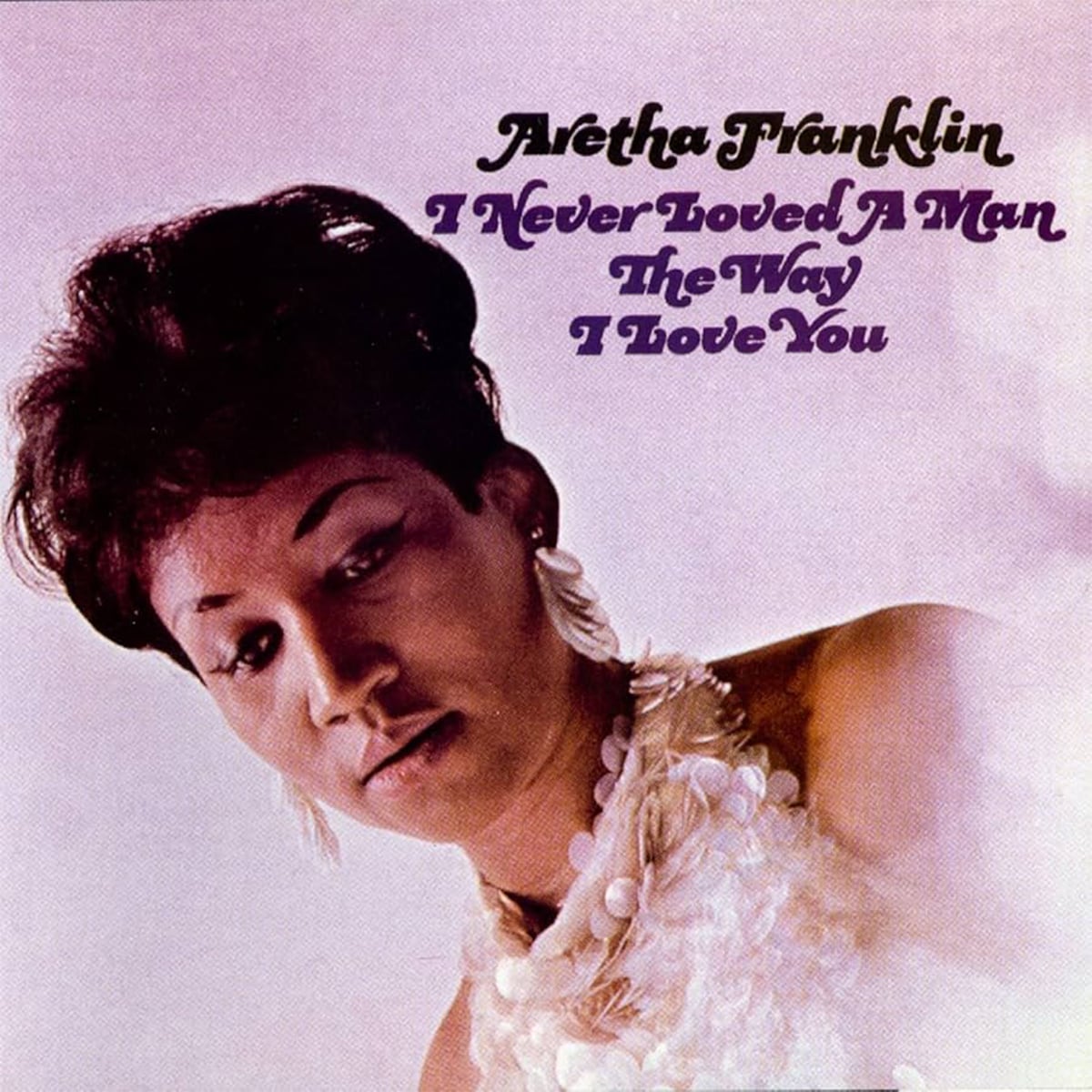
That single, much to the surprise of Franklin herself, quickly went on to top the R&B charts and earn the vocalist a top-ten pop hit in the process. At long last, Aretha Franklin, the ‘Queen of Soul’, had arrived. It wasn’t, however, until the album of the same name arrived in the spring of 1967 that Franklin’s masterful output truly cemented itself in the musical realm.
I Never Loved a Man (The Way I Love You) is perhaps the greatest debut album of all time, which is a particularly impressive accolade when you take into account that it was actually her tenth studio album up to that point. Nevertheless, it reflected the birth of an entirely new artist, worlds apart from her Columbia-era output, and firmly on the cutting edge of soul.
Inevitably, the bulk of attention afforded to the album is pinned upon its title track, or the defining single that supported the record, ‘Respect’. While those two tracks are undeniable masterpieces that remained defining moments for Franklin right the way through her illustrious career, the entirety of the album’s tracklisting is utterly flawless.
From the original Franklin-penned efforts to her incredible covers of Sam Cooke, Otis Redding, and Ray Charles, the album not only exemplified the masterful talents of Franklin, but it also showed the kind of star power that had been utterly neglected at Columbia. At her original label, she was a struggling singer failing to gain a foothold, but as soon as I Never Loved a Man (The Way I Love You) hit the airwaves, it became immediately evident that Aretha Franklin was going to be sticking around for many more years to come.
A multitude of other masterpiece albums followed in the wake of that inaugural effort with Atlantic, each adding an entirely new layer of appeal to Franklin’s distinctive, transformative sound. Throughout it all, though, her 1967 effort remained a cultural touchstone that not only marked the arrival of one of America’s all-time greatest vocalists, but arguably marked the peak of the nation’s soul scene.
