


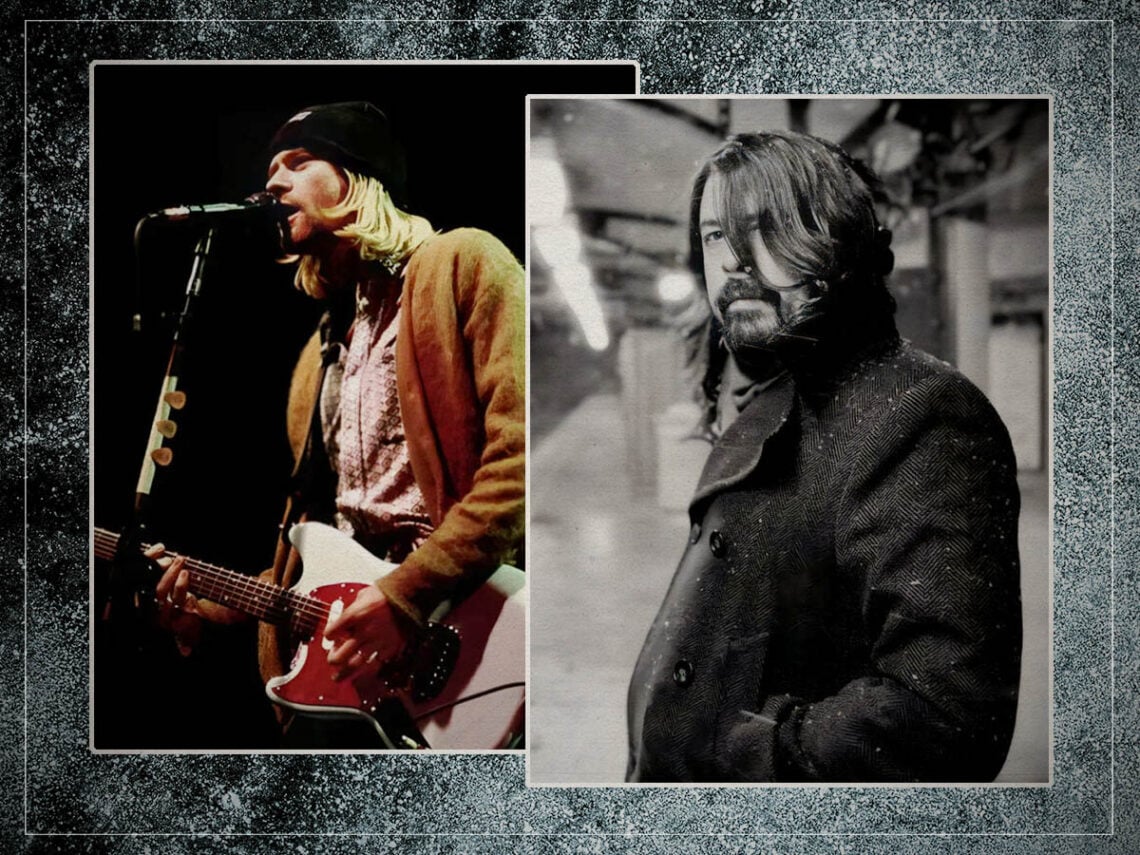
The album that got Dave Grohl through Kurt Cobain’s death: “I couldn’t even listen to music”

Kurt Cobain’s death tore Dave Grohl to pieces, and for a while, he didn’t know if he’d ever recover. The two musicians weren’t just bandmates in Nirvana—they were close friends, with Cobain being the first to truly believe in Grohl’s songwriting ability. After losing him, Grohl turned his back on music, finding it too painful a reminder. But, as always, it was music that eventually saved him.
On April 5th, 1994, Cobain tragically passed away when he was only 27 years old. Everybody who knew the singer was devastated by his loss, as were millions of mourners his music had touched. Grohl hadn’t only lost one of his closest friends but also Nirvana, which acted as an anchor in his life.
For several months, Grohl was aimless and spent his life trying to avoid any reminders of his previous band. Slowly, the Foo Fighters frontman began to dip his toes into the world of music again and even appeared on Saturday Night Live in the backing band for Tom Petty.
Following that performance, Petty asked Grohl to join him full-time. However, the former Nirvana drummer had already committed to a solo project, a little seedling of an idea which became Foo Fighters. But if it weren’t for one album that reignited Grohl’s passion for music, the Foos would never have come to exist.
Speaking about that torturous time with NME, Grohl named The Voluptuous Horror Of Karen Black’s album A National Healthcare as the one album that allowed him to heal as he grieved Cobain’s death. The band was fronted by Kembra Pfahler and released three albums, with their final LP arriving in 1998.
A National Healthcare was the band’s debut record, featuring Pfahler’s then-husband, Samoa Moriki. The album arrived as a God-send to Grohl, and from the darkness, he began to make his way back to the light.
“For a while, after Kurt died, I couldn’t even listen to music,” Grohl painfully remembered. “I hated turning on the radio for fear that I’d hear a Nirvana song or any sort of sad music. Anything melancholy just made me so depressed. I would listen to shit like Ace Of Base. I got really into that! I was listening to some really ridiculous shit. But I had a record called A National Healthcare by a band called The Voluptuous Horror Of Karen Black that I particularly remember.”
The album is a discordant fusion of punk, glam, and noise rock with social commentary and satire. The lyrics wallow in black humour, absurdity, and irony and address such issues as politics, gender, and consumerism with grotesque, over-the-top intent. The production is low-fi and primal in design to suit the band’s “availabilism” aesthetic—using what’s at hand to create without concern for sheen or convention.
Pfahler’s voice is half snarl and half chant, sung with a theatrical quality to it, and music that’s dense and grating and relentless. The record does not aim to have mass popularity in its crosshairs; it’s in your face and defiantly other. It’s more performance than slick product—recording of a band pushing boundaries and making a display of rebellion. The album’s cult material is admired for refusing to play by rules and embracing fearlessly that which is grotesque as a means of expression.
Grohl, further explaining how the album helped him through, added: “They were this sort of New York performance art band and were great. I remember Frank Black’s ‘Teenager Of The Year’ came out that year around that time, that was a really great record. The Jon Spencer Blues Explosion record ‘Orange’ came out around the same time, that was another great record. That was a funny time with me musically because I just didn’t really want to hear any music. Then I realised, ‘Oh wait, it’s music that’s going to heal me. What am I doing? I should be listening to music. I should be making music that will make me feel better’. And it did.”
From there, music shifted from being a source of fear for Grohl—a constant reminder of what he’d lost—to a kind of remedy, something that helped him reconnect with the sanctity of life.
