


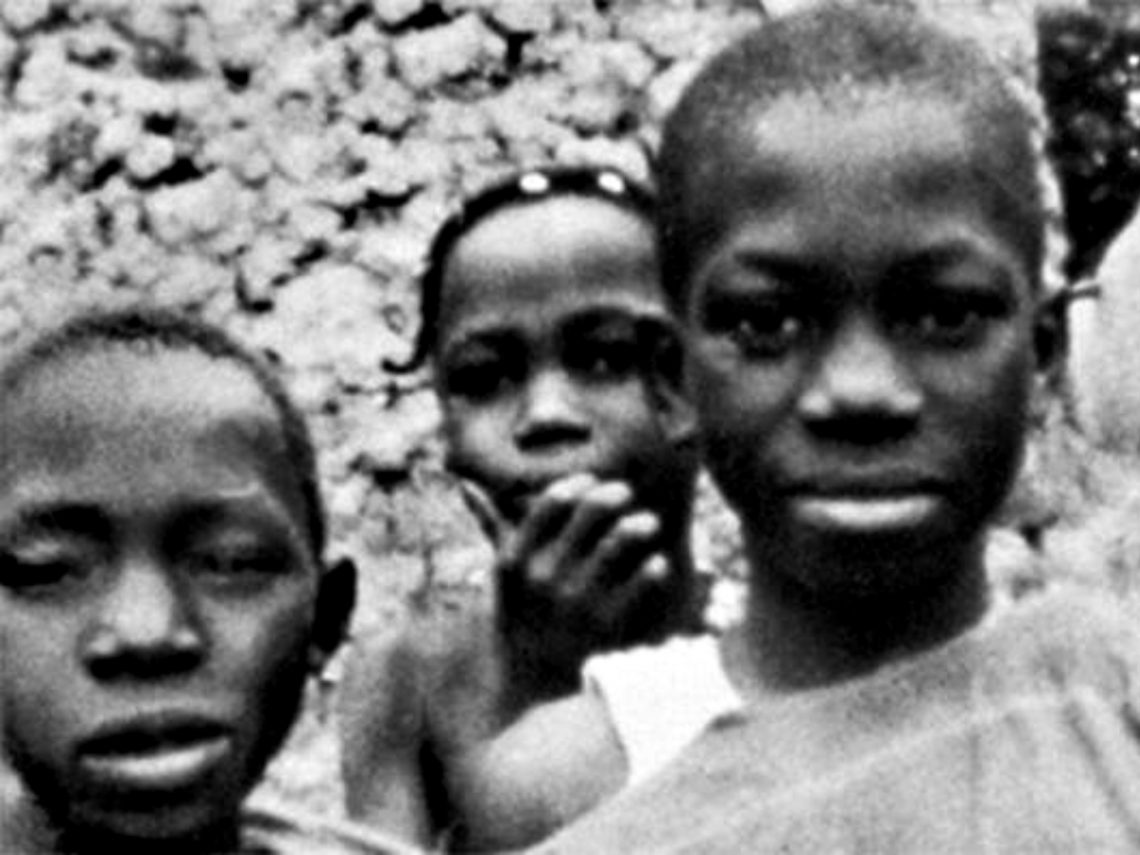
‘Afrique 50’: The first French anti-colonialist film

In the context of the early history of African cinema, the camera can only be seen as a colonial apparatus. Western filmmakers routinely filmed African subjects as the ‘Other’ to entertain audiences back home, augmenting a fundamentally racist visual discourse. René Vautier’s Afrique 50 represents an important disruption to that discourse.
Vautier had a strong political consciousness since his early years, having joined the French Resistance during the Second World War when he was just 15. A graduate of the Institut des hautes études cinématographiques, he made a splash with his first film – a short 1950 documentary which had a staunchly anti-colonialist vision.
Interestingly, Vautier was initially assigned to make a film about the “positive effects of colonisation” – an impossibility. Although they wanted him to document the educational mission of the French League of Schooling in West Africa, Vautier naturally only noticed the blatant exploitation and the unimaginable violence perpetrated by the colonial regime.
According to the director, he felt it was his duty to address the “lack of teachers and doctors, the crimes committed by the French Army in the name of France, the instrumentalisation of the colonised peoples.” The result is still a product of the colonial gaze, but it remains an important addition to the corpus of African cinema.
Subverting the initial objective of highlighting the “positive effects”, Vautier documents the repressive actions of the colonial oppressors. Ranging from the massacres that destroyed entire villages to the endless exploitation of African labourers, Afrique 50 does not hesitate to hold up an unforgiving mirror to French brutality.
One of the interesting elements of Afrique 50 is the constant juxtaposition of European technology and the hypocrisy of the colonial regime. Replacing technological progress with cheap labour and enforcing a ruthless taxation scheme, the consequences of colonisation are on full display in Vautier’s film, and they do not resemble the “positive” fabrications of Eurocentric propaganda.
While presenting his images of resistance, Vautier declares: “This is not the official image of colonisation.” Although he was thrown in prison for Afrique 50 and the film was banned for more than four decades, its legacy lives on.
Watch the film below.
