


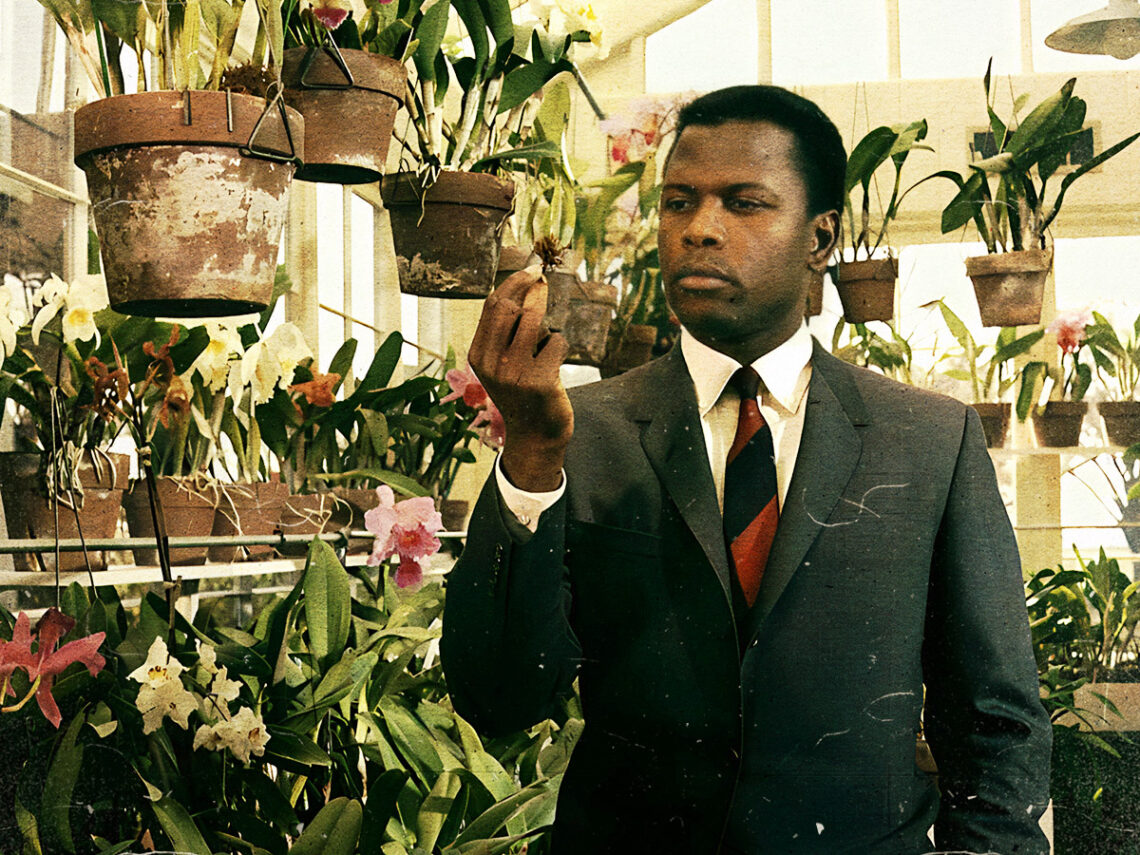
The actor Sidney Poitier called one of “the best that ever lived”

By many metrics, Sidney Poitier changed Hollywood forever, partially through his role in the 1967 movie Guess Who’s Coming to Dinner?, a film that is perhaps one of the greatest junctures in cinematic history. A relationship between a white woman and a black man was portrayed in a positive light, with a happy ending to a mainstream audience for what is largely considered to be the first time ever. And it came just months after Loving vs Virginia.
Previous to that, he had been the first black man to be nominated for an Oscar and went on to become the first black man to win the Oscar for ‘Actor in a Leading Role’ in 1964 for his role in James Poe’s Lilies of the Field. Though there is, of course, still work to do in terms of diversity and presentation in Hollywood, the importance of Poitier’s work can’t be understated. Barack Obama even presented him with the Presidential Medal of Freedom in 2009.
As the man responsible for so many moments of progress in Hollywood, Poitier’s words on the subject of racial diversity in cinema hold an enormous gravitas, but it’s also clearly something he’s spoken about a lot. When asked in 2002 if he was satisfied with the progress Hollywood had made in this direction, that experience was immediately evident:
“Well, your question is valid, but partially loaded, in that you can see, as well as I can see, that there has been change,” immediately flipping the script on the interviewer. “And I think to speak of Hollywood as if there has not been a change is unfair. You can question the pace of it. You can even question how long it will last. But you must first take note of the fact that there has been change.”
Poitier’s realism and perspective are the kind that come from a long career in Hollywood on the front lines of change. Where the interviewer wants an answer that condemns Hollywood for not doing enough, that kind of negative mindset isn’t feasible for Poitier to hold. In these contexts, change is never enough, but positivity and acknowledging the progress that has been made are essential.
“Denzel Washington,” who has credited Poitier with career-making advice in the past, “stands shoulder to shoulder with the best actors that ever lived for my money,” continues Poitier. Washington has, of course, given us some of the great performances of our time, as John Creasy in the revenge thriller Man on Fire, the troubled heroic pilot in Flight, and the titular Eli in the spectacular post-apocalyptic epic The Book of Eli.
“Morgan Freeman stands as one of the best actors in the world. Wesley Snipes is an extraordinary actor. Larry Fishburne is a great actor. We have lots of African American actors.” Ever humble, Poitier fails to point out that all of these actors would have grown up watching his films and no doubt been inspired by his work.
Poitier goes on to credit his own success to fortuitous timing, again playing down his own talents as an actor: “Now, when we didn’t have any, I appeared. Not because I brought so much but because the time was right, the circumstances were right. The world was at a certain place and my career happened to catch hold at that time.”
Like any great actor who has affected significant change in the film industry, Poitier maintains his focus on the future. “I am hopeful that there will be minority actors, not just African American or Hispanic or Asian, but a real diversified Hollywood in the future,” he said. “Certainly, if not in mine, because my days are numbered, but in yours and your children’s.”
His days were perhaps not as numbered as he thought, living another 20 years after these comments, ultimately passing on January 6th, 2022. Still, he leaves behind a legacy that brought into being the careers of the greats that he named. If the diversified Hollywood that he dreamt of does come to pass, he certainly played a pivotal role in the creation of it.
