


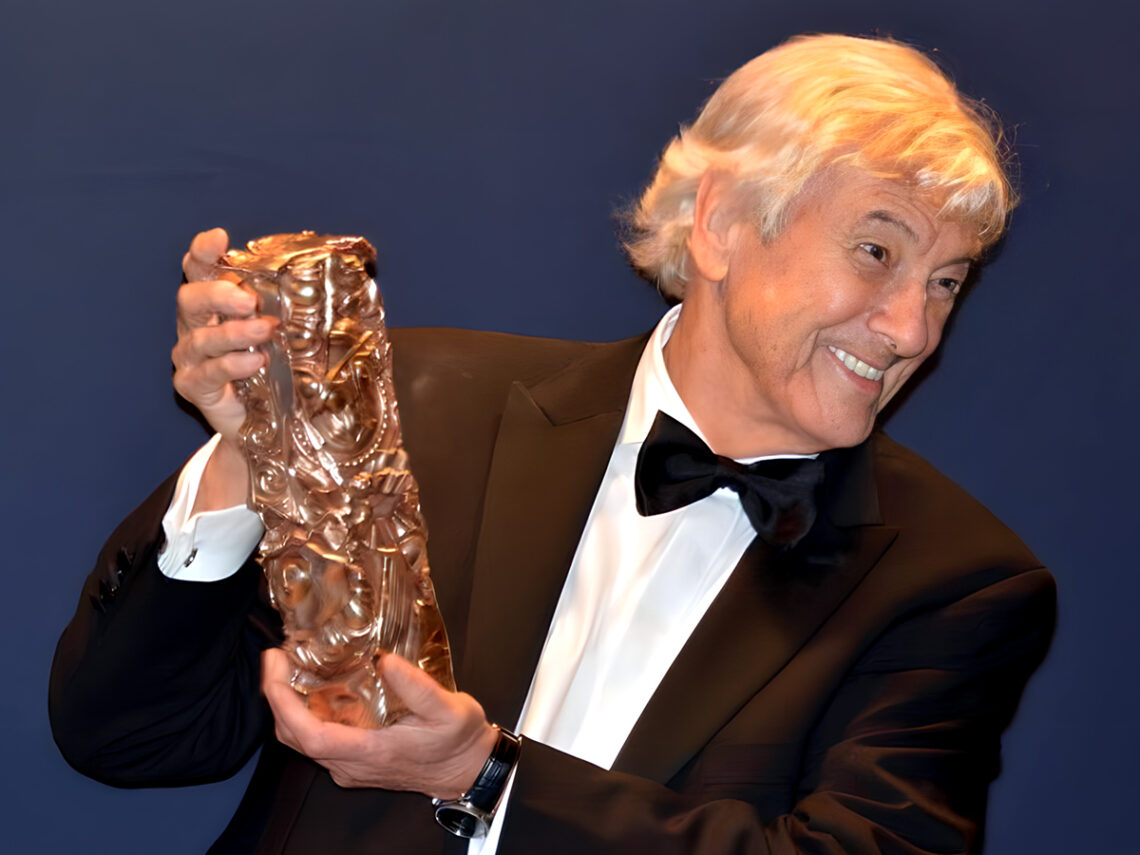
The actor Paul Verhoeven compared to Meryl Streep: “She was limitless”

Paul Verhoeven made a name for himself in Hollywood with sexy, stylish blockbusters that often served as takedowns of fascism. He’s worked with all sorts of actors – action stars like Arnold Schwarzenegger, character actors like Kurtwood Smith and award winners like Michael Douglas.
Returning to Europe in 2006, the Dutch filmmaker directed the WW2 drama Black Book. He cast Clarice van Houten in the lead role – the actor who would later find global fame when she played Melisandre in Game of Thrones. The actor’s singular confidence and command of the screen has been compared to Catherine Hepburn and Joan Crawford. Paul Verhoeven, after working with her, compared her to Meryl Streep.
Verhoeven has maintained that he is personable and versatile in his work with actors. He often bases his direction on each actor’s individual performance. With Sharon Stone on Basic Instinct, for example, Verhoeven “would give lots of direction, and I would be continuously busy with her.” He found that he was much more hands-off working with Carice.
“I found the less I did, the better it got,” he explained. “If I gave her too many instructions, it would limit her too much, whereas if I just let her go, she was limitless. She was like Meryl Streep that way,” Verhoeven praised. “So I got whatever I wanted from her, but ultimately, I had to tell her to not listen to me, and just to do what she felt, which was always the perfect solution.”
Actually getting Van Houten to star in the film proved to be something of an uphill battle. Filming was delayed due to some health issues Verhoeven was facing. The Valkyrie star had agreed to partake in a performance of Twelfth Night after the production had concluded, but due to the change in schedule, she was suddenly unable to. The theatre company sued the production, as they had informed them they would require compensation if such delays occurred. Before filming began, the independently funded production had to pay a €60,000 fine. Fortunately, both the actor and director found the production to be worth the struggle.
Van Houten had heard some horror stories from Verhoeven’s original European productions in the 1970s but found that he had come a long way. “I know a lot of people want to hear something else, like crazy stories, but he was really, like, the sweetest director I could have had because he knew what to do.” she reflected fondly. “Such a thing needs trust, and you need somebody who leads you through that, and he did it. Every morning when I came on the set, I thought, ‘Maybe this is the day he’s going to explode,’ and ‘maybe this is the day we’re all sort of waiting for,’ but it never happened. “
After a string of misfires and misunderstood cult classics like Showgirls & Starship Troopers, Black Book received wide acclaim on its release. This was Verhoeven’s first film in six years, a more dramatic piece that harkened back to his own upbringing. He grew up in Nazi-occupied Netherlands and witnessed all sorts of carnage before his tenth birthday.
This homecoming to make a period piece was significant as it allowed him to reckon with the images his mind had absorbed “like a sponge” as a child. It also offered him the opportunity, as Van Houten said, “to make something more real. He was fed up with making (films) like Hollow Man. He would make jokes. He would tell you that he didn’t want to make hollow films like Hollow Man anymore. He wanted to make realistic pictures, and of course, he’s a Dutchman, and I think that works for him to be back. “
