


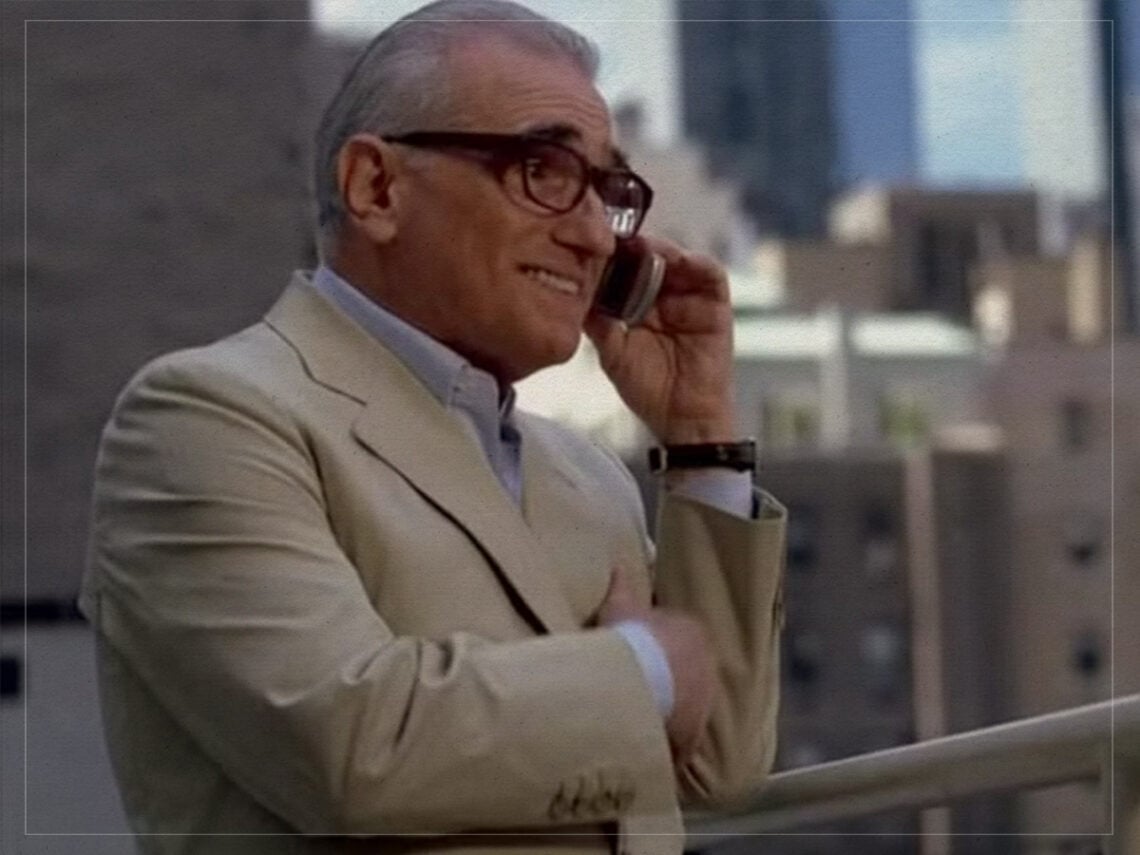
The one actor Martin Scorsese broke federal laws to work with: “He got into a lot of trouble”

You’d think that Martin Scorsese wouldn’t have to jump through hoops to cast anybody in one of his movies, since he’s Martin Scorsese, one of the greatest and most respected directors in cinema history.
Ever since he first broke through as one of the shining lights of the emerging ‘New Hollywood’ generation in the 1970s, very few actors have turned him down. When he broke federal laws to secure a cast member, though, whether it was deliberate or not, it had nothing to do with being rejected.
Instead, it was the opposite. Scorsese was so determined to land a performer he’d admired from afar, albeit one who’d never played a major role in a feature film before, that he committed a crime to do it. Luckily, he didn’t shoot, stab, rob, or defraud anyone, but breaking the law is breaking the law, regardless of how minor an infraction it appears to be.
It’s an extreme simplification of its legacy, reputation, and importance, but in terms of being a proving ground for the next generation of heavyweight comedic talent, Second City Television was basically Canada’s version of Saturday Night Live, with countless alumni going on to take Hollywood by storm.
John Candy, Eugene Levy, Harold Ramis, Rick Moranis, and Martin Short were among them, but Scorsese had a particular soft spot for Catherine O’Hara. SCTV was her breakthrough, earning her five Primetime Emmy nominations and a win for ‘Outstanding Writing in a Variety or Music Program’ in 1982, but her film career was virtually non-existent, bar a couple of small roles.
“I went to a film festival in Toronto one year in the ’80s,” O’Hara recalled, years later. “So, my sister and I came in the back of the theatre, and Martin Scorsese was waiting to be introduced, because he was being honoured. He looks over and goes, ‘Hey, SCTV!’ Like, what?!? Then, he invited us to join him, Robert De Niro, Harvey Keitel, and other people for dinner.”
So far, so innocuous, but during the meal, he laughed in the face of federal legislation. “At the dinner, he rips out a piece of his passport to give me his phone number, which I held on to forever but never called, because I’m shy,” the actor and comedian explained. “That’s how I ended up in After Hours.”

That doesn’t sound so bad, if it wasn’t for Title 18 of Section 1543 of the United States Code making it perfectly clear that it’s “illegal for anyone to make, forge, counterfeit, mutilate, or alter any passport with the intent that it be used.” By the letter of the law, Scorsese tearing a page out of his passport to write his phone number on and give to O’Hara technically constitutes the mutilation and misuse part.
The feds didn’t bust down his door, but O’Hara did share how “he did end up telling me that he got into a lot of trouble for that page missing from his passport,” so it sounds like he got a slap on the wrist for it from somebody, which is a lot better than being hauled in and thrown behind bars.
