


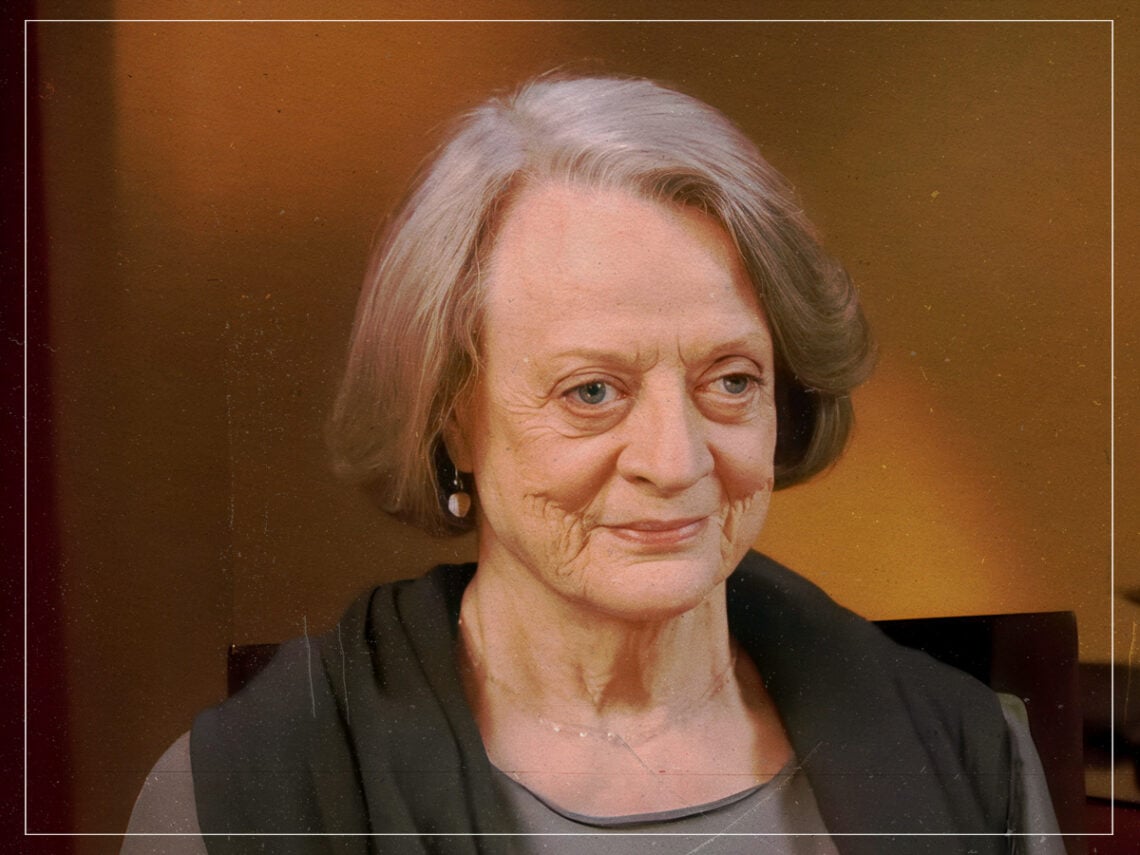
The actor Maggie Smith called an enormous influence: “I pinch off him all the time”

There’s at least one generation of cinemagoers out there who know Maggie Smith best from her recurring role in the Harry Potter franchise, and while there’s no shame in being introduced to a new audience under blockbuster circumstances, she was already one the United Kingdom’s greatest-ever actors long before she cast her first spell as Minerva McGonagall.
The one-two punch of the monolithic fantasy saga and Downtown Abbey gave Smith’s career a new level of visibility more than half a century in, which is the least she deserved after becoming one of the most distinguished performers of stage and screen the country has ever produced.
Her accolades speak for themselves, with Smith the recipient of two Academy Awards from six nominations, five competitive Baftas from 18 nods to go along with her two honorary gongs, not to mention four Primetime Emmys, three Golden Globes, five Screen Actors Guild Awards, and a Tony.
Since making her debut treading the boards in the 1950s, Smith has always been regarded as one of her generation’s finest performances, but even legends have been known to steal from those around them. On the plus side, she was incredibly forthcoming about how one particular performance was effectively pilfered directly from a close friend and regular collaborator.
“An enormous influence,” she said of Kenneth Williams in an interview. “I pinch off him all the time. Well, in Black Comedy I’m doing a complete Kenneth. I mean, it’s outrageous. He hasn’t seen it. He’d be livid.” She was joking, of course, with the Carry On favourite undoubtedly thrilled that somebody he was so close to had been using him as a source of inspiration.
Peter Schaffer’s play Black Comedy began in 1965 with Smith as part of the original cast, with the title carrying a double meaning. Highly experimental for its time, the premise turned convention on its head by illuminating the stage when the characters are supposed to be in darkness, but darkening the lights when the protagonists were able to see each other.
A literal and figurative black comedy, then, the story saw a young sculptor and his fiancee borrow expensive furniture from a neighbour without permission to pass themselves off as well-to-do for the upcoming visit of a wealthy art collector. When the power fails, the precarious situation devolves into an outright farce.
Smith and Williams first encountered each other in the late ’50s when they shared the stage in a production of Share My Lettuce, and they remained close until the latter passed away at the age of 62 in April 1998. They were just as comfortable with each other away from performing as they were in a professional setting, so Williams wouldn’t have minded his regular scene partner dipping into his box of tricks for inspiration.
