


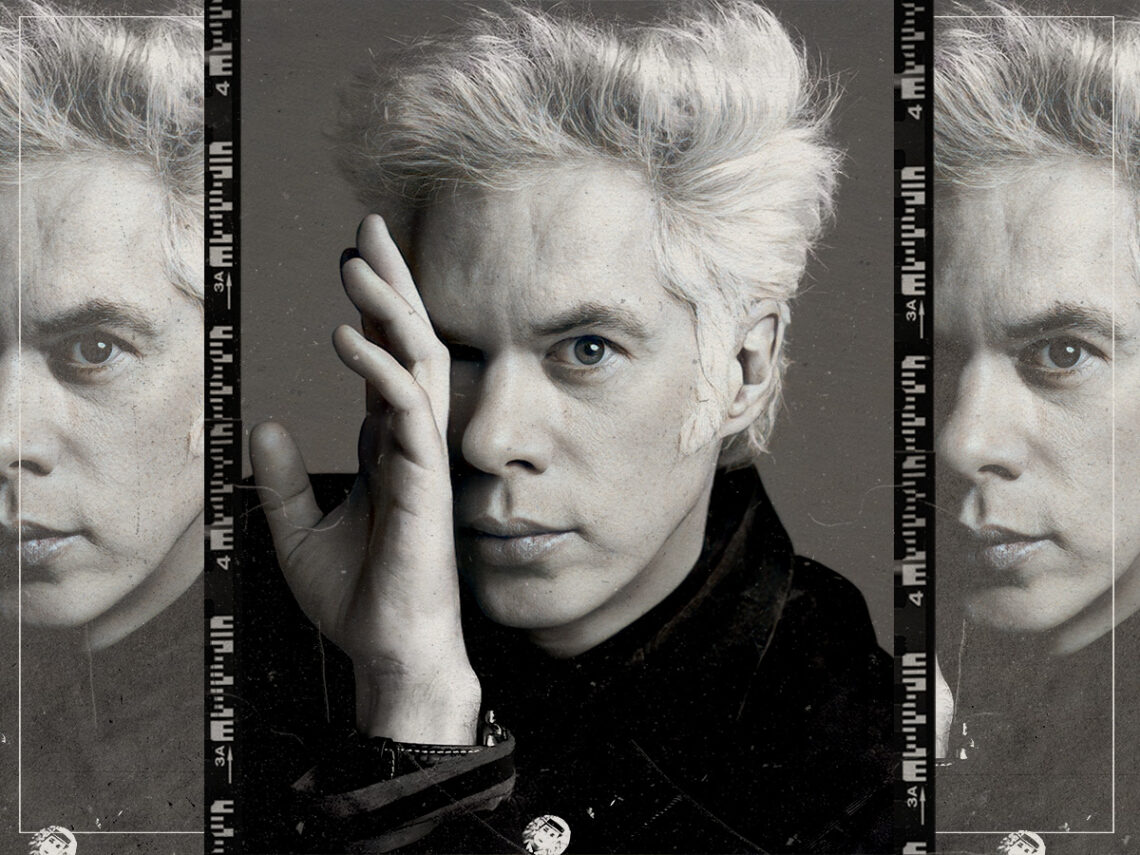
The actor Jim Jarmusch called an “incredible chameleon”

In 1980, when Jim Jarmusch released his first feature film, Permanent Vacation, Academy Award-nominated actor Jeffrey Wright was a mere 15-year-old boy. He was on his way to graduate high school and headed to Amherst College to pursue a degree in political science as a stepping stone towards law school.
When Wright made the decision to give up on being a lawyer and instead pursue an MFA in acting at New York University, things took a different direction. Wright left Tisch after just two months to work as a full-time actor with the Huntington Theatre Company in 1988. His major break came in 1994, when he played a gay nurse assigned to care for the racist Roy Cohn, who was suffering from AIDS, in Tony Kushner’s cultural phenomenon Angels in America.
Following a spate of largely unsuccessful films where he appeared in supporting roles, Wright finally secured his first big break in Jonathan Demme’s 2004 remake of The Manchurian Candidate. Soon enough, the following year, he was cast in Jarmusch’s next feature, Broken Flowers. The film premiered at the Cannes Film Festival, where it competed for the Palme d’Or and ended up winning the festival’s second-highest honour, the Grand Prix.
Wright plays the role of Bill Murray’s neighbour and is among the few male actors in the film. In a conversation with Cinema, Jarmusch recounts, “I did have Jeffrey in my head while I was writing Winston, although Jeffrey’s such an incredible chameleon that it wasn’t any part of Jeffrey, except his ability to embody a character that I wanted to not be a stereotype. I wrote hoping he would be interested in creating the character based on what I had written – which he did.”
The enormity of this compliment becomes even further exacerbated in the light of Jarmusch’s own career. By then, the auteur had already worked with international feted and decorated acting stalwarts like Winona Ryder in Mystery Train, Johnny Depp in Dead Man and Forest Whittaker in Ghost Dog: The Way of the Samurai. Not to mention, he was working with none other than Bill Murray, Sharon Stone, Tilda Swinton and Jessica Lange for his latest feature.
Wright’s commitment to his craft stood out to Jarmusch throughout their collaboration—something the director came to appreciate greatly about the artist. In the film, Wright essays the role of Winston, a crime-thriller enthusiast who eggs Murray’s character to go on a hunt for five women who are the most likely authors of a mysterious letter (in the most Sofia Coppola shade-of-pink envelope) that turns up outside his door.
Wright brings a rare comic lightness to his character, demanding one’s attention in every frame that fills his presence. His dedication to embodying the character was so complete that he went to great lengths to perfect his Ethiopian accent. This itself was a difficult task because, Jarmusch argues, the Ethiopian accent has the slightest hint of a South Asian accent—marking it different from other North African accents. Wright’s pathway to perfecting the accent most often resulted in the most hilarious of results.
“While we were shooting,” Jarmusch recalls, “Jeffrey sometimes would be on his cell phone right before we shot a scene. At one point, I was disturbed and said, ‘Jeffrey, is everything okay? You were on the phone –’ And he’s like, ‘Yeah yeah, no no; I call the Ethiopian Embassy all the time, and I make up questions to ask them out of the blue, just so I can hear the guy’s accent on the phone’,” reveals Jarmusch.
One does not need to ponder long to imagine what these rip-roaring conversations must have sounded like to a baffled third-person observer. “Jeffrey’s very meticulous, so he’d be on the phone asking the guy, ‘Are there any troubles on the Western border?’ ‘No, I don’t know of anything. Why are you asking?’ ‘Oh, I…’ Jeffrey would hear the guy, hang up, and go, ‘Okay, I’m ready,'” says Jarmusch.
