


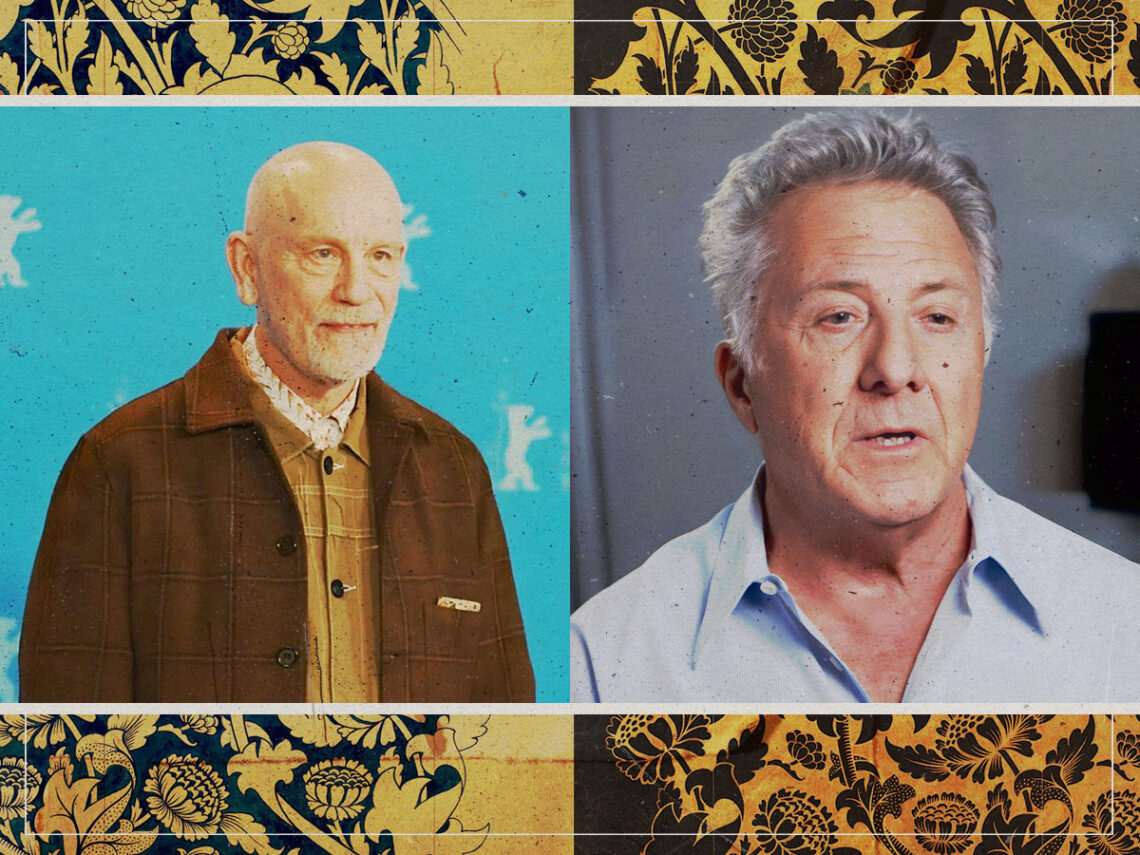
How John Malkovich gave Dustin Hoffman the greatest “experience” of his working life

A great set often leads to a great movie. The camaraderie between stars who carry the film on their shoulders is a crucial element in winning the audience’s hearts. This connection is something palpable and noticeable on screen. For Dustin Hoffman, it was John Malkovich’s unwavering commitment to his artistic integrity as an actor that truly won him over.
This moment occurred in 1984, when Hoffman, already renowned for his scene-stealing roles in The Graduate, Kramer vs. Kramer, and Tootsie, returned to his Broadway roots by taking on the role of Willy Loman in a revival of Death of a Salesman. This character is arguably one of the most tortured yet iconic figures in American literature. Malkovich, who was about to make his Broadway debut in the same production, initially made an unremarkable first impression at his audition—at least to the untrained eye.
But to Hoffman, his wayward edges made all the difference. He subconsciously recognised something that would become Malkovich’s defining trait in the years to come: a sense of “oddness”, as seen through his filmography and increasingly eccentric yet endearing roles that he introduced to Hollywood.
1984 was a career-defining year for Malkovich since he also made his feature-film debut in Places in the Heart and subsequently received an Academy Award for ‘Best Supporting Actor’. He also portrayed real-life personality Al Rockoff in the critically acclaimed epic The Killing Fields. But with Biff Loman, Malkovich accomplished two inspiring feats. Firstly, he quite simply anchored an evening of entertainment in an entirely idiosyncratic fashion.
The second was a moment between him and Hoffman, as their characters embrace. This juncture proved transcendent, as theatre’s two most enduring, lowly parts collided in a totally original manner. These two actors on opposite sides of a spectrum—a newcomer and a veteran—established a camaraderie so rare and encapsulating of the characters they portrayed that they made Broadway history.
It can be said, dare I say, speculated, that Hoffman met a version of his younger self before he became the star that he was born to be in Malkovich. After all, both actors made their home first upon the wicked stage and subsequently bloomed onto the silver screen of Hollywood, and at times, even took the helm behind a camera through directing.
It is all in his reminiscence of that life-changing audition; as he told The Hollywood Reporter, “It’s a moment that’s fixed in my synapses, […] I was mesmerised. He’s doing [the role of Biff] different than anybody has ever done it ever. He was, at first blush, poetic and yet able to convey a working-class quality. Arthur [Miller] looked at me and raised his eyebrows and just nodded. That’s it. There it is. Period.”
This instant between two icons is proof of a deep-seated truth to us audience members: that an actor is more than just the job of acting and perpetuating an image of popularity; it includes contributing a part of oneself to an art that demands creative passion and integrity. This first-time encounter between Hoffman and Malkovich was twin flames engaging in the best way possible, transcending onto the stage of the Broadhurst Theatre and then later onto the small screen in a made-for-television film adaptation.
