


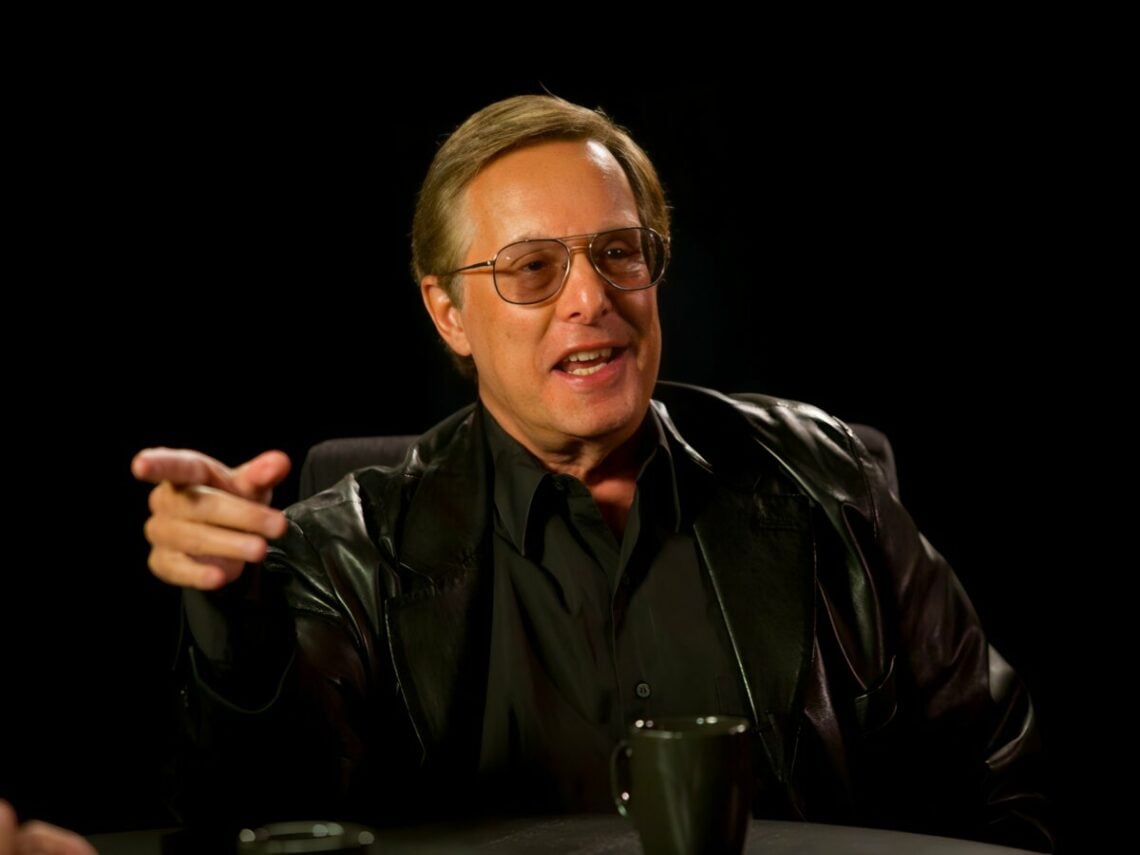
The action director William Friedkin called better than cinema’s 21st century indie darlings

In the early 2000s, a gritty crime film was released that blew the legendary William Friedkin away. He was so taken with it, in fact, that he shot an interview for the film’s DVD release, praising it as a masterpiece. He then compared its young director to a few of his contemporaries in the indie film business, directors whose names we recognise today as being much more celebrated than the one Friedkin was bestowing such high praise upon. At that time, though, Friedkin was certain he was even better than these 21st-century indie darlings.
In the DVD feature “The Friedkin Connection,” the iconic Exorcist director revealed that he first saw the movie when his wife, Sherry Lansing, brought it to his attention. At the time, she was the head of Paramount Pictures, and a movie had come their way that she felt her husband might like. Friedkin claims she sold it to him by saying the director of the film was a huge fan of his, but Friedkin admitted, “That was not a turn-on for me. I’ve heard that before and looked at stuff and been disappointed.”
Still, Friedkin took his wife’s recommendation and first watched the movie via a VHS tape on a small TV screen. It wasn’t an ideal way to see anything, but it didn’t matter; Friedkin said, “I was mesmerised. I thought it was a great, great film.” However, he made sure to see the movie again in a private cinema screening before it came out just to ensure he was correct in his initial assessment. Once again, it blew him away, and he felt, “This is really the most honest film about police procedure I’ve ever seen.”
The film was Joe Carnahan’s Narc, a 2002 crime drama starring Jason Patric and Ray Liotta. It followed two detectives on the hunt for the killer of an undercover police officer, and Friedkin marvelled at how Carnahan had made his film seem so “real” on every level. While he loved the down-and-dirty nature of the cop thriller aspects of the film, he felt it truly sang in its quieter moments. He mused, “The thing that really made it for me was the honesty with which their lives away from police work are portrayed.”
Friedkin heaped particular praise upon Liotta, whose performance he compared favourably to Orson Welles in Touch of Evil, but he was also glowing about all the actors in the film. He explained, “This film will last because of its performances. They’re so real. They’re so lacking in the sense of ‘acting’.” In a move that must have made Carnahan’s head spin, he mentioned Narc in the same breath as the film many believe to be the greatest of all time. Friedkin said, “The films that last are the ones like The Godfather, where the performances are not really grandiose; they’re scaled down to a human level, and that’s true of Narc.”
Friedkin concluded by drawing a fascinating parallel with the crop of young, exciting filmmakers working in indie film around the turn of the millennium and the “New Hollywood” era Friedkin was a part of alongside greats like Steven Spielberg, Francis Ford Coppola, and Martin Scorsese. Friedkin claimed, “One of the differences between those directors then and the younger group today is that the people in the ’70s had great success with their films. The audience was on the same wavelength as them.”
Even as early as ’02, though, Friedkin had begun to fear that the tastes of the multiplex audience had moved away from those kinds of films. To him, this meant that even though the indie directors of the early ’00s were as talented as the New Hollywood pack, they were struggling to connect to mainstream audiences in the same way. Friedkin noted, “People like Paul Thomas Anderson, Wes Anderson, Spike Jonze and now Joe Carnahan; as far as I’m concerned, their films…have taken American cinema further than we did, but the audience has not caught up to them. There’s great critical affection for these films, though, and I think they’re brilliant – especially Carnahan.”
Ultimately, Friedkin was right about films like Narc finding an unreceptive audience. After all, it made only $12.5million at the box office despite stellar reviews. It also can’t be argued that Carnahan didn’t go on to experience anywhere near the same critical approval as the contemporaries Friedkin mentioned. However, that might simply be because he didn’t make another film like Narc. Perhaps to chase that mainstream audience, Carnahan has mostly made action films since its release. Ironically, the closest he’s come to something as acclaimed is The Grey, his criminally underrated “Liam Neeson fights wolves” film, and that was mostly misunderstood by audiences, too.
Still, Carnahan – and Friedkin – will always have Narc. As the director shared, “Few American films today carry the weight that a film like Narc does. I believe this film will be around for many years to come and will be hailed as a masterpiece.”
