


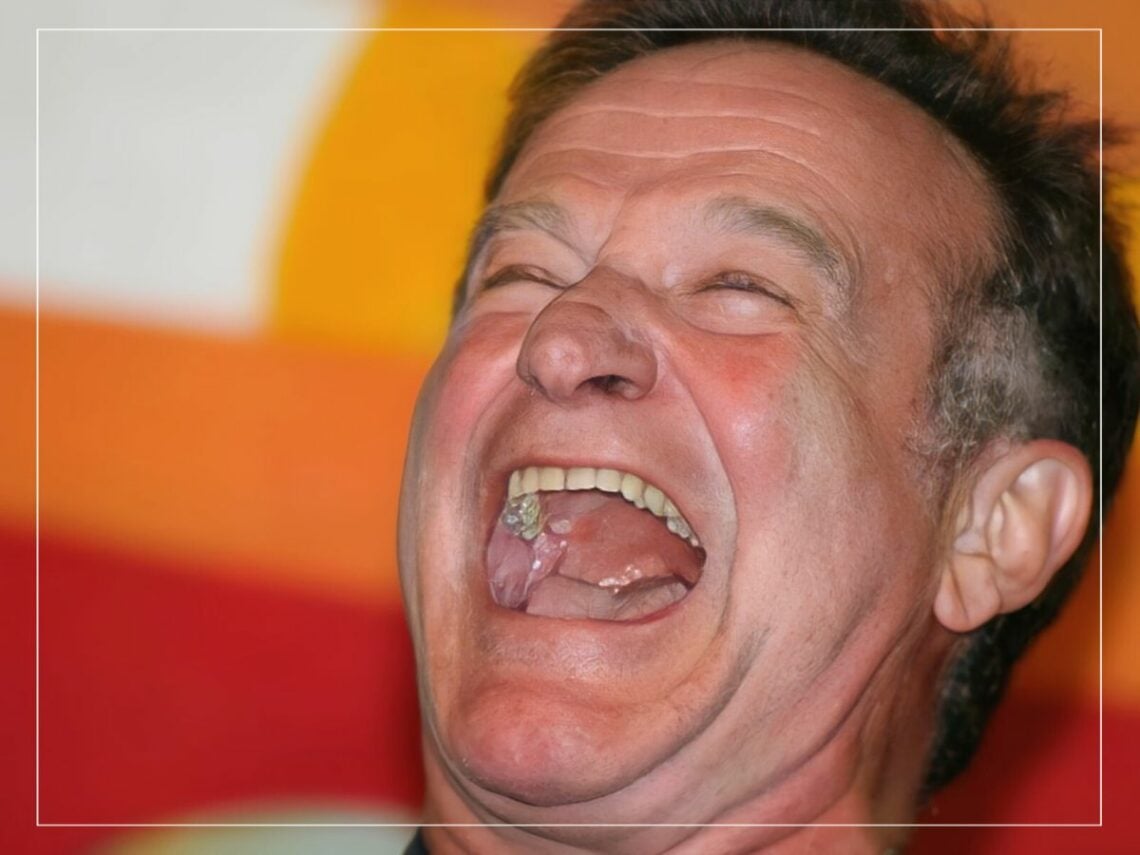
The acting style Robin Williams compared to “looking through shit for gold”

Robin Williams was a generational talent. With a repertoire spanning from Happy Feet to Hamlet, his versatile acting career showcased an ability to adapt to various cinematic modes and acting styles at a whim. However, he’s perhaps best known for his knack for improvisation. Considering Williams got his start in San Francisco’s stand-up comedy scene, this seems only natural.
Williams’ talent took him to Los Angeles and eventually catapulted him to fame when he played an alien, Mork, on the sitcom Happy Days and its spin-off, Mork & Mindy. From there on out, he used this aptitude on every one of his projects and found massive critical acclaim with 1987’s Good Morning Vietnam, where he played real-life Radio Personality Adrian Cronauer—a role that was almost entirely ad-libbed.
Building on the moment, in 1992, Williams revolutionised how animated movies were made with his uninhibited improvisational work on Disney’s Aladdin. “Robin ended up recording about six to eight four-hour sessions,” recalls director Ron Clements. “An enormous wealth of material. The big problem was figuring out what to use.“ The production team developed a system that involved transcribing everything Williams had said, playing the recording back and circling everything they liked, all before editing the recording down even further so that William’s freewheeling would fit into short scenes.
Given that success, when recording for Blue Sky’s Robots in 2005, the production team sought a similar approach from Williams. He affectionately dubbed this process “looking through shit for gold”. Williams played Fender Pinwheeler, a rusty, constantly falling apart robot. The role marked William’s first time voice acting in a feature film in almost a decade.
“They let me do exactly what we just did and then pick,” Williams explained. “You play with it, and then once you start seeing the early renderings come in, you realise, ‘Oh, okay, I know what it looks like,’ and the fact that he’s falling apart, you can start to play with that.”
While this improvisation was most evident in Williams’ comedic work, it also found its way into his more serious roles. In his Oscar-winning performance as Dr Sean Maguire in Gus Van Sant’s Good Will Hunting, Williams improvised key moments. One such instance provides some much-needed levity. It occurs when the therapist waxes poetic about relationship idiosyncrasies before adding a humorous detail about his late wife: “She used to fart in her sleep”. Williams reportedly also improvised his final line in the film, after 60 takes no less.
The improvisational and fluid nature of filmmaking seems to be what he likes best about the craft. In an interview, discussing one of his most dour roles—that of an emotionally disturbed photo technician in One Hour Photo—he relayed that acting and filmmaking are almost always improvisational.
“When you do it, occasionally something will happen that no one expected,” he concluded. According to Williams, it’s similar to a chemical reaction that takes the artist on unexpected paths. Of course, you also have to be as talented as the American comedian to make directors comfortable enough to allow you to do so.
