


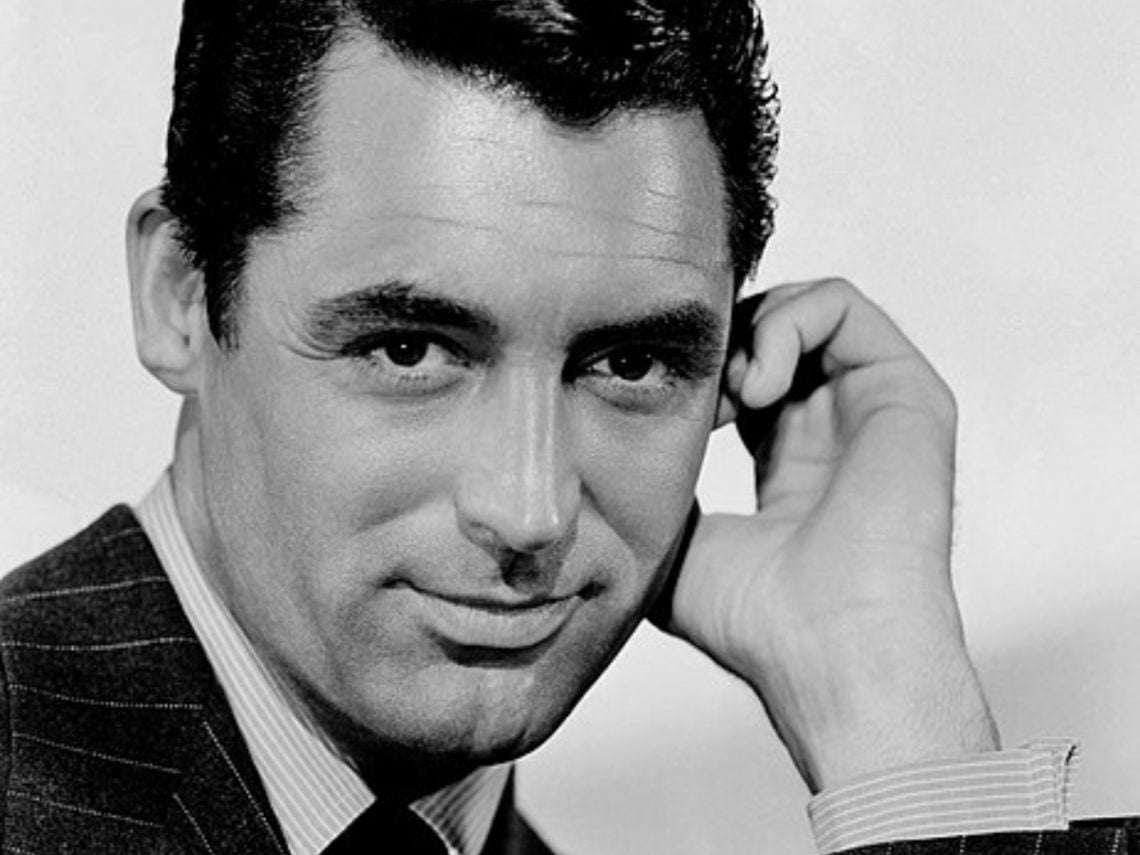
The important acting advice given to Cary Grant: “I was feeling very sorry for myself”

The chances of a man called Archibald, who was born in Bristol, becoming almost the perfect representation of the American movie star would have been incredibly slim if not completely non-existent, but Cary Grant was proof that being born in the United States is hardly a pre-requisite to embody the prototypical superstar.
Beginning his film career in the early 1930s after a stint in vaudeville, Grant was already firmly established as a popular performer by the end of the decade. He gained increasing prominence through The Awful Truth, Bringing Up Baby, His Girl Friday, and The Philadelphia Story, to the point that he was already an A-lister by the time 1940 had even reached a close.
From there, he went from strength to strength by displaying his comedic chops and dramatic range in a number of disparate productions covering multiple genres, which brought him into contact with many of the greatest actors and directors to ever grace Hollywood. Ironically, it was another British-born staple of Tinseltown who ended up giving Grant advice he’d carry with him throughout his entire career.
The second credit in his filmography came as part of a whirlwind first year in cinema, with Grant appearing in eight movies in 1932 alone. His debut comedy This Is the Night was followed just four months later by Devil and the Deep, where he co-starred with Tallulah Bankhead, Gary Cooper, and Charles Laughton.
It was the latter who imparted words of wisdom to the newcomer, and Grant never forgot what Scarborough’s favourite Academy Award winner had told him. “Charlie Laughton said something to me one time that made a very deep impression on me. I was terribly depressed one day at the studio, you know, in one of those Russian cellar moods,” he told Virginia Wood. “I happened to run into Charlie on the Paramount lot, where we were both working at the time, and started to tell him all my troubles.”
Laughton countered by asking whether or not he’d even considered that the people paying money to see him on the big screen are having many of the same issues, with his work providing them with a sense of escapism. He’d been in the exact same position when he was “terribly upset about financial matters and life just didn’t seem worth the living,” before a lightning bolt came out of the blue.
Grant was informed by Laughton of the realisation “that whenever I did a good job on the stage or screen I was diverting those thousands of people down in front of their own troubles by interesting in them mine as the character I played,” and it was a sentiment the former would carry with him for the rest of his days.
“So I determined that no matter what happened to my own private life, I’d try my level best to help those folks forget about themselves for at least as long as they looked at my performance,” Grant explained. “And I can’t tell you what a great deal of satisfaction I’ve gotten out of that one idea!”
He’d gone from “feeling very sorry for myself” to putting his baggage behind him in order to serve the audience first and foremost, and it was an approach that reaped major rewards in the decades to come.
