


Hear Me Out: ‘Across the Universe’ remains the best and most mystifying homage to The Beatles

Throughout the years, there have been numerous tributes to The Beatles, and it’s no surprise, given their status as one of the greatest bands in history. Even in 2019, Danny Boyle took a shot with his polarising film Yesterday. Yet, among the plethora of homage attempts, including plays, songs, and films trying to encapsulate the essence of The Beatles, none have ever come closer to mastering the art than Across the Universe.
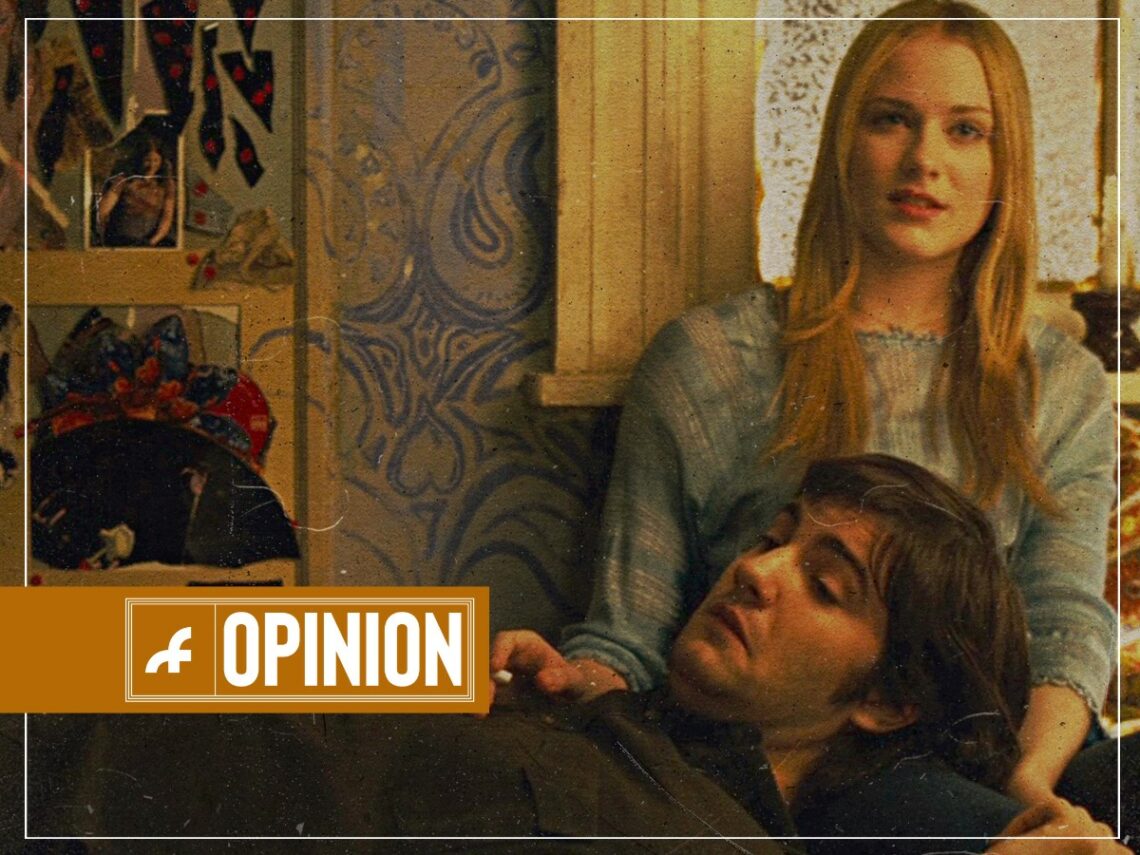
Nestled comfortably within the ‘if you know, you know’ category, Julie Taymor’s jukebox musical features the dynamic duo of Evan Rachel Wood and Jim Sturgess, whose tumultuous love story infuses fresh vitality into some of The Beatles’ most iconic tunes. The film kicks off with a preview of ‘Helter Skelter’, setting the stage for its clear intent: mirroring the emotionally charged highs and lows that the band themselves navigated.
The narrative follows Jude Feeney (played by Sturgess) as he heads to America to find his father. Jude soon meets Lucy, who he falls in love with. However, this isn’t your conventional love tale; it’s a narrative of genuine affection set against the backdrop of the “free love” era in the 1960s. Employing the lens of love intertwined with The Beatles’ most cherished musical catalogue, the film delves into expansive political landscapes, vividly portraying the era’s profound concerns and triumphs.
With the civil rights movement at its zenith, the film does well to capture the intensity of the 1967 Detroit riot. At the same time, Vietnam emerges as a central theme, immersing our characters in a world marked by significant internal and external transformative shifts. The Students for a Democratic Society, a leftist group, often make appearances, hosting anti-war rallies that frequently escalate into clashes with law enforcement.
This era, as we know, is renowned for its embrace of free love and the advent of rock and roll. If this contextualisation wasn’t perfect enough, the film also explores different facets of ‘60s-specific trends, like experimentation with drugs, characterised by the performance of ‘I Am the Walrus’ delivered by the U2 frontman Bono, clad in the iconic attire of the film Easy Rider.
During the ‘60s, the cultural impact of The Beatles was clear. Becoming the embodiment of youth culture, they represented a break from the conservative values of the past and a celebration of freedom and individuality. While the band themselves were not overtly political during their tenure, their music and message of love and peace resonated with the counterculture movement of the decade. Within Across the Universe, scenes like Prudence’s poignant exploration of a lesbian crush set against the backdrop of the innocent ‘I Want to Hold Your Hand’ and the whimsical and surreal green screen circus spectacle of ‘Being for the Benefit of Mr. Kite!’ serve as a testament to creativity and allegory in its own right. Their presence, whether essential or not to the central narrative, showcases the finest elements of The Beatles’ contributions to music.
Equally, Across the Universe masterfully delivers its political stance the same way The Beatles did: the intentions of the characters are clear in that they only want peace and justice for all. The left-wing influence of the film’s broad positioning is subtly nuanced yet confidently steadfast in its stance. In one of the film’s most emotionally climactic moments, a beautiful gospel rendition of ‘Let It Be’ plays over scenes of the Detriot riots, followed by a funeral for a child who was killed, demonstrating some of the most extremely moving moments of the decade.
Above all, relationships are central to the film’s main message. Within the wider impacts of historical movements and cultural shifts, Across the Universe focuses its overarching sentiment on the fondness that develops between Jude and Lucy. Much like the difficulties and oftentimes clashing nature of the esteemed Lennon-McCartney partnership, Jude and Lucy soon encounter barriers and, whilst at times they may seem impossible to overcome, ultimately they realise that their love is enough.
The beauty of The Beatles is that, no matter how much time passes, spotting drippings of their influence here and there is often an exciting exercise. Across the Universe provides a fun interactive experience, challenging you to pick out and pinpoint all of its various references woven throughout its narrative. From the characters, such as Jude, a namesake derived from the iconic ‘Hey Jude’ written for John Lennon’s son Julian, to Lucy, an allusion to the drug-imbued ‘Lucy in the Sky with Diamonds’, the film integrates these nods with grace. It also artfully sprinkles subtle lines that allude to other Beatles songs, offering glimpses of legendary figures like Janis Joplin and Jimi Hendrix and presenting evocative images, including the iconic Abbey Road album cover.
Even though the 1960s, and much of The Beatles’ catalogue, is drenched in heartbreak, ruthlessness, and tragedy, as shown during its reimagining of ‘I Want You (She’s So Heavy)’, Across the Universe manages to capture this whilst remaining inherently feel-good. Right from Jude’s energetic rendition of ‘I’ve Just Seen A Face’, you know that, even though you’ll encounter difficulties throughout the film, the ending will be satisfying.
And it is. We all remember the band’s iconic last appearance, dubbed the ‘rooftop concert’, and the film pays tribute to these iconic scenes in the most stunning, endearing way. As the film draws to a close, Jude begins to sing ‘All You Need Is Love’ on a rooftop to get Lucy’s attention. Much like the reconciliation between Lennon and McCartney themselves, the coming together at the end, despite the chaos they’ve all separately experienced, signifies the power of a single moment of unity. All you need is love is the ultimate parting statement and a stark reminder that love’s power over war will never be unmatched.

Never Miss A Beat
The Far Out Beatles Newsletter
All the latest stories about The Beatles from the independent voice of culture.
Straight to your inbox.