


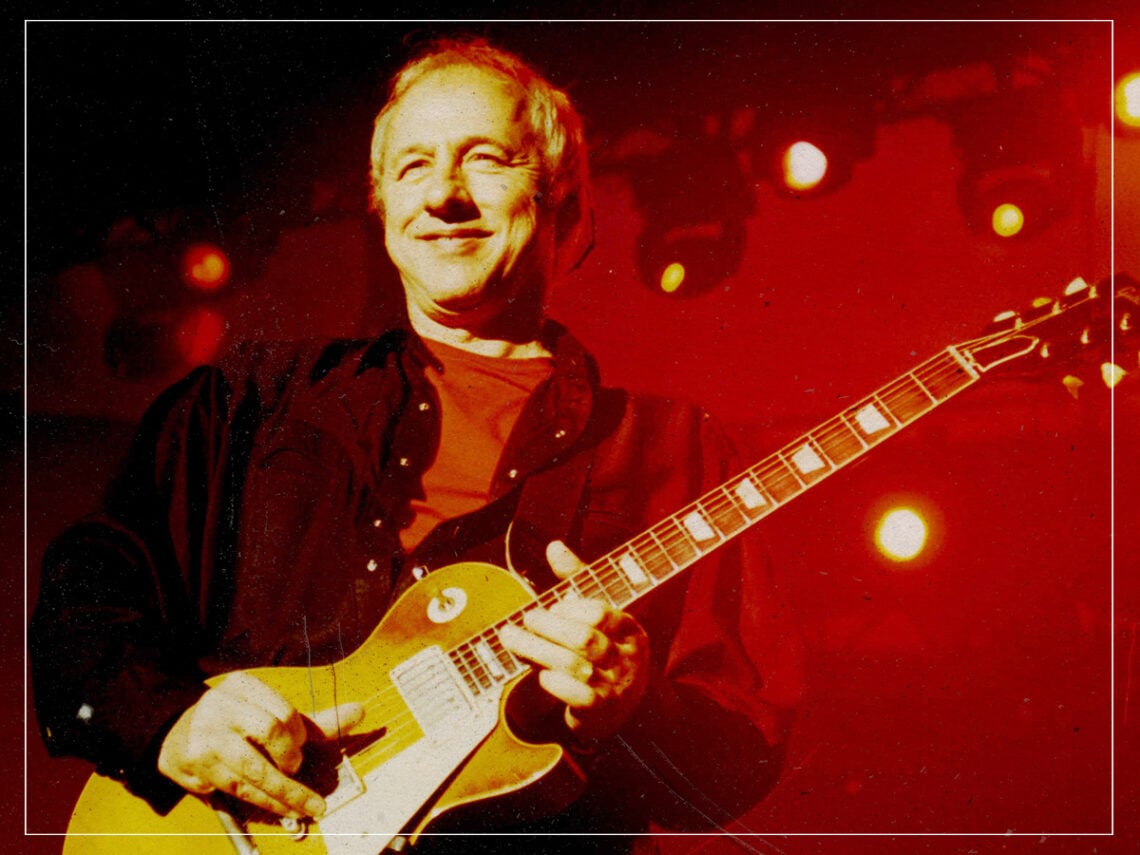
The “genius” who shaped Mark Knopfler’s songwriting and why soul is more important than skill

It’s easy to forget just how monster-massive Mark Knopfler and his Dire Straits were in their mid-1980s pomp. Their nimble blend of bluesy songwriting with a little pub-rock rough swiftly brought them a devoted fanbase, songs like ‘Sultans of Swing’ off their self-titled debut LP played eternally on rock radio stations to this day.
Following further hit singles and the introduction of complex arrangements, they achieved monumental success with ’85’s Brothers In Arms, aided by a modern production sheen of the latest digital recording technology plus a pioneering CGI video, which ensured endless rotation on MTV for ‘Money For Nothing’.
Like most artists of his generation, the young Knopfler soaked up the music of his teens: The Beatles, The Rolling Stones, and The Kinks all revealed as personal favourites in interviews across the years, and an influence on his guitar playing was the old R&B maestros like Muddy Waters, whose ‘bending’ style of guitar play directed influenced Knopfler’s fretwork, even inspiring him to play in an R&B/rockabilly group with a Gibson Les Paul Special shortly before forming Dire Straits. As a songwriter however, it was folk giant Bob Dylan who had the greatest effect.
That influence isn’t always obvious on the surface, either. While Knopfler’s playing could drift into intricate territory, his writing often kept things grounded, focusing more on mood and storytelling than any grand technical display. Much like Dylan, the emphasis was on the picture being painted, not the complexity of the brushstrokes.
It also explains why Dire Straits songs tend to unfold at their own pace. There’s no rush to get to the hook or hit a radio-friendly moment, just a sense that the song will arrive where it needs to in its own time. That patience, more than anything, feels like the true link between Knopfler and Dylan, a shared understanding that the best songs don’t need to shout to be heard.

Discussing his love for Dylan in a 1984 interview with Guitar Player, Knopfler states, “Bob’s musical ability is limited, in terms of being able to play a guitar or a piano. It’s rudimentary, but it doesn’t affect his variety, his sense of melody, his singing. It’s all there. In fact, some of the things he plays on piano while he’s singing are lovely, even though they’re rudimentary. That all demonstrates the fact that you don’t have to be a great technician.”
Knopfler is considered one of the most technically astute players of his generation, but he notes that relying solely on that skill is a recipe for disaster. “It’s the same old story: If something is played with soul, that’s what’s important. My favourite records, by and large, aren’t wonderful technical achievements, with the exception perhaps of people like Chet Atkins. But generally speaking, all you’ve got to do is listen to a Howlin’ Wolf album – that’s just soul.”

It’s an interesting take from Knopfler. He was well known for his enthusiastic embrace of technology, incorporating the latest emulators in the slick Brothers In Arms LP and being one of the first albums to be recorded using the 24-track digital tape gear.
Maintaining a healthy balance of keeping abreast of the latest studio trends while revering the ‘soul’ of an imperfect artist caught Dylan’s attention, who needed a producer for his ’83 Infidels album. Initially desiring to produce the album himself, his lack of technical touch meant approaching the up-and-coming Knopfler.
Knopfler later admitted, “Each song has its own secret that’s different from another song, and each has its own life. Sometimes it has to be teased out, whereas other times it might come fast. There are no laws about songwriting or producing. It depends on what you’re doing, not just who you’re doing. You have to be sensitive and flexible, and it’s fun. I’d say I was more disciplined. But I think Bob is much more disciplined as a writer of lyrics, as a poet. He’s an absolute genius. As a singer—absolute genius. But musically, I think it’s a lot more basic. The music just tends to be a vehicle for that poetry.”
“A vehicle for poetry” succinctly illustrates Knopfler’s creative principles, inspired by Dylan’s raw and unpolished genius, and utilising the tools of today to draw the best of any song.

Never Miss A Tale
The Far Out Bob Dylan Newsletter
All the latest stories about Bob Dylan from the independent voice of culture.
Straight to your inbox.