


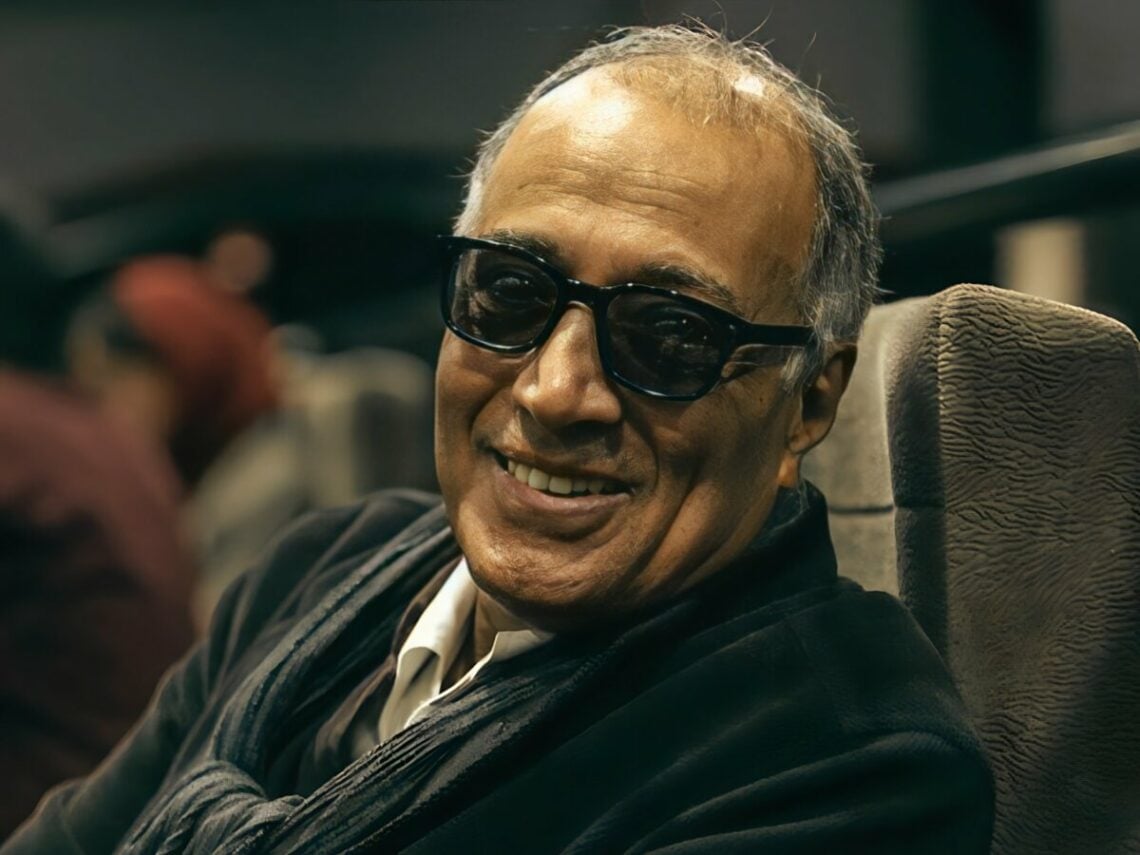
“There is something very natural in the context”: Abbas Kiarostami explains why he finally decided to use violence

Violence is often a necessary part of cinema used to convey character, emotion, or intent, but it was something Abbas Kiarostami shied away from for the majority of his career until he discovered there was no way of telling the story he wanted to tell without it.
One of the all-time greats, the inspirational and influential auteur who helped bring the Iranian New Wave to the forefront of the cinematic consciousness and served as its erstwhile figurehead made a habit of crafting creative, compelling, pioneering, and evocative features without having to resort to jarring bursts of violence.
His work had always been indebted to neorealism and naturalism, with Kiarostami trading heavily in coming-of-age stories punctuated by melancholy, narratives that reflected the socio-political struggles of his home nation at the time they were made and shining a light on the corners of the human condition that were rarely given their moment in the cinematic sun, making his filmography singular, universal, and essential.
With that in mind, it was fitting that Kiarostami’s detour outside of home shores to Japan would serve as the moment where he deployed a trick in his cinematic arsenal that nobody was even entirely sure he possessed, with 2012 drama Like Someone In Love using violence to underpin and enhance its ever-shifting power dynamics.
Rin Takanashi’s student Akiko burnishes her income by moonlighting as a high-end escort, with Ryō Kase’s partner Noriaki growing increasingly jealous and suspicious of her mysterious extracurricular activities. When she spends the night with Tadashi Okunu’s elderly Takashi, he establishes and exerts growing influence over her whether he wants to or not when Noriaki mistakes him for her grandfather after he drives her to college following their tryst, asking for approval to take her hand in marriage.
Not quite a routine love triangle but just as complicated nonetheless, the tensions between Noriaki and Akiko escalate into violent manifestations of rage, something that had never typically been associated with Kiarostami’s work. However, when asked by The Playlist why it had taken him nearly 40 years and almost two dozen features, his explanation was as thoughtful as it was level-headed.
“It all depends on the situation of the film,” he suggested. “There is something very natural in the context of the film. When I used to make films in the Iranian countryside, the characters were anchored in their landscapes, so the silence given by nature was obviously in their minds. The same for the violence. There is violence in real life but I would never impose violence in a film just to attract the audience.”
Kiarostami did admit that his preference towards violence would be to “make it more discreet,” but because of its relation and importance to the plot, he opted to play his hand unrestrained. “Here, the situation is a violent one,” he said. “There is something emerging between the characters, and I just showed how it came naturally given the situation between the characters and the context of the society and the landscape.”
It goes without saying that an auteur of Kiarostami’s calibre and standing would never use violence for the sake of violence, but because it had never been a recognised part of his oeuvre, Like Someone In Love was all the more powerful as a result.
