


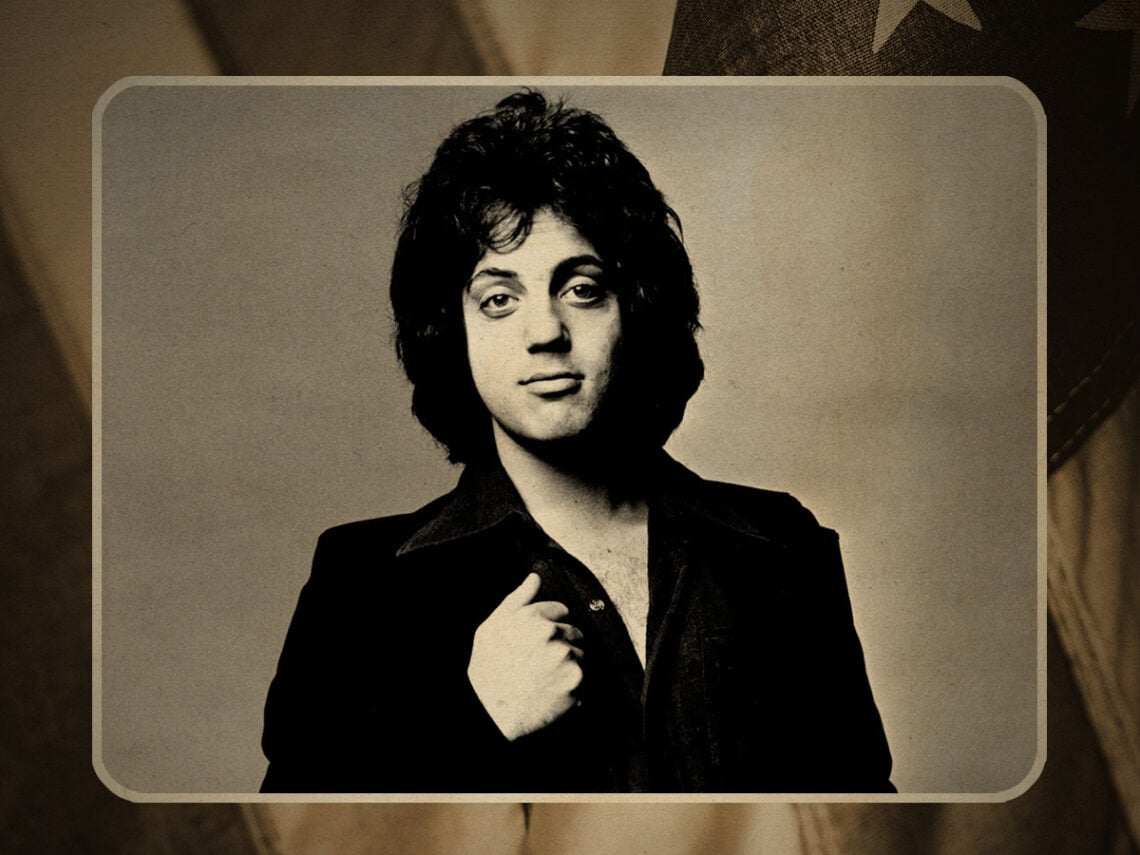
“A reach”: The “naive” song Billy Joel thought never worked

The music of Billy Joel might not resonate with everybody on the planet, but it’s tough to argue with his work ethic and level of expertise.
After all, during a speech at a college in 1996, he once broke out into a version of Beethoven’s Eroica symphony while narrating the late classical musician’s emotions and experiences at the same time. Masterful.
Not everybody recognises Joel’s ability to deliver perfectionist compositions as much as fans might, but, in a way, it’s his messiness that has garnered him widespread appeal. Whether he knows it or not, Joel is a musical maestro because of his unabashed passion for the art, even if he sometimes appears to jump the gun because his emotionality gets in the way of neatness.
That’s not to say that the musician isn’t good at what he does when it counts: there’s a reason why he has become one of the world’s most cherished artists and remains a significant muse for many film and television writers and the characters they create. Joel isn’t just a timeless writer; he remains a significant cultural touchstone, and that’s even harder to achieve.
Of course, when most people think of Joel, it’s difficult not to think of the various ways he repurposes and utilises major historical events, whether it’s in the subtle ways he filters classical music into his own work or the ways he directly references specific moments in time that changed the world forever. ‘We Didn’t Start the Fire’, for instance, remains one of the most enduring songs of all time.

‘We Didn’t Start the Fire’ wasn’t just ambitious in nature; it showcased everything Joel was willing to put on the line for the purpose of great art. Even better is the fact that it wasn’t the first time that the singer put history in the firing line to create a great piece of music; he also took this approach for ‘Two Thousand Years’, which, considering the fact that this required a more condensed overview of history, seems to surpass the Storm Front hit by quite a significant fraction.
What makes ‘Two Thousand Years’ stand apart is its shift in perspective. Where ‘We Didn’t Start the Fire’ races through history with a journalist’s eye for detail, this later track slows everything down, attempting to find meaning rather than simply catalogue events. It’s less about what happened and more about what it all amounts to when viewed from a distance.
That change in approach also highlights Joel’s willingness to take creative risks, even when the result might not fully land in his own eyes. Summarising the entirety of human history in a few verses is an almost impossible task, but it speaks to his ambition as a songwriter. Rather than repeating a proven formula, Joel chose to push further, even if it meant stepping into uncertain territory.
Following the end of the Cold War, Joel felt a specific sentimentality when writing for his 1993 album River Of Dreams. ‘Two Thousand Years’ followed a long, hard chapter in human history where nations fought to re-establish peace and quash animosity. Joel channelled this into the song, providing an anthem he hoped would give people something to hold on to. Of course, hindsight shows that what followed was anything but peace, but Joel recognised the innocence in his ambition.
“I was very hopeful when I wrote that song,” the musician told Sirius XM in 2016. “Hopeful to the point of being extremely naive.” Although he admitted having “all these great predictions” about science and poetry, his optimism was short-lived. “Boom, what happened? 9/11,” he said. “It really took me down, and this is just how optimistic I was before all that happened, then recognised things really aren’t going to change all that much. It was a wake-up.”
Discussing the song for The Tapes Podcast, Joel explained how the passing of time tarnished his relationship with the song. “I don’t know how crazy I am about [‘Two Thousand Years’],” he said. “That’s a tad ambitious. I don’t know if I succeeded on that one. It was a reach. You know, I’ll sum up all of the history of mankind in three verses. That’s a little bit of a reach.”
Despite its dated nature, the song undeniably hits a nerve, whether it’s sadness about what could have been or hopefulness about where humanity could potentially be leading in the future. Somehow, as Joel sings about how “only true love perseveres” and the power of togetherness, it feels impossible to ignore the beauty of humanity’s resilience in the face of war and suffering. “This is our moment,” Joel sings, consistent as ever in his emotionally driven position, regardless of the accuracy of his delivery.
