


‘A Portrait of Ga’: the intimate cinematic vision of Margaret Tait

Scottish filmmaker Margaret Tait carved out a special place for herself within the world of avant-garde cinema through her vastly influential works like Where I Am Is Here and Colour Poems. Due to her deep interest in poetry and her own writings, Tait’s approach to cinema was inherently poetic, which was reflected in the visual language she employed. It is this unique cinematic grammar that still feels revelatory to those who aren’t familiar with Tait’s films.
Before she ventured into avant-garde filmmaking, Tait had an interesting journey which brought her to cinema. Starting out as a doctor who served in the Royal Army Medical Corps, she worked in various parts of Asia, like India and Sri Lanka. After the conclusion of her service, Tait decided to pursue a career as a director and moved to Rome to study filmmaking at the renowned Centro Sperimentale di Cinematografia.
Following her academic explorations of cinema, Tait returned to Scotland and started working on films that were heavily inspired by the landscapes and culture of the Orkney Islands. In addition to her work as a director, Tait also published several writings, including poetry which was directly tied to her frameworks of filmmaking. In fact, she often referred to her cinematic projects as “film poems” because their aesthetic functions often ran parallel to poetry.
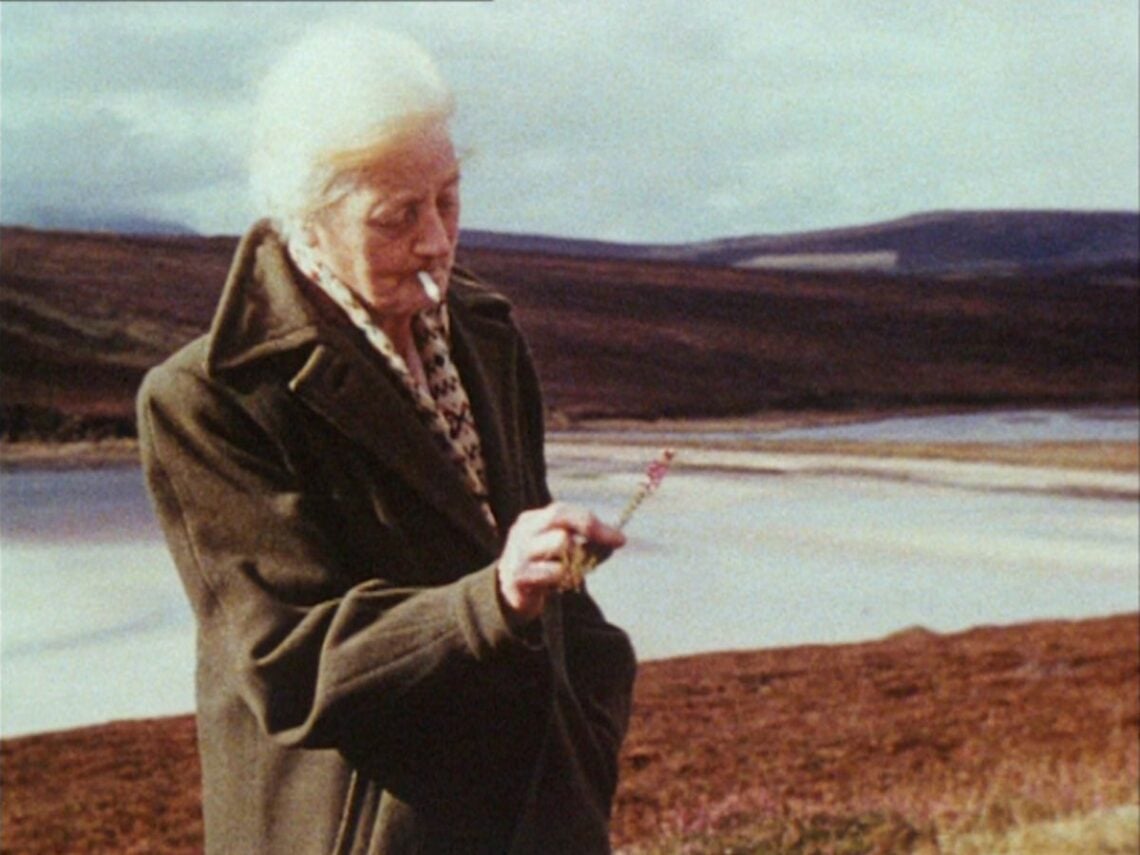
One of the greatest “film poems” from Tait’s oeuvre is a 1952 work called A Portrait of Ga, revolving around her own mother. Made with immense love and warmth, the film features vignettes of an old lady immersed in her daily activities, which reveal details about her enigmatic personality. Consisting of abstract visions that are threaded together with care, A Portrait of Ga actually manages to create a cinematic experience that is full of affection.
While describing the film and the specific visual language with which it functioned, Tait explained the reason behind the abstraction. She said: “My mother seemed a good subject for a portrait, (she was there), and I thought it offered a chance to do a sort of ‘abstract film’, in the sense that it didn’t have what you might call ‘the grammar of film’. It’s mostly discontinuous shots linked just by subject, in one case by colour, only rarely by movement.”
Tait’s singular approach to family portraiture is tinged with a colour that can only be called nostalgia, mimicking the appearance of memories. Her work continues to inspire younger artists, including Charlotte Welles, who incorporated Tait’s approach while making her own masterpiece: 2022’s Aftersun. Once you witness Tait’s brilliance in A Portrait of Ga, the parallels will become clear instantly.
Watch the film below.
