


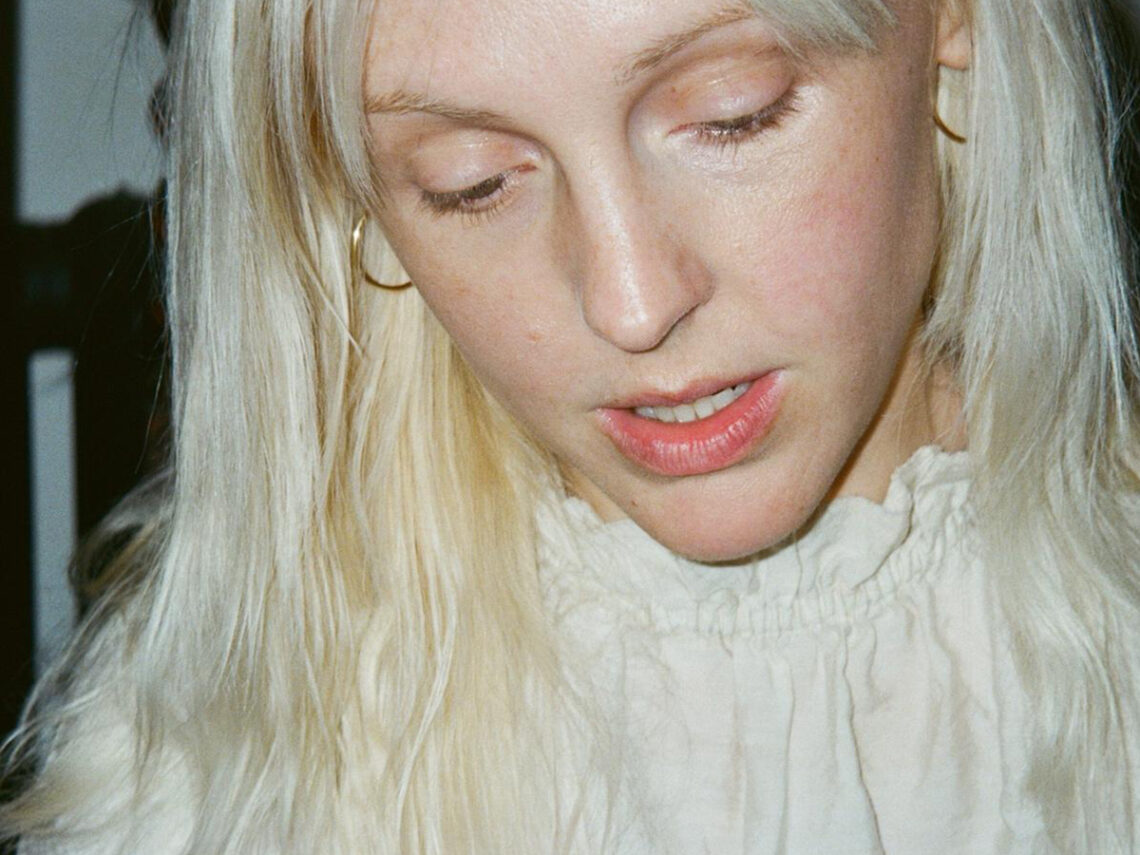
“A magical happening”: Laura Marling’s weed album

Music and pot smoking have gone hand in hand for several decades, even centuries now, with many of the great musicians and composers reporting to have used cannabis in some form as a supplement to their creative process. While for some users, the reports are that weed can make you lazy, lethargic or even nauseous, for others, it brings out parts of their imagination that they would otherwise not have tapped into.
When we think of big weed smokers in music, the mind almost immediately travels to the likes of Willie Nelson, Snoop Dogg and Bob Marley, all three of whom are quite easy to picture with huge billowing clouds surrounding them at every moment. Marijuana was massive in the jazz world as well, with artists such as Louis Armstrong and Cab Calloway having written what were known as ‘reefer songs’ as early as the 1920s – possibly the earliest examples of songs to have been directly influenced by the drug.
Folk music was far from the cleanest genre in terms of abstaining from drug use, with the hippie culture it often finds itself aligned with being strongly associated with smoking weed and using other mind-altering substances. For Joni Mitchell, it was a huge help for her to expand her imagination, and for Nick Drake, it was a daily ritual that he partook in, with some attributing his shyness to excessive use of the drug.
One artist that doesn’t get so strongly associated with the modern era, however, is British singer-songwriter Laura Marling, who is regularly heralded as one of the great folk musicians of the modern era for her deft ability to pen songs that are so rich in detail, yet never feel overcrowded. In an interview with Uncut, where the artist looked back over her discography in detail, she revealed that smoking weed had a profound effect on how one of her albums turned out, although it’s perhaps her most sparse album that was transformed by drug use.
Her fourth album, Once I Was An Eagle, released in 2013 when Marling was 23 years old, is a minimalistic yet devastatingly beautiful record and one that saw Marling develop a great deal as an artist. In the interview, Marling attributed her recent discovery of weed to how the first four songs merge into one 16-minute suite that feels incredibly progressive in comparison to her earlier work. “It’s like a nice lull, where you’re off on another planet,” she said, but she also revealed many other things about the record that were seemingly different to how she had previously worked.
“I’d had some intense emotional growth since the previous album,” she continued, “And I’d started to feel like I very much wanted to be on my own and not with a band.”
Working with her longtime collaborator Ethan Johns on production, Marling chose to abandon her previous bandmates during the collaborative process and allowed Johns to contribute large amounts of the arrangements and embellishments over the course of a week, adding to the intimate feel of the album.
“I still think of it as a magical happening,” said Marling of the record in 2020. “There was a sense that something was about to peak, it did feel like that. I felt like it was the best record I’d ever made, and I could sense that it would be harder to carry on from then.”
Once I Was An Eagle was truly a turning point in Marling’s career. From this point onwards, her albums became increasingly more adventurous, experimental, and sprawling, yet she still stayed true to her roots as a folk artist. The gentleness of everything on the record makes everything feel just that much more profound, and it’s clear that Marling’s mind and creative process were altered on this record.
