


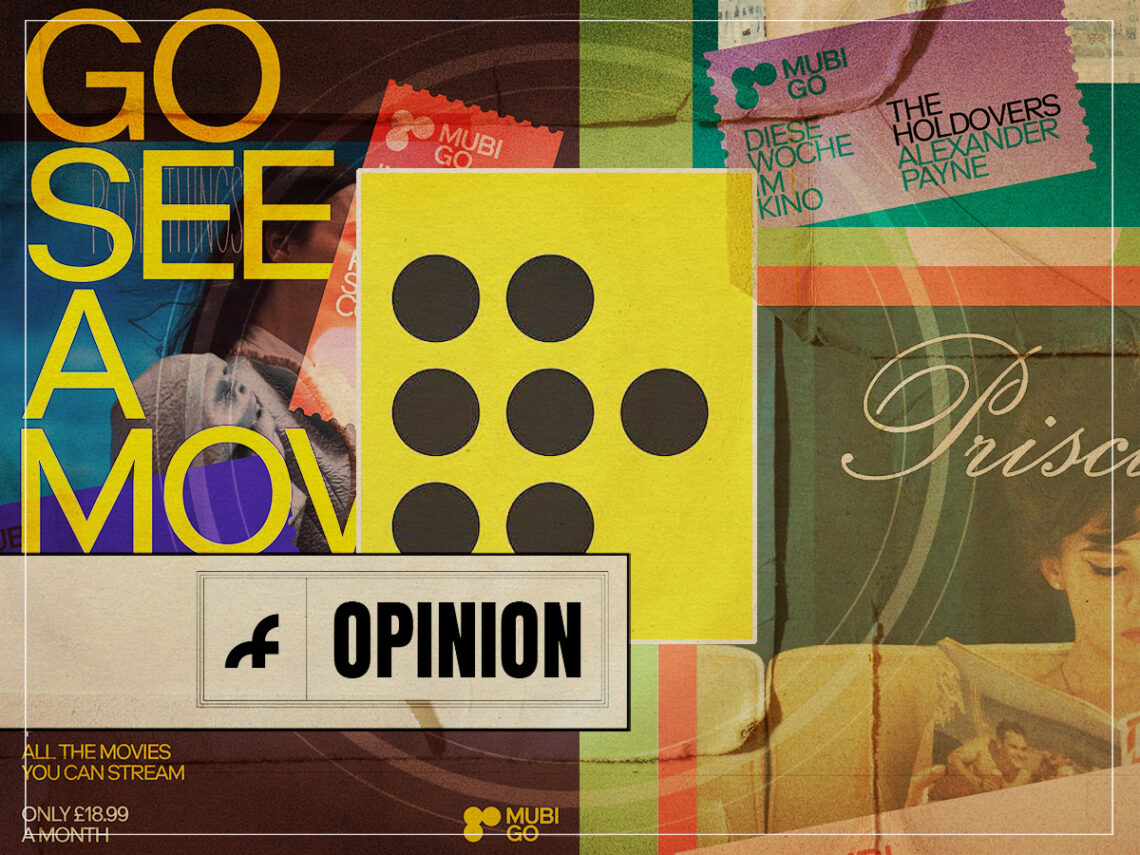
The comeback of the cinema: A love letter to MUBI Go

A month ago, I achieved what must surely be a kind of holy grail in a city as big as London. After getting my ticket, picking my seat in the same spot and getting the same usual mixed popcorn, the cinema steward on the door to the stairs that lead to one of the screens went to ask me if I knew where to go, then faulted. “Oh, you’re a regular, you know.” A regular – a title anyone who has lived in a vast and anonymous city yearns for, and a title I’ve got thanks to MUBI Go.
It’s because I’m there pretty much every week. If the film MUBI has carefully selected and given me a free ticket to is on at the cinema down the street, I always go there. If not, I’ll venue further afield, having spent the year getting to try out and tour some of its nicest screens: Rio in Dalston, The Castle in Homerton, Genesis in Bethnal Green, sometimes even managing to break into an Everyman, getting a taste of the upper echelon of cinemas thanks to the £99 I paid at the start of the year and by now have more than paid back.
Everyone is sick of hearing me say it, but MUBI Go is the best thing I’ve bought myself. Growing up working class often leads to a kind of spending paralysis that makes indulgences like cinema and streaming services feel like an irresponsible luxury. I contemplated it back in January, realising I only needed to go less than ten times to get my money back or that I could even just use the streaming platform to make it worthwhile, so I did it. At first, I thought my joy heading to the cinema each week was connected mostly to the fact of gifting myself this treat or spending my adult money on what essentially feels like a present to myself week after week. But really, it’s nothing to do with me. All thanks have to lay at the feet of the streaming service and their efforts to push movie fans from their screens and back out into the world.
We live in an age where almost every film you could think of is available with a click of a button. If it’s not on one of the countless streaming platforms, all coaxing people in with free week trials, then it’s likely somewhere online for free, or it might cost you £4 or so to rent. With Netflix, Prime, Disney+, Now TV, and even MUBI themselves, we’re in an age of choice exhaustion. Trying to pick a film to watch on some cosy weeknight feels like falling into a bottomless pit of choice where you can spend more time browsing than actually looking and where, if you don’t enjoy your pick, you can end up resenting yourself for a bad decision.
Having too many choices is paralysing, and we confront that fact day in and day out. As adults, we have to decide what to wear, what to eat, what to do with our free time, where to go for a drink, and so on. Even at the cinema, the big multi-screen complexes sometimes have close to ten films on at any given time. Or, when you live in a city, you have the choice of which cinema you want to go to. We have too much freedom, and while it’s sold to us as a good thing, it can actually be exhausting.

So, it’s delicious to fall into the arms of MUBI and let them make the decisions. The film ticks over each Friday, and on the app, I’m given nothing more than a brief summary and a rundown of the cinemas and screening times I could go to. All I have to do is pick a time, get myself there, scan a QR code, and sit down.
But still, while limiting my choice and taking control out of my hands, MUBI Go has meant I’ve actually kept up to date with new films for once in my life. From major releases like The Apprentice, Kinds Of Kindness or The Substance to smaller but interesting titles like Four Daughters or a documentary about Powell and Pressburger that probably would have slipped through the cracks if it wasn’t for the service. For once, I feel clued up, able to keep up with cultural chat, engaged with discussions about future awards show calls and even excited for that season to roll around, to join in with a larger community of cinephiles because this service has given me the opportunity to be involved, and simply, to afford to be involved. Or even on a small scale, I get to go onto Letterboxd and see a bunch of my friends also going to see the same film, giving us something to share in, even from our respectful cities across the country.
Going to the cinema is a privilege, but it’s one that I think everyone should be able to engage with. Like a concert or a show, there is something so special about being in a room of other people, engaging with the same thing. Even though the crowd doesn’t talk, even if it’s a full screening of people there on their own, all leaving a respectful seat gap in between them as they stay quiet and alone, there is something communal about it. Everyone laughs together, reacts together, and sometimes even cries together. You can look around in the dark and see first-hand how art affects humans as everyone shares in a unifying act of entertainment, yes, but also a display of empathy, humour, and so much more. The cinema, really, is a beacon of film’s impact on people, and MUBI Go feels like MUBI’s pledge to that as the only streaming service that’s pushing people away from their site and back out into the world.
When the steward called me a regular, I not only thought about how much I love going to that particular cinema but also about the importance of cinemas as a whole and how society’s commitment has tragically slipped from cultural institutions. We’ve neglected their importance as meeting places as our world has become increasingly individual and isolated. Before, we were a world of small villages where pubs, music venues, and cinemas were places where people who knew each other would socialise.
There’s even something about MUBI Go that seems to be bringing that back, or at least beginning to, as you’re encouraged to go to screenings in your local area where sometimes, you just might notice that same guy from last week sat in his own same favourite seat, eating his own same snack. One time, someone I recognised from another screening offered me a cookie, and I’d been waiting for the week when I spotted them again so that I could return the favour. Or maybe it’s enough that now when I see that steward, we say, “How are you?” rather than him just ripping the corner of my ticket and saying, “Downstairs to the left.”
My friends keep joking that MUBI should have me on commission, but I mean it wholeheartedly when I say that shouting the praise of the service feels like a rallying call for a return to the cinema being a community hub, a necessary playground for human experience and a sacred space protecting cinema as an art form that is meant to be shared, in these hushed rooms rather than at home where there is no one else there to laugh at the funny bit or to smile at you as shuffle in and find your seat.
