


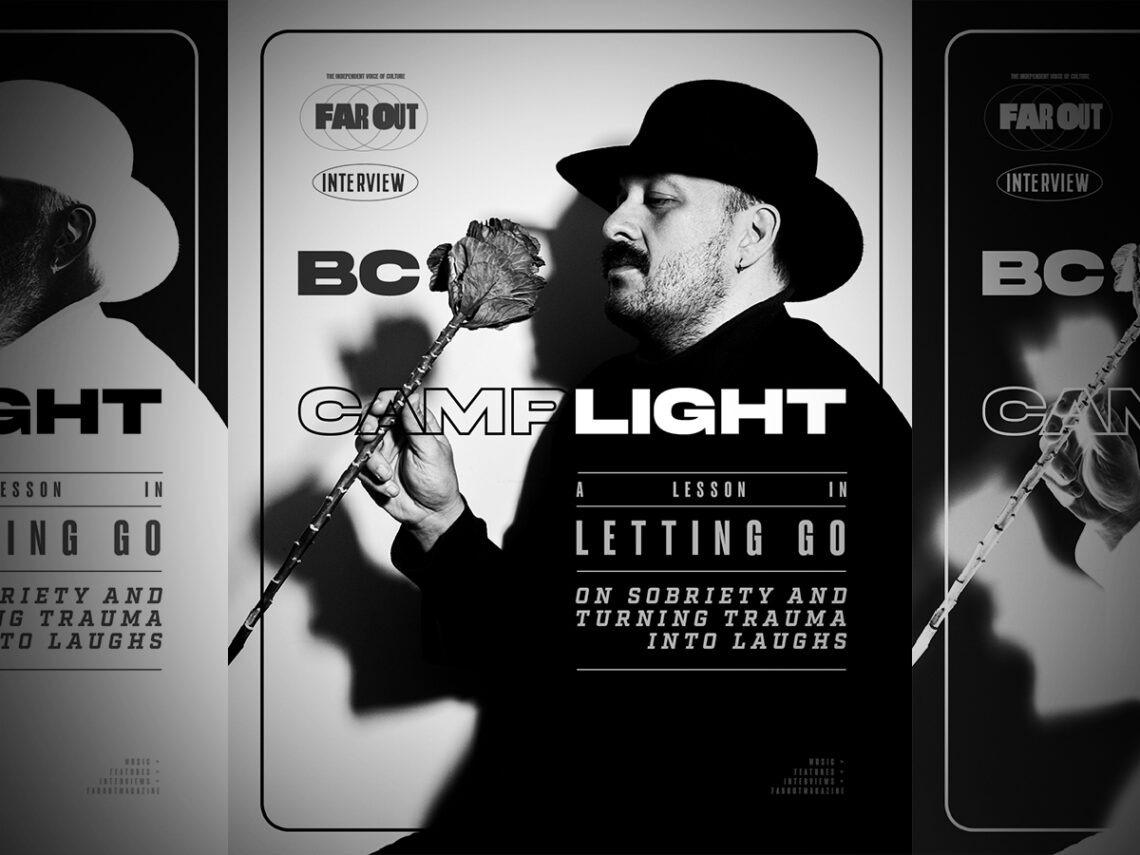
“A lesson in letting go”: BC Camplight on sobriety and turning trauma into laughs

BC Camplight isn’t exactly a household name. The project of New Jersey-born, Manchester-based songwriter Brian Christinzio, he’s perfectly happy to admit that he’s not famous, but he’s perhaps a lot more well-known than he could have expected to be at 45 years old.
“There seems to be raised stakes each time,” he tells me of the rigorous nature of the album cycle. “I think it’s because I went from having this ‘me against the world, nothing’s ever going to work out for me’ kind of attitude that was self-defeatist, to this ‘shit, it might work out and I hope it does’ mindset.”
To say that cult fame has been a long time coming might be a stretch; if anything, it’s a long-overdue thing that Christinzio should have been claiming over a decade ago. The fact that he’s worked his backside off by releasing a slew of gorgeous yet underappreciated records is indicative that the talent is natural and abundant, and even though there’s still some way to go before reaching the upper echelons, the recognition he’s receiving now is still more than deserved.
That being said, Christinzio himself believes that if success and acclaim had come any earlier, when one might normally expect a buzz to be surrounding you for your work, it would probably have tipped him over the edge that he’s teetered along for much of his adult life. On his seventh studio album, A Sober Conversation, you’re thrust into the darkest corners of the songwriter’s psyche as he grapples with past events that have haunted him forever, and now, with the maturity and clarity to process them, he’s found himself much more equipped to deal with the praise that has followed the release.
Every BC Camplight is steeped in tragedy to a degree, but the “raised stakes” that Christinzio speaks of in anticipation of releasing a new album were significantly more apparent for A Sober Conversation. Despite featuring his usual candour, the two main themes of the record are as sobering as they get: kicking a drug habit that’s lasted over a decade, and finally confronting the traumatic abuse he suffered during his teens.
“I think my last relationship ending was the catalyst to my last record,” Christinzio explains, referring to 2023’s The Last Rotation of Earth, “but that was one of very many wake-up calls where I realised I was just living in this haze and not being a great person. It took me a while to find my footing.”
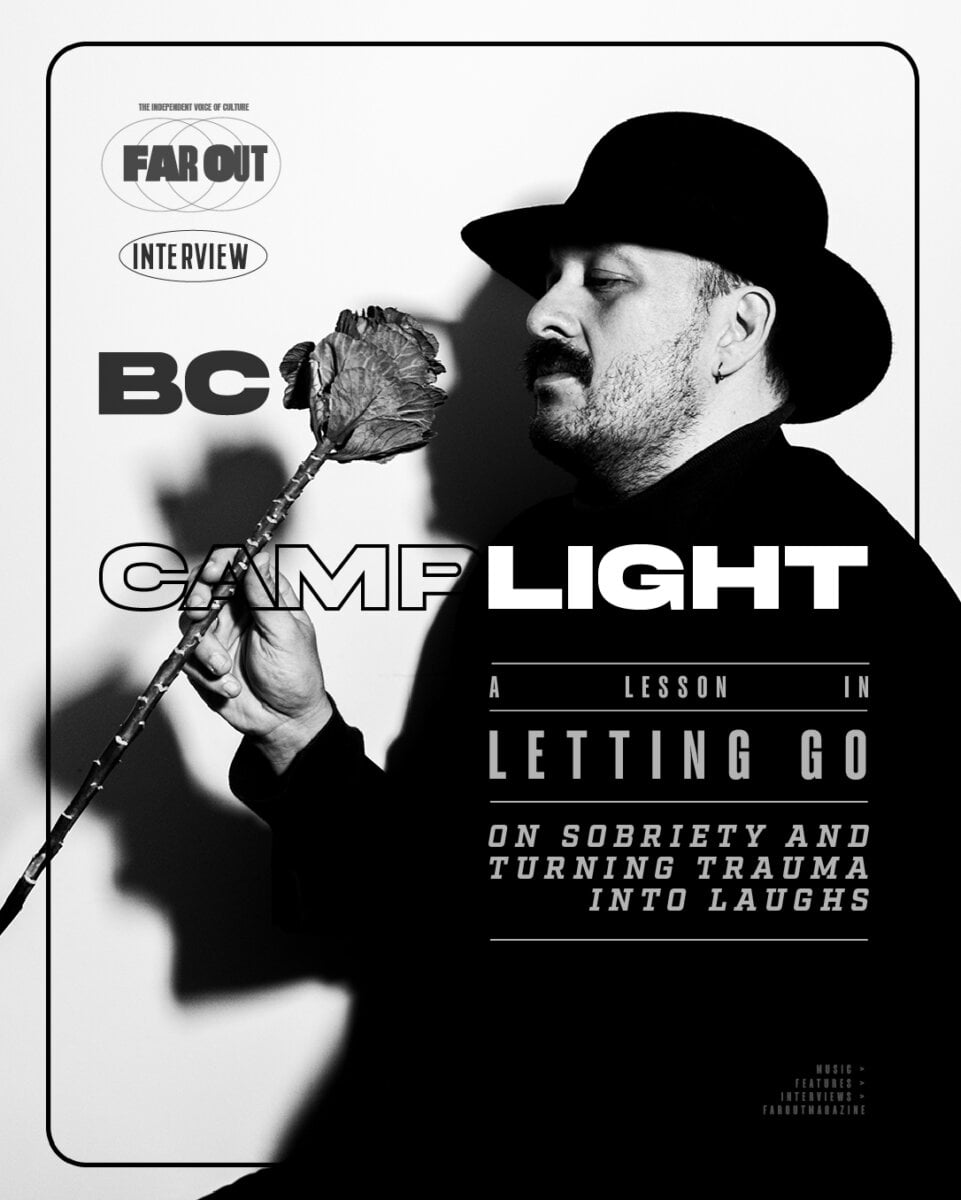
While the breakup of one relationship led to a despairing record, the glimmers of hope felt throughout A Sober Conversation are largely down to the emergence of another relationship, which guided him towards the need to confront his demons.
His new partner, Jessica, appeared to trigger something in Christinzio’s mind that got him asking questions he’d not previously contemplated. “My birthday two years ago was the last time I did drugs,” he says, almost blown away by the fact he finds himself able to say such a thing. “I woke up the next day thinking of the future of myself as an artist and as a man, and this worry hit me that I was essentially living a lie. Any of my traumas and things that I know I’ve been trying to deal with for decades now were just buried in me, and it was torturing me. I took a week or two off drugs, and it just snowballed into two years with the support of my partner and my friends.”
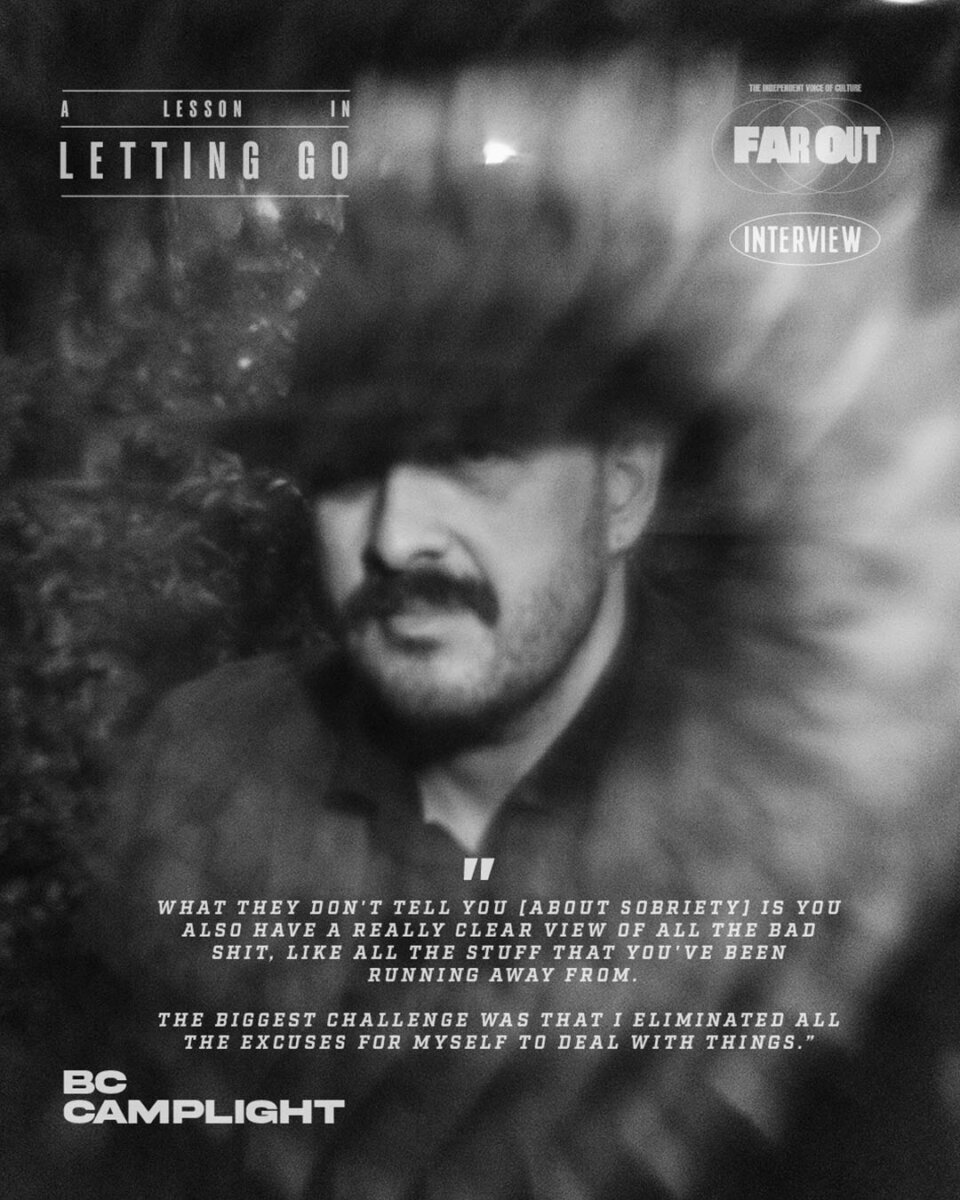
Of course, breaking an addiction isn’t a simple process that happens overnight, and it can take plenty of time to adjust to. Christinzio claims that one thing he struggled with was the sudden sense of clarity that came with not being intoxicated, and that it wasn’t exactly as it had been advertised to him. “What they don’t tell you is you also have a really clear view of all the bad shit,” he laughs, “like all the stuff that you’ve been running away from”.
The desire to confront his fears on record has come up before, but it has never taken up the entirety of an album. “I can hear it artistically in some of my songs, where I have these brief moments of wanting to deal with it, and then I back off quite quickly,” he acknowledges. “On The Last Rotation of Earth, there was a line in ‘It Never Rains in Manchester’ that says ‘I was smacked by lightning when I was 14, but I’ve been fucking mint since’, and then I don’t mention anything like that anywhere else on the album.”
“The biggest challenge was that I eliminated all the excuses for myself to deal with things.”
BC Camplight
That extends into his personal life as well, although it’s only been in the last couple of years that major progress towards this has been made. “I think for the past five or six years, there’s been at least a subconscious yearning to get better, or at least to acknowledge that this thing that happened to me,” he admits, “but there was no long stretch of sobriety, anytime in the last 15 years.”
This goes hand in hand with his aim of being regarded as an honest artist, and only ever writing about topics that were meaningful to him or served the purpose of his being able to move on to a better place in his life. “I thought I’d be doing myself a big disservice if I just decided now’s the time to do a fucking vacuous pop banger record,” he says, distancing himself from the notion of making an album that feels absent from meaning.
“It may have scared fewer people off, but that’s what the ‘sober conversation’ is with yourself – now’s the time to do this, I’m not getting any younger. I just decided to make this joint venture of my mental health and my creative currency, joining hands and going in the same direction.”
A large obstacle that stood in the way of his addressing things in his music sooner was the self-consciousness that comes with being candid about something so deeply personal. “I was a little bit too concerned with the perception of maybe other people,” Christinzio adds. “I could hear some of it on Deportation Blues, where I feel like I’m so close to being on to something, but there’s this hesitancy to be vulnerable. I started to piece together that the more I was speaking to myself, the more honest I was being with my music.”
Generally speaking, Christinzio doesn’t sit down and decide that his next album will follow a specific theme or concept, and between records, he doesn’t write a great deal, instead preferring to see where life takes him. However, given how much of an urge there was to confront his past self on A Sober Conversation, it required considerably more planning to ensure he was expressing himself in a way that he felt was both understandable and not uncomfortable for him.
“I had to weigh up what I was dipping my feet into before I did it, and I knew that once I opened this box, there was no going back,” he asserted. “There are people in my family and some of my friends who don’t know these things, and I had to be prepared for people to be uncomfortable about it, or to ask me questions that I might not be comfortable with just yet.”
Realising that this was a unique album within his catalogue, he knew that attempting to tackle such heavy subject matter might have backfired, and he knew that he had to be prepared for that. “This is my highest risk album from a mental health standpoint, and I knew that if I wasn’t really careful, it could go very wrong.”
Christinzio said that early feedback from his friends and inner circle called A Sober Conversation his most accessible record; something that he remains perplexed by. “How can a record centred around a 12-year-old being abused in a tent in New Jersey be my most accessible album?” he laughs, adding that despite the heaviness, it’s led to immense support from his nearest and dearest, and he envisions that continuing.
“My friends have been really supportive,” he notes, finding comfort in his network. “They’ve assured me that this was the right move. I know that my fan base has a large contingent of people who are very aware of mental health issues, and my family base, by and large, is quite enlightened, so I trust it won’t scare too many people off.”
It’s not just sobriety that has given Christinzio additional clarity over his life, but receiving an adult ADHD diagnosis between his last record and beginning the process for this album opened many doors he’d previously thought would remain shut for him. “That came as a surprise to no one,” he says of his diagnosis. “I was actually diagnosed when I was a child, so when I got my ADHD diagnosis, I called my family and told them, and they said ‘oh yeah, you were diagnosed as a kid’. I could have saved myself 30 years of this, but it explained almost everything in my life.”
Much like overcoming past trauma, navigating this diagnosis in his mid-40s has proved to be something that requires patience and determination to process. “I’m still trying to find my footing there,” he adds, “but it just takes away a little bit of the shame, knowing that there is some quantifiable label for this neurodivergence. I should be proud of myself for the things that I’ve managed to accomplish under these conditions.”
Christinzio has every right to feel proud of himself for A Sober Conversation, and at the same time, he’s allowed this fresh perspective to persuade him to take new approaches that he would previously have shied away from. At the risk of sounding like “a pretentious douchebag”, he says he’s never really understood the point of collaboration from the angle of fulfilment. “I know that the things that I want to get out there are things that I need to get out of myself,” he argues.
“Throughout my career, I felt like adding more voices to that would dilute the message.”
BC Camplight
He’s managed to unlearn some of this, though, and bringing in The Last Dinner Party’s Abigail Morris to sing on ‘Two Legged Dog’, as well as The Orielles’ Sidonie Hand-Halford to play drums on most of the track, gave him greater confidence in trusting his material in the capable hands of others. “With Abigail, we had another singer who was supposed to do this song, and she had to pull out on the final day,” he explains of how Morris got on board.
“I knew The Last Dinner Party were fans of mine, and they came to see me at Glastonbury, so I just messaged them. She was like, ‘fuck yeah, get me the track’. It was the only thing on the album that was done remotely. Within 24 hours, she sent it back with all the ad libs, all the howls, all the life that she brought to it. I wouldn’t have thought to do any of that, and it taught me a little bit of a lesson in letting go.”
It makes sense that he’d choose to abandon his old approach for this record, considering the very premise of the album revolves around letting go. Despite this, there are places where Christinzio knows he still has to show restraint in his work in order to have a greater impact. As someone who uses humour frequently to soften the blow of his darker subject matters, he was acutely aware of how a delicate balance between flippant remarks and gravely serious matters needed to be drawn.
Claiming that he took inspiration from John Candy’s performance in Planes, Trains and Automobiles, a film where the funnyman lets down his guard and becomes vulnerable for a change, Christinzio explains that a scale exists in his mind whereby he can judge when something becomes too far one way or the other. “This is why I can’t book in studio time for three weeks and go in and come out with a record,” he muses, noting how revision needs to play a large role in the end product.
“It’s a lot of chopping three words out here, getting the antonyms out and sprinkling them back over there to get the scales to level out again. Then, I’ll go home for a week and I’ll listen to it, and if I think I’m getting a little bit slapstick, or it’s not giving the right message, I sprinkle a little bit on the other side of the scale.”
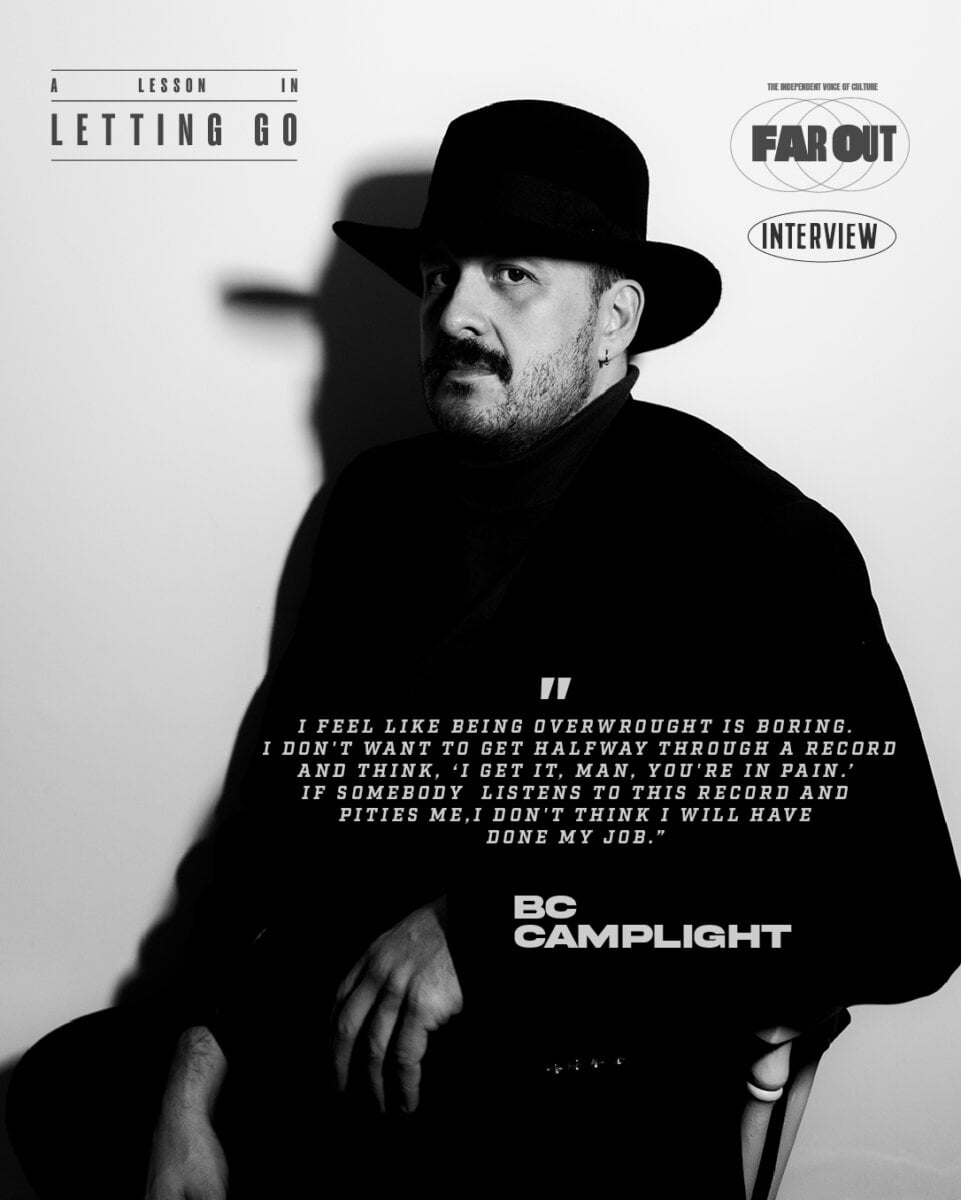
If his albums were to exist without the buffer of humour, Christinzio probably wouldn’t listen back to them. “I feel like being overwrought is boring,” he argues. “I don’t want to get halfway through a record and think, ‘I get it, man, you’re in pain.’ If somebody listens to this record and pities me, I don’t think I will have done my job.”
Once again, he took a certain amount of wisdom from his heroes on how he chose to approach this. “I think Joni Mitchell said if you listen to a record and you hear the artist, the artist has failed,” he muses, “but if you listen to a record and think about yourself, the artist has succeeded. That’s something that I try to keep in my mind.”
But are we hearing from Christinzio himself, or a slightly fictionalised and exaggerated version of himself? I thought it necessary to pick up on some of the more ludicrous lines heard on A Sober Conversation and see how much truth there was to them:
“Maybe I’ll learn some / I-talian / Dove il ristoranti” – ‘The Tent’ – Is the real Brian learning Italian?
“I had to become an Italian citizen to regain entry to the UK, which I am formally banned from as an American. I have dabbled in learning Italian, and I’m not solely blaming my ADHD, but it’s not going well. I ain’t a book learner.”
“As we pulled into the pines, I cried and he said ‘lеt it all out’ / I said ‘OK. Don’t tell anyone. I don’t care for David Bowiе’” – ‘A Sober Conversation’ – Does the real Brian not like David Bowie?
“I felt it important that it was obvious that the character in the song was saying something outrageous to avoid talking about his own feelings.”
“Sunday at ten to six / I’m running for my fix / Cocaine and Weetabix” – ‘Rock Gently in Disorder’ – Has the real Brian ever combined the two?
“I really don’t like Weetabix, and I really like cocaine. That’s just something that sounded really good. There was something about the visual of it that felt so unpleasant, but it’s perfectly unpleasant.”
It’s fair to say that Christinzio plays up to the character he has created, but that all of his actions are loosely based on his real-world experiences, and that doesn’t make the album any less personal or pertinent. As for how he might go about singing these songs in a live capacity, which is ultimately a more daunting experience considering he can see his audience in front of him, he explains that he has to distract himself to a degree.
“I think I’m able to go into a bit of a fugue state when I play live,” he says. “I can’t really be in the moment and dissecting lyrics as I’m performing them, or I won’t make it through the songs.” That being said, the experience of being back on the road, touring with the people he calls his closest friends, and meeting the people who have been affected by his music is still a source of excitement, especially since he’s going to be embarking on his largest tour later in the year.
“This time, for the first time ever, I’m on a proper tour bus, which I’ve never done before in my life,” he reveals gleefully. “We’re playing these massive shows, at the Manchester Apollo and the Roundhouse.” Despite the elevated status, he’s managed to stay grounded throughout. “Like I said, if this was thrust on me in my 20s, I think it would have really inflated my ego and pulled me far away from the things that were really important. Now there’s this sense of ‘I deserve this shit.’ I’ve worked really hard. I haven’t made it, but to me, I’ve come far enough where I can take a little joy in knowing that this stuff I’ve put myself through has been worth it.”
