


A brief history of viral internet music

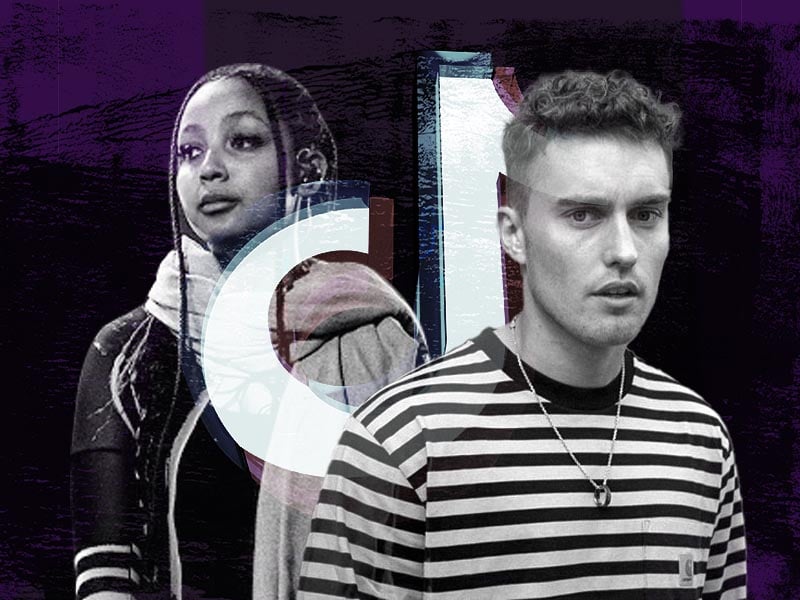
A few months back, there was a spate of musicians publicly complaining that labels were pressurising them into trying to turn their new tracks into trends on TikTok. As Halsey tearfully explained: “Basically I have a song that I love that I wanna release ASAP, but my record label won’t let me. I’ve been in this industry for eight years, and I’ve sold over 165 million records and my record company is saying that I can’t release it unless they can fake a viral moment on TikTok.”
TikTok is a shortcut to mass publicity and the youth culture’s need to be ‘in on the trend’ is an excellent way to ensure a song worms its way into society at large. The issue is that it isn’t all that good for art. However, when you’re coming at things purely from a business point of view, then the tendency is to only look at the empirical evidence, and on the surface, a viral trend can be hugely profitable for labels.
The seed for this was first sewn in the very early days of the internet. The first viral track dates back to the pre-internet days of 1987. Rick Astley had a big fat hit with ‘Never Gonna Give You Up’, then it went away. Like many things from the 1980s, it was sequestered as a dated piece of culture set to become a tricky pub quiz answer in years to come.
Then a message board service called 4Chan sprung up in 2006. One of the site’s moderators thought it would be funny to replace all uses of the word ‘egg’ on-site with ‘duck’. Before becoming a troublesome breeding ground for unwelcomed political discourse, the site was known for its irreverent humour, mostly occupied by young men cutting loose in the liberating anonymity of an unmonitored online realm.
One thread on the site happened to be about ‘eggrolls’, thus, this particular discussion page became a ‘duckroll’ thread. When people pondered what a duckroll might be, an anonymous user created an image of a duck on wheels. The image then caught on and created a niche that memes still thrive on: Do you get the joke? Ultimately, if you knew the origin of the confusing image, then you got the joke, and you were in the club, so to speak. For frequent 4Chan users, there was something satisfying about this—there was almost a sense of belonging to be found.
It also had the elitist edge of being used to prank those out of the loop. In fact, it was pranking that brought rickrolling about. In March 2007, Grand Theft Auto IV was so hotly anticipated that the site crashed. Thus, a 4Chan user thought of a way to prank desperate fans by posting a link to the video. However, this link actually redirected them to Rick Astley’s big fat hit from yesteryear. This created a comic community fad.
Communities are a great thing to target. ‘Never Gonna Give You Up’ is a prime example of this. Now, 1.2 billion people have watched the video. The old hit was dead now it’s one of the most watched on the internet and millions have been made. This was simply because of a catchy tune and a community creating an in-joke craze. Every other viral video since then has followed a similar trend.
When Rebecca Black emerged in 2011 with ‘Friday’, initial radio play was minimal. Physical formats weren’t even available in stores. However, online, the irreverence of the catchy song caught on. Soon it went from some obscure corner of YouTube to the home page. This alone ensured that it gained millions of views and took it from nothing – without any real promotion – to 58 on the Billboard Hot 100.
A year later, ‘Gangnam Style’ became the next transition of the trend. This was less of a daft in-joke and more of a cultural sensation thanks to a quirkiness, an invisible horse dance, and a catchy beat. Soon, it became the first YouTube video to ever hit the one billion mark. It now has 4.5 billion views—there are only 7.8 billion people in the world!
Thus, you had comedy and dances essentially forming the crux of the early hits, but soon old classics like ‘The Sound of Silence’ would also find their niche. The blanket term was that culture was becoming ‘memefied’. If a song can fit that bill then there is every chance it will become ubiquitous and there is money to be made from that.
While this might not be great for art, there are some musicians who have used it in their favour. Lil Nas X purposefully promoted his track ‘Old Town Road’ in this fashion. He turned it into countless tweets, set up dancing accompaniments and so on. The TikTok community got a hold of it and suddenly it became inescapable online. This exposure meant that it became the longest charting in Billboard history. Now, it has set up a promotional revolution whereby a viral craze is almost the aim of mainstream outlets. For better or for worse (and most likely for worse), we’ve come a long way from rickrolling.
