


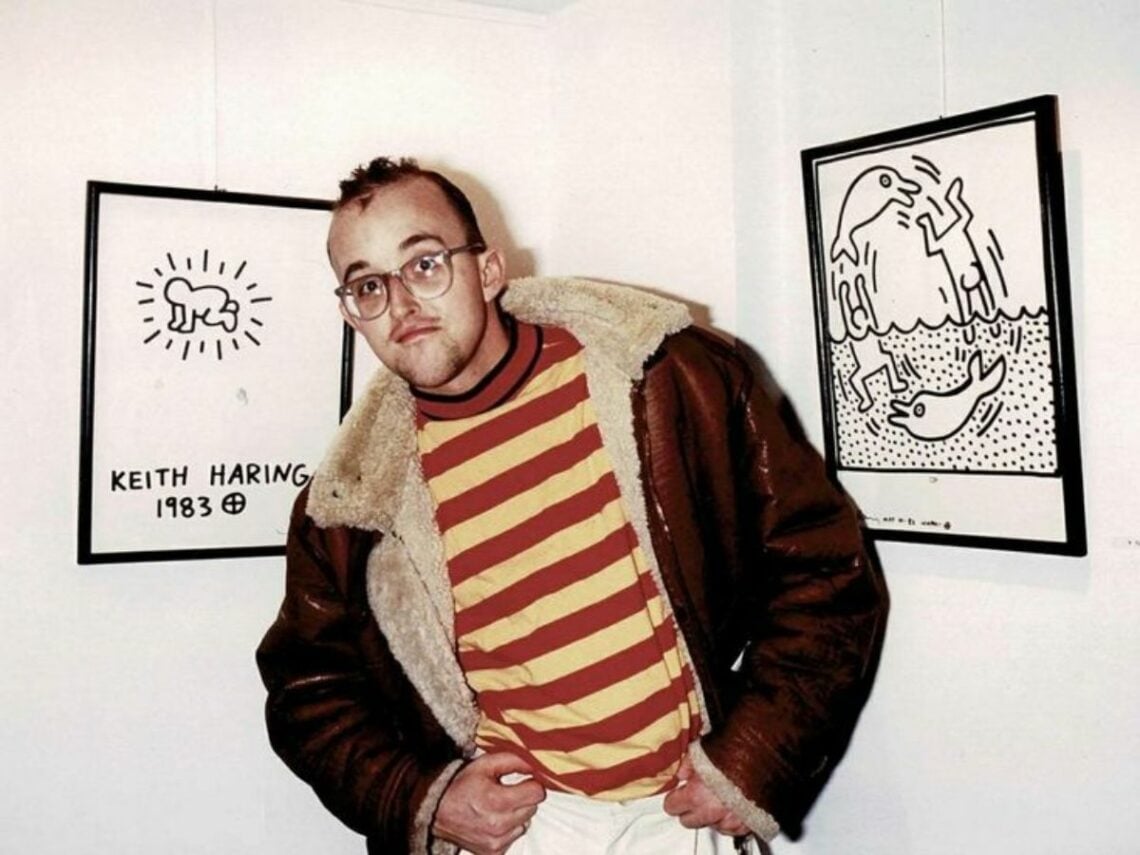
From Mick Jagger to Aretha Franklin: A collection of Keith Haring’s mixtapes

The spectacular artwork of Keith Haring became a symbol of its own as a response to the societal issues he experienced and witnessed on the streets of New York. AIDS awareness, anti-apartheid sentiments, LGBTQ+ rights, drug abuse and religion were common themes of his work, which he used as a platform for activism.
Haring’s work was captivating due to the use of bright colours and bold shapes, stemming from his experience as a graffiti artist. During his career – which was tragically cut short when he was just 31 – he used public spaces as a canvas, spreading his message by altering advertisements with his paintings and words or attaching his art to lamposts.
As Haring’s reputation grew and his work started selling for high prices, he continued to adorn subways and other public places with his art. Moreover, he continued producing buttons and posters to hand out for free and voluntarily donated artwork to schools, hospitals and daycare centres. In 1986, he opened his Pop Shop, a store that prevented Haring’s work from only becoming accessible to art collectors. The shop encapsulated the essence of Haring’s work – to make art available for all.
He explained: “Here’s the philosophy behind the Pop Shop: I wanted to continue this same sort of communication as with the subway drawings. I wanted to attract the same wide range of people, and I wanted it to be a place where, yes, not only collectors could come, but also kids from the Bronx. The main point was that we didn’t want to produce things that would cheapen the art. In other words, this was still an art statement.”
Music was a significant part of Haring’s creative process, enticed by its ability to convey meaning and social messages, similar to his art. He always played music while creating murals, drawing inspiration from vibrant beats and rhythms. In the 1980s, he was attracted to the burgeoning hip-hop and breakdancing scene, which led to the incorporation of dancing figures in his art. However, Haring had a varied music taste, blasting anything from new wave to disco and classical music. He associated closely with many musicians and DJs, such as Grace Jones, Madonna, and DJ Juan Dubose, who were huge influences on his art.
During an interview with Dazed, art curator Tamar Hemmes explained: “The club scene was important, not just for his work, but for his life. Haring came to New York in 1978 and very quickly started going to Club 57, a nightclub, which was the kind of place where he met a lot of performers and artists who became a part of his social circles, people like Madonna, for example. But at the same time, he started organising performance evenings and was curating work by his peers. It was a very creative, artistic scene that was taking place.”
The Keith Haring Archives have digitised many of the artist’s mixtapes between 1983 and 1988, giving fans a greater look at the music that shaped his art and life. It showcases his eclectic taste and love for artists such as Prince, ESG, Aretha Franklin, Van Morrison, Kool & The Gang, Igor Stravinsky, Sylvester and Chaka Khan, to name just a few.
Discover a complete playlist of Haring’s collected mixtapes below.
