


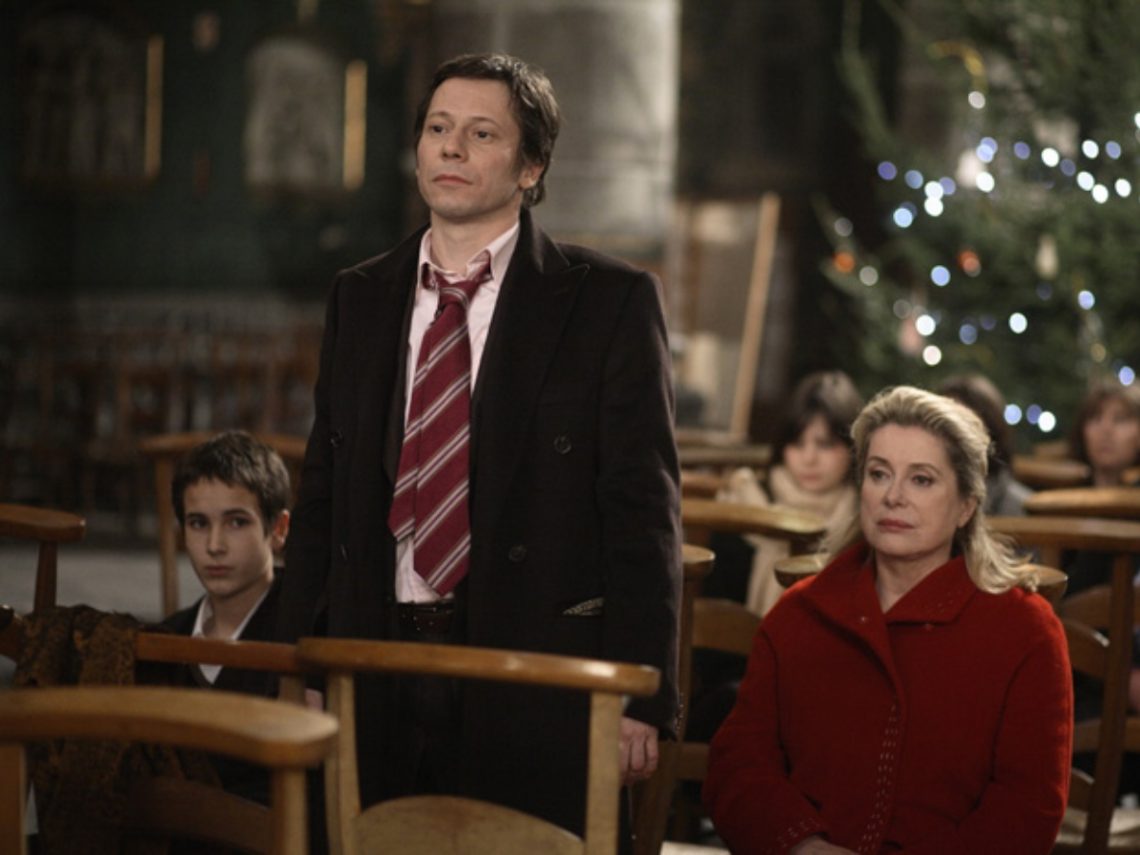
How ‘A Christmas Tale’ achieved a Palme d’Or nomination

A festive film that may have slipped under the radar but deserves some watches this season is A Christmas Tale. The 2008 French comedy-drama directed by Arnaud Desplechin features a fantastic cast starring Catherine Deneuve and Jean-Paul Roussillon. Desplechin’s film explores an estranged and dysfunctional family who gather at their parent’s home for Christmas only to receive the news that their mother has leukaemia. The film was a success, earning a spot in the competition for the Palme d’Or at the 2008 Cannes Film Festival, becoming the first Christmas movie to do so.
It goes without saying that the Palme d’Or is a massive deal for filmmakers, being the highest prize offered at the Cannes Film Festival and widely considered one of the film industry’s most prestigious awards. Typically, recipients of this award border on stylistic noirs such as The Third Man, which won in 1949, or psychological character studies as seen in the 1976 winner Taxi Driver. Thus, it is initially surprising to hear that a festive holiday film once received a nomination. However, Desplechin became the first director to submit a Christmas film for the Palme d’Or.
So what is it about A Christmas Tale that attracted such a pristine trophy? Well, A Christmas Tale may be a Christmas movie, but that doesn’t mean it has to submit to the expectations of tone, narrative and effects associated with the genre. While there are plenty of other alternative Christmas films that contrast the more recognised and cliché-driven classics, it’s just that A Christmas Tale took more of a risk in the subject matter.
A Christmas Tale infiltrates the grey and compromising area between the humorous and the unsettling, employing contrasting tones and events to examine a family that is the utmost dysfunctional and unconventional. This reads as a vast and ambitious risk when considering traditional family presentations in Christmas films, as seasonal features emphasise love, gratitude and coming together to celebrate the most wonderful time of the year. Even in bizarre cases like Home Alone, where a family accidentally leaves their youngest child alone to fend for himself, family love is a principal value to the story. Desplechin’s script tackles several family issues, with the setting of Christmas exhibiting a contrast to the challenges and a possible motive to resolve the problems. The film offers multiple characters to maintain this conflict, with the interpersonal problems established immediately to set the stage.
Speaking to Indiewire upon the film’s release, Desplechin shared his motive for playing a dysfunctional family against a Christmas background. “This time, I came to the story through this idea that I was going to be making a Christmas movie. How can you take this family, this material and make it a good film? For me, it was important not to be too nice,” the filmmaker explained. “Who wants to see a family where everyone gets along? It would be boring! At the same time, it cannot be too terrible; if it is too terrible and cruel, it doesn’t make for a good movie. It doesn’t work.”
The director also emphasised his goal of achieving equilibrium and rationality when it comes to presenting the mother’s illness and her family’s reaction to it, such as the morality and emotional investment in choosing to provide a blood transfusion: “So, it has to be something in between. For me, it is how do I get this balance?”
When considering these family dramas, the thought of a Christmas gathering to celebrate and express love appears dire and intense. Audiences can view it as a challenge, a test to overcome. Blending a festive visual style with heavy subject matter creates a complex watch, as the former is infiltrated and negotiated by the latter. Desplechin employs an unfamiliar emotional expression to compromise a universally familiar annual celebration. The family members express their dislike or disapproval of one another whilst sharing necessities and engaging in Christmas activities. A Christmas Tale presents what should be a close-knit band of people in the form of outsiders, strangers to one another who are sharing a space to submit to a holiday’s expectations and image. The consequence of this set-up is a cold and empty echo chamber, not exactly the type of thing you want to watch with the family after a joyful, merry day.
Dialogue and performance are tasked with being the exposition of this outlook, as lines such as “thanks to my disease, we’re being reunited” exemplify the neglect and difficult chore being in this family involves. A Christmas Tale does not restrict itself to one character or one journey. Instead, audiences are poetically bombarded with multiple characters and subplots, each heavier than the last. Audiences think a particular character is a hero or victim in their story to brand them the villain in another member’s story. This layered and profound story presentation breaks away from tedious Christmas movie norms. This negotiation against expectations of any film style is something that Cannes Film Festival wants to see and acknowledge.
The intertwining plots and character arcs spin a dire ensnaring web tied together by complex approaches and situations, something that has Cannes Film Festival written all over it. A Christmas Tale takes a risk in being a Christmas film that presents something broken, exposing the annual holiday that values superficial wholeness. Family grudges may be swallowed to get on with Christmas, but that does not eliminate them, as Desplechin explores in the film.
The juxtaposition Desplechin’s film embodies by showing the audience a dysfunctional family suffering through what is supposed to be a beautiful and uplifting time for families aligns with previous Palme d’Or nominees and winners. This award praises filmmakers who tackle, overcome and achieve. A Christmas Tale effortlessly tackles expectations and overcomes clichés to achieve something different yet pragmatic. It proves there is no reason a Christmas film cannot go against the norm and present a side to the holiday that is raw and real.
