


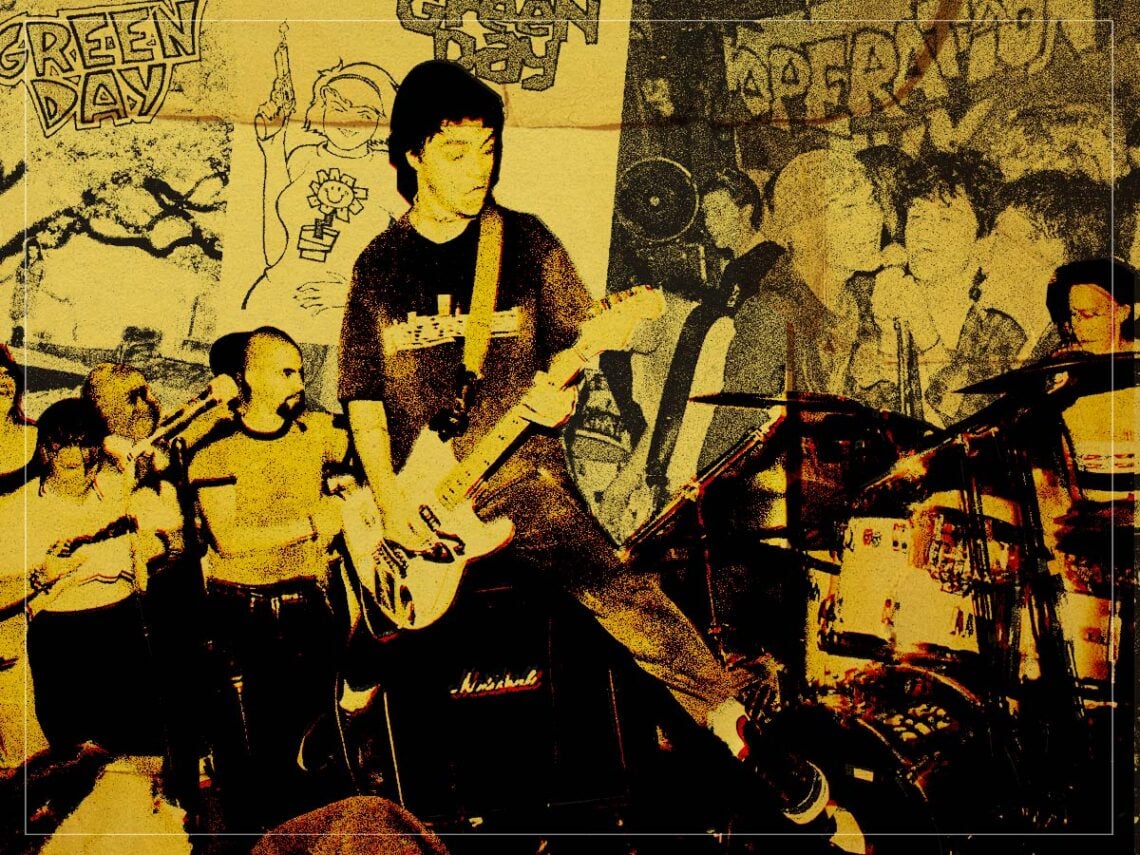
924 Gilman Street and the pettiest feud in rock history

In the world of punk rock, the words “going mainstream” may as well be considered sacrilege. Several artists who have grown up in punk clubs have found their way onto the charts, but there are only so many times that they can have hits before they start looking like a caricature of the genre rather than someone with anything meaningful to say. Especially for the underground punk scene, any type of mainstream success was synonymous with selling out, and once Green Day left the venue at 924 Gilman Street for a major label, it started one of the most infantile wars that any high-profile band ever had to fight.
Then again, it’s not like Green Day was exactly the biggest underground name in the world. As much as other bands of their ilk, like Crimpshrine, were signed to independent labels, Billie Joe Armstrong’s songwriting was indebted far more to The Beatles and Cheap Trick than to Minor Threat, leading to punk shows where you could actually dance without having to worry about getting knocked out in a circle pit.
Every band has to get their start somewhere, though, and growing up in northern California, Gilman Street was the best place for Green Day to set up shop. Considering its reputation for housing underground legends like Operation Ivy, its creed of no sexism, racism, or any prejudice seemed to be the model of what the punk rock lifestyle should have been.
There was just one caveat: no band signed to a major label could play there. That didn’t seem to matter to a young Armstrong and Mike Dirnt. The idea of being a major player in rock music seemed like a far-off dream, but by the time they started working on Kerplunk with new drummer Tre Cool, it started to look like it could actually happen.
Even their label’s founder, Larry Livermore, remembered being intimidated by hearing tunes like ‘2000 Light Years Away’. Despite going platinum without any massive help, Green Day was still proud to be independent before meeting with Rob Cavallo. It couldn’t get more mainstream than the son of one of the men behind Prince’s Purple Rain, but Cavallo at least spoke their language enough for them to trust him not to steer them off a cliff when they made Dookie.
Once they inked a deal with Reprise Records, though, to say that their stomping grounds were pissed would be a massive understatement. From that day forward, Gilman Street outright banned them from playing there, with Armstrong later remembering, “There was no one in there, and [my friend] had a key. We were drinking, and I went into the girl’s bathroom, and someone had written ‘BILLIE JOE MUST DIE’. That kinda sucks that I can’t go to the place I used to hang out all the time. That time period will always be a moment of confusion for me.”
In the end, though, was their music all that different? Yes, they had better production behind them, but when you look at a tune like ‘Welcome to Paradise’ on Dookie compared to the version of Kerplunk, it’s hard to really understand the logic of liking the version on the independent just because it’s mixed slightly worse.
While Green Day tried to get much heavier on their next album, Insomniac, it did nothing to turn the tide for their hometown club. They were still beyond pissed off, but Armstrong wasn’t looking to repent to them, either, eventually writing ‘86’ as a firm middle finger to anyone who dared call them sellouts.
But this wasn’t just some raw wound. That ban remained in effect until 2015, years after they had broken into the mainstream and a full decade after they had turned rock and roll on its head with American Idiot. No matter what kind of code of punk ethics that anyone measures themselves on, this is the musical equivalent of not talking to someone because they accidentally broke one of your toys.
Then again, at that point, it didn’t really matter if Green Day weren’t welcomed back anymore. Because if anyone starts shaming an artist for signing to a major label, chances are they are going to be the first people to start kissing ass when they actually see them doing well.
