


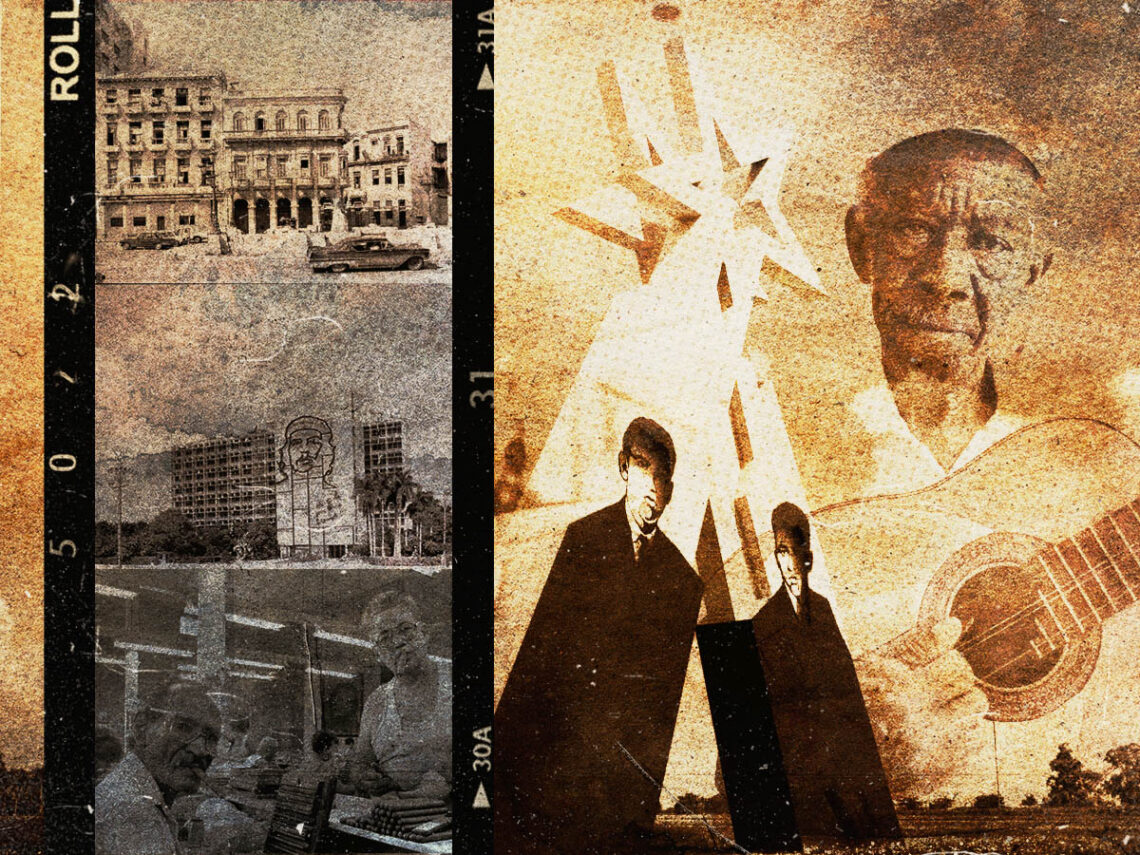
Exploring late ’80s Cuba with Bent Rej

When Bent Rej arrived in Cuba in the late ’80s, the nation was on the cusp of another great change. 30 years before, the revolution had put an end to Fulgencio Batista’s regime. In the following years, Cuba cut ties with the US and placed itself in the hands of the Soviets. When the Soviet Union collapsed in 1991, the country lost its primary supplier of imported food, machinery and everyday goods, plunging it into crisis. These photos were captured during his second visit in the early ’90s.
In this collection of stark monochromes, worlds collide. Pearlescent beaches give way to palm-flanked tower blocks, cocktail-sipping hedonists rub up against exhausted factory workers, and towering communist sculptures dwarf ornate century-old cathedrals. Rej offers paints a portrait of a nation powered by the collective experience of its inhabitants. We see them wandering the empty streets, sweating in the midday sun and exchanging marriage vows. We watch as they work the land, kiss their loved ones and revel in the joys of music. All is done beneath the ivory glow of an undying sun, and all is captured here.
Rej’s subjects are inseparable from the landscapes in which they exist. Workers in one of Havana’s cigar factories hand-roll tobacco leaves into neat cylinders; on the roads, cyclists traversing busy crossings look dissolve into the tarmac; and in train depots, gnarly train drivers take on the rust of their machines. While Cuba’s people are frequently consumed by their surroundings, its manmade structures, tributes to Christian saints and communist revolutionaries, dominate the landscape.
Rej also shows us the changing industrial and agricultural landscape of Cuba. Before the revolution, most of Cuba’s agricultural produce went to the US. By the time Bent arrived, that had all changed. The Soviet Union was injecting billions of dollars into Cuba every year, offering it oil at below-market prices and then allowing that commodity to be re-exported to the world market. This generated a huge amount of revenue – twice the amount generated by exports of Cuba’s primary crop, sugar, for which the Soviet Union was paying more than six times the average market price. By the time these photos were taken, decades of economic improvement had given way to food, medical, and oil shortages.
Bent’s second trip to Cuba coincided with a unique period in the nation’s history. In this collection, he captures it in all its complexity. Take a look below.


