


50 years of Andrei Tarkovsky’s sci-fi epic ‘Solaris’

Fifty years have now passed since the legendary Russian filmmaker Andrei Tarkovsky released his sci-fi epic Solaris in 1972. The film is often referred to as Tarkovsky’s response to Stanley Kubrick’s 2001: A Space Odyssey released four years prior. The film is an adaptation of Polish author Stanislaw Lem’s 1961 novel of the same name.
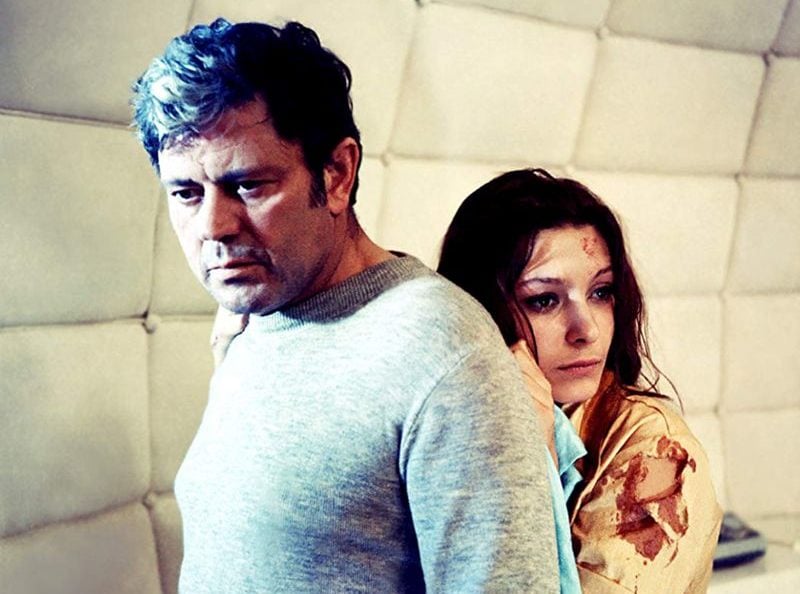
Solaris follows psychologist Kris Kelvin (played by Donatas Banionis), who is sent on a journey to a space station to investigate the titular planet the station is orbiting. Kelvin’s mission is to evaluate whether a study on the planet ought to continue after it had stalled following a series of researchers falling into severe emotional distress.
Kelvin spends his last day on earth in the company of his father and a former space pilot Burton, who had also visited Solaris. Burton informs Kelvin that he had experienced several peculiar incidents on the space station, including visions of a four-metre-tall child. However, Burton’s reports (and those of his crew) were dismissed as mere hallucinations. Now that other scientists on the station have begun reporting similar experiences, Kelvin’s psychological knowledge will be tested.
When Kelvin arrives at the station, he finds it in a mess and is not initially met by any of the three scientists onboard and finds that one of them (Kelvin’s friend, Dr. Gibarian) has killed himself. The remaining two are out of sorts, to say the least. Kelvin then begins interacting with several people who were not meant to be on board.
Amongst them is Kelvin’s wife, Hari, who had died ten years prior. Hari does not understand how she got there, and Kelvin ends up releasing her into outer space, terrified. However, Hari turns up once more. After several strange occurrences, Kelvin and the other scientists posit that the planet Solaris itself is responsible for creating the station’s ‘guests’ from the crew’s memories.
Indeed, the similarities between Solaris and Kubrick’s space film are evident, for they both feature human journeys into the interstellar unknown and alien intelligent lifeforms that can create worlds (in the case of 2001) or beings (Solaris). However, where A Space Odyssey charters the course of humankind’s progression into the next step of their evolution, Solaris warns humankind against making that leap until they further understand their own consciousness.
What’s more is that Tarkovsky felt that many science fiction films at the time had eschewed a vital component of them: human emotion. They had primarily focused on technological innovation rather than exploring the concepts of human consciousness, memory and desire, which Tarkovsky would closely examine in Solaris and also Stalker in 1979. In fact, Tarkovsky had claimed that 2001 was “phoney on many points [and] a lifeless schema with only pretensions to truth“.
In a similar move, Stanislaw Lem did not necessarily approve of Tarkovsky’s adaptation of his novel. Tarkovsky had wanted to make a film based on Lem’s novel but with its own artistic direction. However, Lem had insisted that it ought to be a direct adaptation. Upon release, Lem claimed that the film was more akin to Dostoyevsky’s Crime and Punishment rather than his own novel. However, he also admitted to not seeing the film’s finale until after Tarkovsky had died.
In 2002, Steven Soderbergh directed a remake of Solaris starring George Clooney. While it was critically admired, it was not well-received by the public audiences as they had essentially shown up to watch a Cloon-tastic sci-fi thriller rather than a deep and profound exploration of Tarkovsky and Lem’s original philosophical exposition. Still, Tarkovsky’s 1972 sci-fi masterpiece remains one of the genre’s most admired works.
