


25 Years of science-fiction romp, ‘Starship Troopers’

In 1997 Paul Verhoeven directed the science fiction film Starship Troopers, based on the 1959 novel of the same name by Robert A. Heinlein. The film was written by Ed Neumeier and was filmed from April to October of 1996.
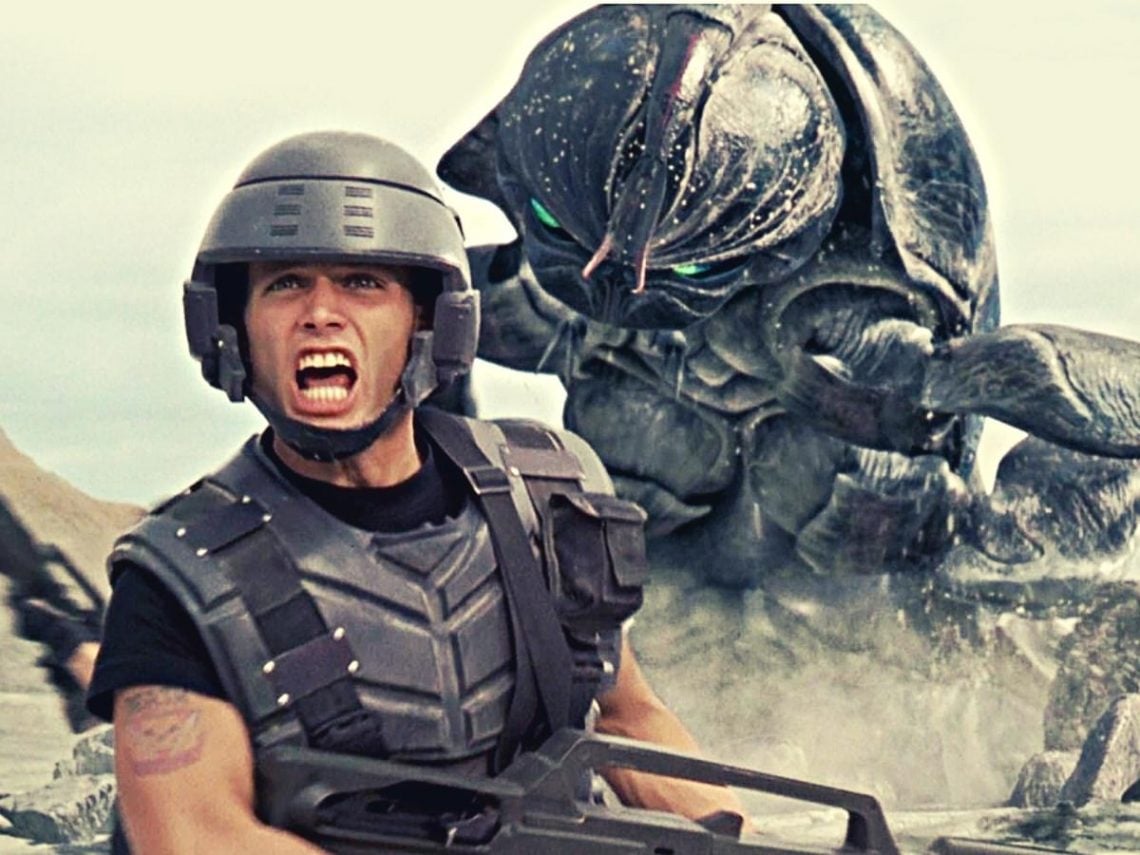
Set in the 23rd century, Starship Troopers focuses on mankind as they colonise outer space, leading them to come into a brutal war against the Arachnids, an alien species to mirror insects. The cast of the humans fighting in this interstellar military includes Casper Van Dien, Dina Meyer, Denise Richards, Jake Busey, Neil Patrick Harris, Patrick Muldoon, and Michael Ironside.
Following the film’s release, it did hold initial box office success. However, its subject matter of extreme right-wing ideology was misread by critics who dished out negative reviews under the impression Starship Troopers was actually Fascist propaganda. These scathing reviews also included accusations of Verhoeven and Neumeier being Nazis.
Fortunately, 25 years have been kind to Starship Troopers, and interpretations of its narrative have calmed down. The film has been critically re-evaluated to gain cult classic status and is now cited as one of the greatest science fiction films ever made.
It can now be seen as subverting expectations of war films, and sci-fi films. Furthermore, its satirical representation of fascism and authoritarian governance has been analysed in recent years to hold relevancy and educational purposes.
It cannot be denied that Starship Troopers has some unsettling content, both visually and thematically. The core disgust lies within the gore factor of the routinely placed fight scenes. These sequences can only be described as exceedingly execrable and gruesome due to the macabre special effects provided by Tippett Studios of young soldiers being pulled apart by colossal bugs. The brutality of fight scenes is a common feature in military films; the savagery of war being presented to spectators to disturb them serves as the goal.
However, the addition of science fiction as a source of entertainment gives a new level to the initial genre. Humans are unsettled by insects and we come to think of insects as disgusting due to the connotations they exist upon. Therefore, for Verhoeven to combine vicious imagery of dismemberments with them being at the hands of such creatures violates our pleasure as an audience.
Furthermore, Starship Troopers exemplifies a case of social issues and morals within its story. The issue of war between two distinct groups challenges ethics when considering the treatment the groups exert towards each other, thus accentuating the film’s themes of morality and ideology.
The film interestingly quarrels any sympathy for both groups by having the “enemy” be repulsive non-human creatures. By placing the protagonists’ nemesis as the common fear of bugs, the film challenges the emotional reactions one would direct towards the treatment this enemy receives in the bombings and massacres; it is difficult to feel sympathy for something so inhuman and revolting in appearance and behaviour.
Instead, audiences find it difficult to feel sorry for the victims of these attacks because they refuse to emotionally align with the enemies as they are a shared human fear. Furthermore, Verhoeven channels unsettlement and critical thinking in the film’s undertone of fascism as an ideology. Interestingly, this is the source of both praise and criticism towards Starship Troopers; the satirical presentation appears to be hit or miss.
Audiences observe the excessive portrayals of the military with overblown characterisation and a pattern of propaganda featurettes inserted between significant arcs of the event, creating moral judgement as a response. This comes from the display of far-right ultranationalism ideals in the imagery of costumes and sequences.
Thus, Starship Troopers’ extreme presentation of fascist ideology brands the film as something a little more developed than just your average sci-fi flick. In the 25 years since its release, the battle scenes and military presence have been re-assessed. They now serve as entertainment and thematic take on politics and lack of perspective towards social matters.
