


25 years of ‘Good Will Hunting’: Matt Damon’s sentimental and insightful psychology study

Sentimental. Insightful. Emotional. These are some of the words associated with the 1997 film Good Will Hunting, a psychological drama about a boy genius who submits to an emotional crisis that jeopardises his talent.
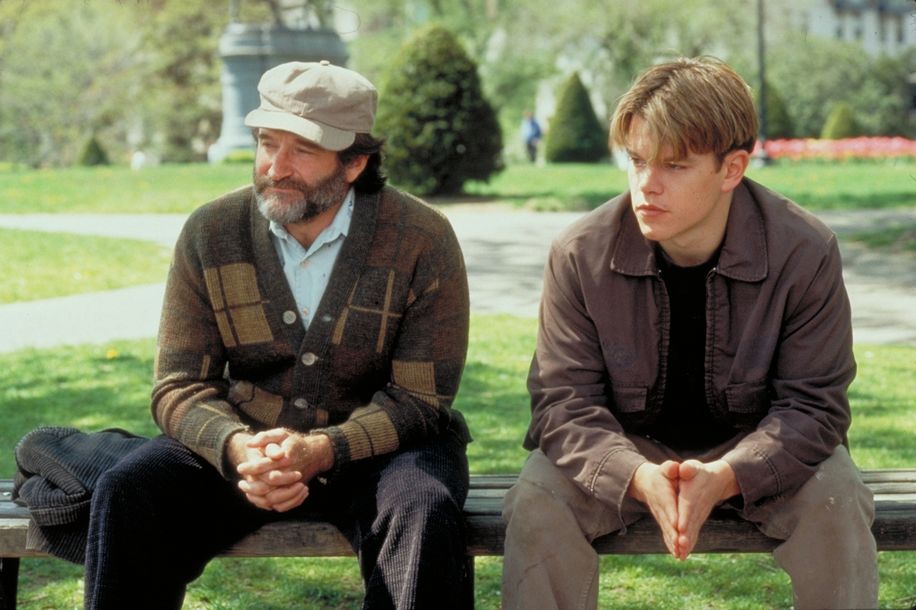
Good Will Hunting stars Matt Damon as the mathematic genius Will Hunting, who comes under the treatment of Robin Williams as his therapist. Damon also wrote the film with Ben Affleck, who also appears in the film as Hunting’s companion. Castle Rock Entertainment hired innovative filmmaker Gus Van Sant to direct the project, which had already changed dramatically from the original source material.
The classic film was released 25 years ago, and it has successfully retained its status as a universally loved film due to its powerful writing and magnetic performances. It has only grown in stature because it features one of the finest roles of Robin Williams, who won ‘Best Supporting Actor’ at the 70th Academy Awards. Damon and Affleck also picked up the ‘Best Original Screenplay’ award, being nominated for Best Picture and Van Sant earned a ‘Best Director’ bid.
During a 2021 interview with GQ, Damon shared how the first day of filming was an emotional experience, having worked long and hard on the script. “Sometimes those moments sneak up on you,” Damon explained. “And that was another one of those moments we never thought was going to arrive. To see not only actors but those actors, saying the stuff that we wrote, was like…”. He adds: “Just, I guess, a mixture of joy and disbelief. And relief. And gratitude. That would probably be it. That was a really nice moment. I’m not ashamed to say it.” So what is it about Good Will Hunting that resonates so much with critics, audiences and its cast?
Good Will Hunting is a testimony to the notion a film can achieve greatness with a well-written script performed by a talented and passionate cast. These harmonise to create a comforting atmosphere and dynamic emotional responses. In the age of high-budget CGI blockbusters blowing up the screen with non-stop action and fight sequences, it’s a refreshing interval to watch something honest and poignant. Something that explores the human condition as it reacts to emotional and psychological issues should always be highly valued.
The story represents our experiences; its characters portray the good and ugly traits that emerge within us. Audiences can understand Hunting’s bitterness and pain hiding behind his witty persona. They can also appreciate Williams’ healing through humour, a bittersweet observation now the actor has passed. Van Sant’s direction, plus Damon and Affleck’s writing, allow the film to employ a beautiful tone combined with some tragic elements, such as Hunting’s emotional breakthrough during the painful yet cathartic “It’s not your fault” scene.
Another profound scene that captures the film’s heart and spirit is Dr Sean Maguire’s (Williams) brilliant speech to Hunting about knowledge vs wisdom. Damon’s writing and Williams’ performance are a powerful combination in this scene. The script sets up insightful binary oppositions regarding the definition of knowledge – reading and memorising books, and the meaning of wisdom – living life. There may be no action heroes taking down armies or overwhelming explosions, but the scene’s dialogue and the actors’ facial expressions are just as riveting. Like the whole of Good Will Hunting, this infamous scene exemplifies its core values and ideas effortlessly, in a manner where audiences are immediately captivated and learn from the scene’s meaning.
Good Will Hunting also presents contrasting characterisation to elevate its narrative. Hunting spends most of the film hiding his trauma, projecting counterfeit coolness but lashing out when he feels his pain is being attacked. He neglects opportunities to take his intelligence seriously, pretending it’s due to a careless nature when he is scared and insecure. Maguire also demonstrates pain and trauma, like his client. However, instead of repressing it and employing it to push others away, the psychiatrist nurtures it and illustrates how people can grow from hurting. The relationship the two build through sessions, as led by these different outlooks that cause them to clash and then harmonise, augment the film’s statement on processing the human condition.
Ultimately, the Academy Award-winning picture utilises its dramatic power and employs its performances to exhibit some beautiful yet intricate themes. It celebrates knowledge and emotion, showing how both can bring downfalls but can be powerful tools. The film has recently been used to remember and pay tribute to the dearly missed Robin Williams after he passed in 2014. It truly is a timeless watch, as its emphasis on psychology, trauma, emotion, and bonds will always be relevant.
Watch one of Good Will Hunting‘s powerful scenes here.
