


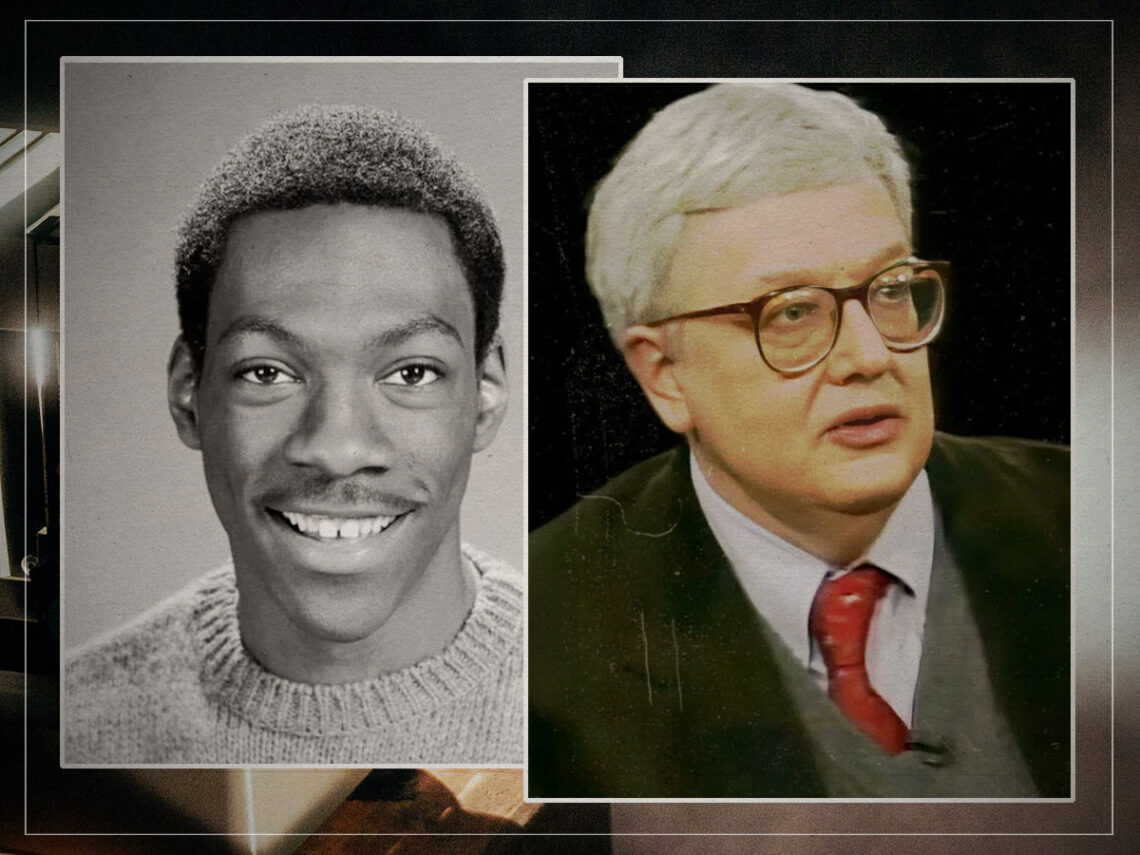
The 2003 Eddie Murphy movie Roger Ebert couldn’t stand: “Fuelled by delusion”

Few stars in Hollywood history have burst onto the scene and reached the top of the industry faster than Eddie Murphy, which meant there was realistically only one way for him to go after he’d perched himself on the mountaintop so early in his career.
To put things into context, the actor and comedian’s first seven films had combined to earn over $1.3 billion at the box office, he’d notched three Golden Globe nominations for his performances, won a Grammy, ensured his position as one of Saturday Night Live‘s greatest-ever performers, and headlined the highest-grossing stand-up comedy movie ever released in cinemas by the time he was 27.
Meteoric probably doesn’t even do it justice, and one of the downsides was that the vultures were constantly circling. Murphy knew that better than most, and he responded to The Golden Child becoming his first notable flop by diving straight into a blockbuster Beverly Hills Cop sequel that was a guaranteed hit.
By the early 2000s, though, things weren’t looking great for his long-term prospects. Holy Man, Life, I Spy, and Showtime failed to recoup their budgets from cinemas, the Nutty Professor and Dr Dolittle sequels both made over $100million less than their predecessors, and The Adventures of Pluto Nash was one of the biggest flops of all time.
2003’s family comedy Daddy Day Care may have been Murphy’s most profitable release in years, but it was awful. The film didn’t receive many glowing reviews, with one of the most scathing coming from Roger Ebert, who unloaded both barrels on the leading man’s latest misfire.

Part of the frustration surrounding Murphy’s career at the time was that nobody doubted his talent. Whether it was the razor-sharp comic timing he’d displayed in Trading Places and Coming to America or the effortless charisma that carried the Beverly Hills Cop films, he’d already shown he could elevate almost any material. The problem wasn’t Murphy’s ability but the increasingly uninspired projects he was choosing to headline.
That made Daddy Day Care feel like another step away from the fearless performer who had taken Hollywood by storm in the 1980s. Family comedies had become a reliable commercial lane for Murphy, but they rarely captured the wit or edge that had made him a superstar in the first place. Even before critics weighed in, there was a growing sense that one of cinema’s brightest comic talents was capable of far more.
“Daddy Day Care is a woeful miscalculation,” he surmised. “A film so wrong-headed audiences will be more appalled than amused.” Ebert’s assessment may not have been a hit piece on Murphy specifically, but it’s nonetheless obvious that the critic believed he was capable of so much better than the dreck he’d constantly found himself headlining.
“The movie’s miscalculation, I suspect, is the same one that has misled Murphy in such other recent bombs as I Spy and The Adventures of Pluto Nash,” he suggested. “That the delusion that Murphy’s presence will somehow lend magic to an undistinguished screenplay. A film should begin with a story and characters, not with a concept and a star package.”
Ebert was convinced that Daddy Day Care was “fueled by the delusion that it has a brilliant premise: Eddie Murphy plus cute kids equals success.” He might have branded the tedious caper as a delusional piece of work, but it can’t be denied that it was successful. It’s definitely a very bad film, but audiences were happy to fork over their cash to catch it on the big screen.
It’s not even close to being the nadir of Murphy’s filmography either, which says it all about his fall from grace.
