


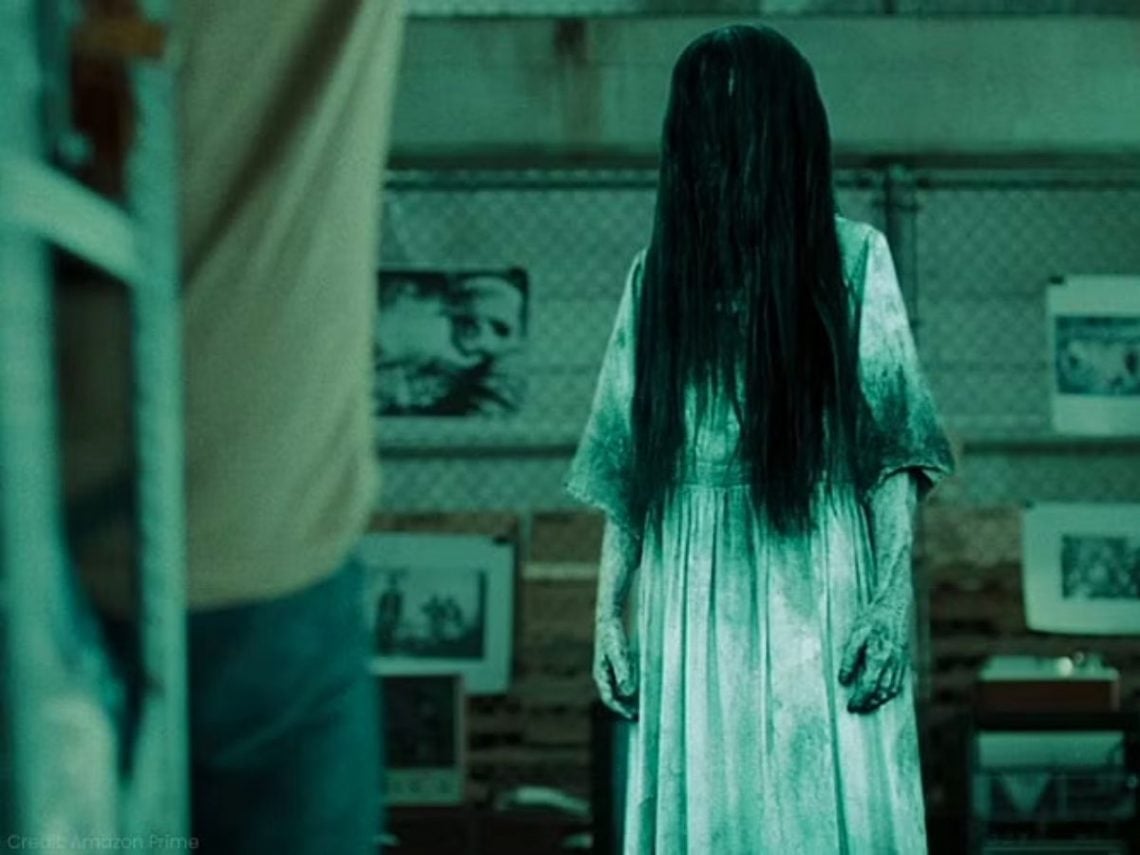
Celebrating 20 years of ‘The Ring’: One of the few great horror remakes

When it came to horror in the 1980s, the things that went bump in the night were too often male slasher killers, sporting conventional weapons and terrifying masks. Such was certainly true for Jason Voorhees of the Friday the 13th franchise, Michael Myers of John Carpenter’s Halloween and Texas Chainsaw Massacre’s Leatherface, with many of these villains proving still popular as horror cinema made its way into the 1990s.
Across the waters in Japan, however, the seasoned filmmaker Hideo Nakata was working on something far more innovative and far more contemporary, a film which centred around a mystical VHS tape that carried the curse of a young, bedevilled girl and the dark promise of death after seven days. Playing into the fear of emerging technologies, Nakata’s Ringu was a trailblazer of grungy horror that would birth a new trend in the western genre.
Distinctively different from American horror, Japanese horror is laced with ancient curses, rules and historic misdemeanours, with films often punishing their characters with the crimes of their ancestors, linking the past with the present; bad deeds never go unpunished. However, the international success of Ringu made the disparate kind of horror impossible for Hollywood to ignore, as Dreamworks and filmmaker Gore Verbinski set to remake the film in 2002.
Where countless American remakes of classic international horror properties fall short (see 2005s Dark Water, 2008s One Missed Call, and 2021s The Grudge), Verbinski’s take on Nakata’s ‘90s classic was curiously competent. Starring Naomi Watts in the lead role, alongside a supporting cast that includes Brian Cox, David Dorfman and Martin Henderson, The Ring successfully brought the distinctly Japanese horror story to western audiences with aplomb.
Leaving much of the story untouched, the American remake merely quickens the pace a little and adds a bit of Hollywood energy, which likely explains why it works so well. Nakata’s story is, after all, a timeless one, updating the classic ghost story in which spectres used to reside in the walls of dilapidated homes but now exist in the questionable realm of television and marvellous new technologies.
Questioning how safe and trustworthy these new technologies truly were, the film follows a familiar trend that was permeating through horror at the turn of the century, with The Ring doing for TV what One Missed Call did for mobile phones and Pulse did for the internet. Coming out just two years after the furore around the strange millennium bug, Verbinski’s remake of Ringu demonstrated that the same fears around new technology were being felt in the western world too.
Opening the door to the influence of J-Horror, with remakes of The Grudge, Dark Water, Shutter, and The Eye coming shortly after the release of The Ring, the 2002 re-imagining of Nakata’s film was pivotal in changing the contemporary landscape of the genre.
It would be difficult to imagine the existence of Sinister’s otherworldly goth ‘Bughuul’, without the black-haired horror of The Ring’s ‘Samara’, and even the strange ethereal dimensions in both Insidious and Stranger Things, seem to take a leaf out of the early noughties horror. Even 20 years after its release, there is an innate terror to the story of The Ring and an eerie unpredictability that teaches us all to question the sincerity of technology.
