


20 masterpiece movies that changed cinema forever

Through new and progressive ideas concerning writing, editing, filming and marketing, the medium of film is an ever-growing and ever-changing experience. Directors, actors, editors and score composers all come together in a collective artistic process that can shape how films are made, exposited and perceived by culture, with some notable films changing cinema for good.
These changes vary in their realms when looking at what makes film distinct as an art form and its various positions, such as entertainment and business. One movie can change how filmmakers shoot a subject on camera, having to overwork barriers or attempt to create a visual that has never been seen before. The way a film is then edited can reshape attitudes towards the medium’s technological realm, presenting new and intriguing ways to keep audiences entertained with on-screen manipulations that help with storytelling and spectacles.
Another can shift prioritisation by arguing for audiences to consider that storytelling is essential in arguing for cinema’s cultural role, done so by representing humanity or societal issues needing to be discussed. When considering release dates and methods of watching films, cinema can progress by changing when and how movies become public.
Including sci-fi films that brought new editing tropes, hybrid genres that emphasised the significance of a thoroughly planned release date and historical milestones, here are 20 masterpieces that changed cinema.
20 movies that changed cinema forever
The Horse In Motion (Eadweard Muybridge, 1878)
Popularly recognised to be the very first motion picture ever made, our list starts with the pioneering work of Eadweard Muybridge in the late 19th century, whose series of cabinet cards, in the form of The Horse in Motion, paved the way for modern filmmaking. A feat of groundbreaking technical work, the film was put together with multiple cameras and multiple images that were stitched together to create a motion picture.
Initially made to settle a scientific debate about whether all four of a horse’s hooves are off the ground when it is galloping, the film has gone on to become a major cornerstone of cinema history, even referenced in Jordan Peele’s sensational contemporary film Nope, itself a celebration of the moving image.
A Trip To The Moon (Georges Méliès, 1902)
Speaking of early movies that are still referenced in cinema to this day, the Georges Méliès classic A Trip To The Moon demonstrated a new standard of filmmaking to audiences, demonstrating what could truly be achieved with the moving image. With a revolutionary length of 15 minutes (early examples of cinema were largely restricted to just a few minutes at most) and an innovative approach to special effects, the film was a commercial success and was extensively pirated across the world.
Packing a structured story into its runtime, which followed a group of astronomers who travel to the moon in a cannon-propelled capsule, Méliès’ film took cinema to brand new heights of potential.
The Story of the Kelly Gang (Charles Tait, 1906)
The Story of the Kelly Gang is a 1906 Australian bushranger film that charts the exploits of a 19th-century gang of outlaws. It was directed by Charles Tait, who also co-wrote the film with his brother John.
Tait’s work has an original cut of more than an hour with a reel length of about 1,200 metres (4,000 ft). This release places The Story of the Kelly Gang as the first full-feature narrative film that opened the door to longer runtimes and more compelling stories in cinema. It was the longest narrative film yet seen in the world until J. Stuart Blackton’s 1909 adaptation of Les Misérables and Vasily Goncharov and Aleksandr Khanzhonkov’s war film Defence of Sevastopol in 1911.
Birth of a Nation (D. W. Griffith, 1915)
Possibly one of cinema’s most controversial contributions, Birth of a Nation, is D.W Griffith’s blend of fiction and history. The film focuses on two families, one northerner and the other southerner, who cross paths when one of the latter members is captured in battle. This leads to the formation of the despicable right-wing terrorist hate group, the Klu Klux Klan.
Birth of a Nation, plot and concept-wise, is a disgusting and wretched excuse for visual storytelling. However, it holds a legacy in filmmaking through its technological landmark of being shot and presented as the first non-serial American 12-reel film. Simply put, it went against the tradition of showcasing a collection of short subjects in consecutive order at one theatre every week until the series ended. Further technological changes included the emphasis on the close-up shot and the fade-out editing strategy.
Battleship Potemkin (Sergei Eisenstein, 1925)
This silent drama focuses on a dramatic and artistic retelling of the 1905 incident when the Russian battleship Potemkin’s crew rebelled against its officers. Battleship Potemkin was written and directed by theorist Sergei Eisenstein and featured a swarm of unnamed actors to maintain its naturalist approach.
The film is a crucial piece of film history and theory, representing its director’s proposal of Soviet montage editing theory, which emphasises the significance of editing in storytelling and audience engagement, cited by Eisenstein as “the nerve of cinema”. Battleship Potemkin also showcased cinema’s importance in cultural, societal and political realms, having been inspired by and inspiring to all. It’s a powerful piece of political storytelling in cinema, emphasising film’s uniqueness as an entertaining art form representing and reflecting humanity.
The Jazz Singer (Alan Crosland, 1927)
Cinema was thriving pre-1927, with the likes of Buster Keaton and Charlie Chaplin thrilling audiences with their silent movie comedies, but the arrival of sound would forever change the fabric of the medium. The film responsible for this technological leap was the 1927 Alan Crosland movie The Jazz Singer, which brought the industry into the ‘talkies’ with the simple line “Wait a minute, you ain’t heard nothin’ yet”.
Whilst there’s no doubt that the film should be considered an important cinematic classic, the 1920s film lacks any artistic longevity thanks to its deplorable narrative that features blackface at the heart of its story.
Metropolis (Fritz Lang, 1927)
Released the very same year as Alan Crosland’s Jazz Singer, Fritz Lang’s Metropolis was a marvel of science fiction filmmaking made decades ahead of its time. The most visionary film in contemporary cinema history, Lang’s film was built with artistic ambition and technological innovation, gifting a dynamic approach to special effects and storytelling that would later inspire the likes of Alfred Hitchcock, Ridley Scott, George Lucas and many more.
Setting the standards by which futuristic films were conceived and captured, Lang’s film, which told the story of the son of an architectural genius who falls in love with a working-class prophet, laid the foundations for the visual and narrative experimentation of the late 20th century.
Lights of New York (Bryan Foy, 1928)
Lights of New York is a crime drama directed by Bryan Foy and starring Helene Costello, Cullen Landis, Wheeler Oakman and Eugene Pallette. It tells the story of a man framed for the murder of a crime boss and needs to clear his name.
This culturally significant film was released in July 1928 as a historical landmark in the medium, becoming the first ‘talkie’ movie to have audible sound and dialogue rather than intertitles with the lines written on them. So much enthusiasm, amazement and acclaim greeted Foy’s picture that Hollywood produced sound films exclusively by the end of 1929, leaving the silent era a thing of the past 95 years.
The Wizard of Oz (Victor Fleming, 1939)
The Wizard of Oz is one of the most iconic and successful book adaptations captured on film, with Victor Fleming and MGM studios re-telling of L. Frank Baum’s 1900 children’s fantasy novel The Wonderful Wizard of Oz. The film stars the treasure that is Judy Garland as Dorothy Gale, a farm girl from Kansas who winds up in the colourful yet unorthodox land of Oz, with only the help of a wizard being her one route home. Frank Morgan, Ray Bolger, Bert Lahr, Jack Haley, Billie Burke, and Margaret Hamilton also star in this timeless and globally known classic.
The Wizard of Oz’s attempt to capture Oz’s vibrant and immersive design of colour and compare it to the dreary and mundane residency of Kanas is one of the critical designs that helped shape cinema as a whole. The film embodied Technicolor’s three-strip colour process. Instead of being a type of colour film, 3-strip colour was a technique where three strips of film were each filtered with a different colour to move from the colourless Kanas to the eccentric Oz as Dorothy opened the farmhouse door. This resulted in one of film’s most profound and famous setting transitions, showcasing one of cinema’s most iconic and quoted lines: “I have a feeling we’re not in Kansas anymore.”
Citizen Kane (Orson Welles, 1941)
Orson Welles’s directorial debut is one of film scholarship’s most frequent and dissected case studies. The 1941 drama tells the story of a reporter assigned to investigate the meaning of a newspaper magnate’s last words, leading to a complex portrait of the subject building with every passing moment. Citizen Kane stars Welles, Joseph Cotten, Dorothy Comingore, Everett Sloane, Ray Collins, George Coulouris, Agnes Moorehead, Paul Stewart, Ruth Warrick, Erskine Sanford and William Alland.
Due to Welles’s new structure and presentation approach consisting of a non-linear narrative told through flashbacks from numerous character perspectives, Citizen Kane proposed an innovative and precedent-setting narrative exposition. The way Kane resides as an unreliable narrator and the stories overlap one another resulted in audience engagement becoming more active, concentrated and challenging, showing cinema’s cognitive properties.
Seven Samurai (Akira Kurosawa, 1954)
Toshiro Mifune, Takashi Shimura, Keiko Tsushima, Isao Kimura, Daisuke Katō, Seiji Miyaguchi and Yoshio Inaba star in this legendary artwork directed by film giant Akira Kurosawa. It focuses on a village of threatened farmers who seek the help of seven samurais to protect them from bandits.
Seven Samurai showcases its director’s brilliant execution of visual storytelling that harmonises culture, history, art and entertainment in one beautiful landscape. The story holds some of film’s most reworked material, inspiring countless films that followed, and was a watershed in creativity and technology. Seven Samurai became Japan’s highest-grossing movie and set a new standard for the industry when balancing subject matter and visuals alongside compelling performances and good audience reception.
2001: A Space Odyssey (Stanley Kubrick, 1968)
Stanley Kubrick adapts Arthur C. Clarke’s original novel into this science-fiction epic. The film stars Keir Dullea, Gary Lockwood, William Sylvester, and Douglas Rain and tells the story of a group of astronauts heading to Jupiter to investigate an alien monolith.
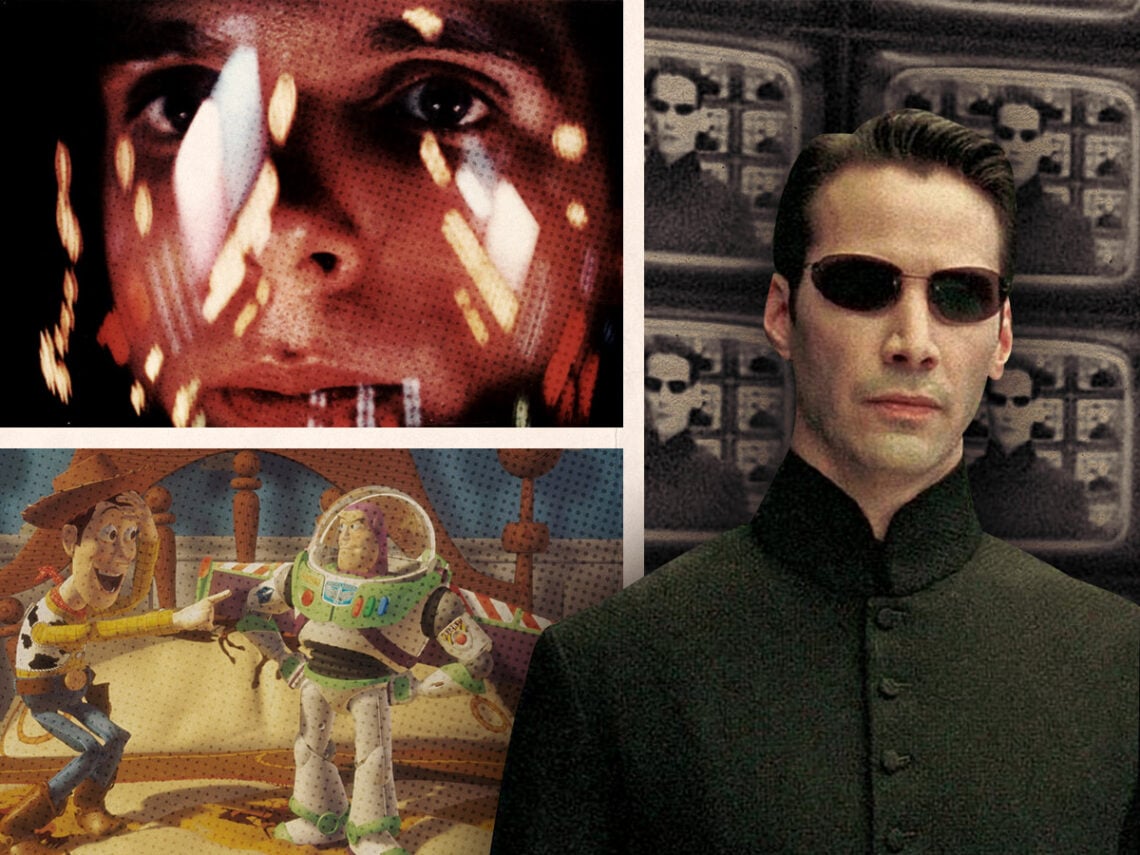
2001: A Space Odyssey illustrates some groundbreaking and significant visual effects and technology. It captures and presents a scientifically accurate depiction of space flight alongside compelling cinematic spaces. Rotating sets and zero-gravity effects achieved by suspending the actors from wires attached to the top of the set and placing the camera beneath them are examples of the hard work that went into creating this cinematic landmark.
The Godfather (Francis Ford Coppola, 1972)
This massive cinematic and cultural classic directed by Francis Ford Coppola stars Marlon Brando, Al Pacino, James Caan, Richard Castellano, Robert Duvall, Sterling Hayden, John Marley, Richard Conte, and Diane Keaton. In a timeless tale of loyalty, family, corruption and image, a crime family led by patriarch Vito Corleone prepares his son Michael to transition into a ruthless and persistent mafia boss.
This beautiful and compelling masterpiece elevated the mob gangster crime genre to the high art realm. The gorgeous and attentive visual design and engaging writing by Coppola and Mario Puzo revealed the dynamic conceptual landscape within the crime genre that represents the utmost humanity and intimate experiences. Additionally, The Godfather also accentuated film’s power and positioning in a cultural sense by becoming a staple in pop culture through its easily recognisable imagery and quotes.
Jaws (Steven Spielberg, 1975)
Steven Spielberg’s hybrid-genre classic that combines horror, thriller and action follows a flesh-eating shark that terrorises residents of a beachside town when they flock it its ocean. Roy Scheider, Robert Shaw, Richard Dreyfuss, Lorraine Gary and Murray Hamilton star in this terrifying masterclass of suspense.
Jaws is a brilliant and re-watchable film that was the highest-grossing film ever until Star Wars topped it two years later. In addition, it’s also a watershed in the business side of the film industry as it’s the prototypical summer blockbuster that revealed the season’s importance in movie marketing and exposition. It also represented the benefits of a comprehensive national release supported by heavy television advertising as opposed to the traditional progressive release in which a film slowly entered new markets and underwent gradual backing. Jaws also played a part in cementing the American’s favourite film approach of ‘high concept’, in which a movie is easily described and marketed.
Star Wars: Episode IV- A New Hope (George Lucas, 1977)
In a galaxy far, far away, a young orphan called Luke Skywalker (Mark Hamill), finds himself caught in the conflict of a rebellion against the tyrannical Galactic Empire, run by Darth Vader, played by James Earl Jones.
Often overshadowed by its brilliant predecessor, The Empire Strikes Back, which proposed the movie culture idea of spoiling a film, A New Hope was the catalyst of the monumental storytelling approaches of the franchise and cinematic universes. The first Star Wars film is the origin of one of pop culture’s biggest phenomenons that have sparked a long-standing fanbase and influential legacy. Many fantasy, sci-fi, action or superhero films now depend on replicating an extensive cinematic universe.
Toy Story (John Lasseter, 1995)
This animated family film kickstarted Pixar’s long-standing reign in American animation. It stars Tom Hanks and Tim Allen as two toys who compete for the affection of Andy, their young owner. The film also stars Don Rickles, Jim Varney, Wallace Shawn, John Ratzenberger, Annie Potts, R. Lee Ermey, John Morris, Laurie Metcalf, and Erik von Detten.
Toy Story is a CGI and cinematic landmark, the first computed animated feature film thanks to 27 animators and 400 computer models, starting with clay models and then working on motion controls to create texture and lighting. The payoff was more than worth it as it became the second highest-grossing film of 1995 and is considered one of the animation’s best.
Titanic (James Cameron, 1997)
This mother of dramatic romance movies stars Kate Winslet and Leonardo DiCaprio as young lovers from different socio-economic backgrounds who meet after boarding the RMS Titanic. James Cameron’s epic blends romance and disaster as the ship crashes into an iceberg and tears the lovers apart for good.
Titanic emphasised the significance of budget and box office correlating to showcase a film’s critical and cultural expense. With a budget of $200million, it was the most expensive blockbuster of its time, requiring extensive special effects and physical work from its actors. Filming was a gruelling process as “film-making is war,” the director stated, according to The Sunday Times. “A great battle between business and aesthetics”. This work amounted to Titanic becoming the first movie to make $1billion at the box office three months after its 1997 release, standing as the third highest-grossing movie today.
The Matrix (Lana and Lilly Wachowskis, 1999)
The Matrix is the pinnacle sci-fi action film directed by the Wachowski sisters, Lana and Lilly. In one of American cinema’s most popular narratives, a dystopian future houses intelligent machines who distract humans using a simulated reality called the Matrix. A computer programmer uncovers the truth and joins a rebellion against the machines and other people freed from the Matrix. The film stars Keanu Reeves, Laurence Fishburne, Carrie-Anne Moss, Hugo Weaving, and Joe Pantoliano.
This sci-fi classic that blends technological advancements with a philosophical narrative is one of film’s most referenced in pop culture. Moreover, the Matrix popularised a visual effect called ‘bullet time’, which depicts the heightened perception of certain characters by slowing down the action in a shot. At the same time, the camera appears to move through the scene at normal speed, giving the impression that certain characters are moving at an average pace.
The Lord of the Rings: The Fellowship of the Ring (Peter Jackson, 2001)
Almost a century after the creation of Georges Méliès’ A Trip to the Moon and Fritz Lang’s Metropolis, Peter Jackson’s first instalment of his Lord of the Rings trilogy, The Fellowship of the Ring, once again changed how audiences perceive the moving image. Based on J. R. R. Tolkien’s novel of the same name, Jackson dedicated an unprecedented amount of time to the recreation of the fantasy tales.
By the time the first film in the trilogy began to start filming in 1999, Jackson had already been working with the practical effects team at Weta workshop to create hundreds of props, costumes and much more. This helped Jackson to create a compressive masterpiece that incorporated stunning cinematography, storytelling and special effects work, setting a new standard for fantasy filmmaking that would inspire future successes like HBOs Game of Thrones and Denis Villeneuve’s Dune.
Avatar (James Cameron, 2009)
James Cameron’s sci-fi blockbuster stars Sam Worthington, Zoe Saldana, Stephen Lang, Michelle Rodriguez, and Sigourney Weaver in a futuristic story in which 22nd-century humans have colonised a gas giant known as Pandora. These humans then grow bodies of the inhabitants, the Nai’vi, to inhabit and venture into the clans to learn their ways.
Due to switching around with script drafts, Cameron’s movie prioritises visuals as a lot of story exposition, and world-building was scrapped from page to shooting. However, the technological progression of a new use of motion capture and recruiting CGI to construct new worlds of their own lore and creatures helped Avatar garner worldwide attention and acclaim. Say what you want about a memorable plot or cultural significance, but Cameron’s creation and execution of stunning Pandora landscapes in 3D provided a never before seen film viewing experience.
